Category
page 1Proposed countries

Tibet
thumb|Greater Tibet regions and claims

Kurdistan
Kurdistan (; ), or Greater Kurdistan, is a roughly defined geo-cultural region in West Asia wherein the Kurds form a prominent majority population and the Kurdish culture, languages, and national identity have historically been based. Geographically, Kurdistan roughly encompasses the northwestern Zagros and the eastern Taurus mountain ranges.
.svg)
Cornwall
Brittany
Brittany ( ) is a peninsula, historical country and cultural area in the north-west of modern France, covering the western part of what was known as Armorica in Roman Gaul. It became an independent kingdom and then a duchy before being united with the Kingdom of France in 1532 as a province governed as a separate nation under the crown. Brittany is the traditional homeland of the Breton people and is one of the six Celtic nations, retaining a distinct cultural identity that reflects its history.

Azawad
thumb|Map of Azawad, as claimed by the National Movement for the Liberation of Azawad|MNLA. Dark grey dots indicate regions with a Tuareg majority. The west is mainly inhabited by Maures, and the south by sub-Saharan peoples.
Azawad, or Azawagh (Tuareg: Azawaɣ, or Azawad; ), was a short-lived unrecognised state lasting between 2012 and 2013. The Azawadi declaration of independence was declared unilaterally by the National Movement for the Liberation of Azawad (MNLA) in 2012, after a Tuareg rebellion drove the Malian Armed Forces from the region.
.jpg)
Liberland
The Free Republic of Liberland, commonly referred to as Liberland, is a micronation founded by Czech right-libertarian politician and activist Vít Jedlička, who claimed an uninhabited stretch of floodplain on the Croatian bank of the Danube (known as Gornja Siga) in 2015, as territory for a new independent country. Not recognized by any country, it has since become an example of a micronation. Jedlička was inspired by the classical liberal Ludwig von Mises and objectivist Ayn Rand: he envisioned a political system characterized by laissez-faire capitalism, minimal government, and an economy ba

Bioko
thumb|View of Bioko from satellite
Bioko (; ; ; historically known as Fernando Pó, ) is an island of Equatorial Guinea. It is located south of the coast of Cameroon, and northwest of the northernmost part of mainland Equatorial Guinea. Malabo, on the north coast of the island, is the former capital city of Equatorial Guinea. Bioko's population was 335,048 at the 2015 census and it covers an area of , making it the fourth largest island in Africa (after Madagascar, Socotra and Tenerife). The island is part of the Cameroon line of volcanoes and is located off the Cameroon coast, in the Bight of

Autonomous Region of Bougainville
autonomous region of Papua New Guinea

East Turkestan
loosely defined region in Central Asia

Kingdom of Kongo
former African kingdom located in west central Africa
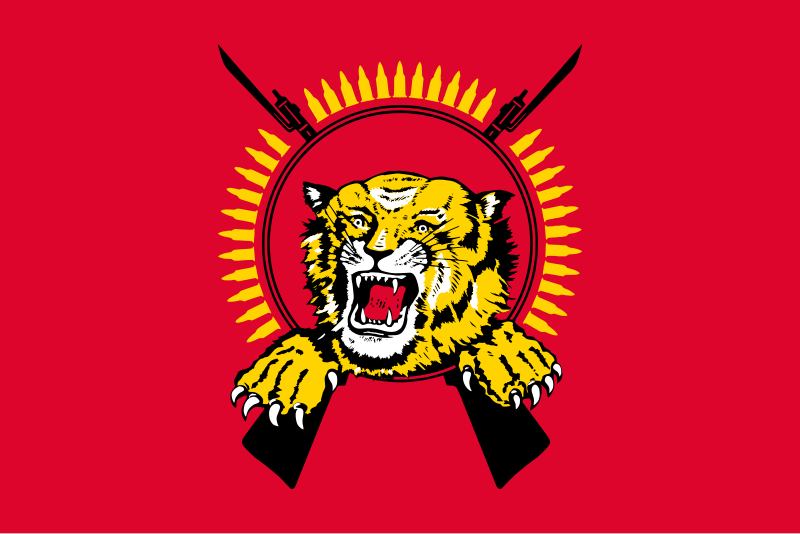
Tamil Eelam
aspirational state

Union State
supranational entity consisting of the Russian Federation and the Republic of Belarus

Padania
Padania ( , , ) is an alternative name and proposed independent state encompassing Northern Italy, derived from the name of the Po River (Latin Padus), whose basin includes much of the region, centered on the Po Valley (), the major plain of Northern Italy.

Ogaden
Ogaden (pronounced and often spelled Ogadēn; , ) is one of the historical names used for the modern Somali Region. It is also natively referred to as Soomaali Galbeed (). The region forms the eastern portion of Ethiopia and borders Somalia.
Principality of the Pindus
Aromanian semi-independent entity in Greece
Korean reunification
potential unification of North Korea and South Korea into a single Korean state

Ambazonia

Annobón Province
Annobón (; ) is a province of Equatorial Guinea. The province consists of the island of Annobón and its associated islets in the Gulf of Guinea. Annobón is the smallest province of Equatorial Guinea in both area and population. According to the 2015 census, Annobón had 5,323 inhabitants, a small population increase from the 5,008 registered by the 2001 census. The official language is Spanish but most of the inhabitants speak a creole form of Portuguese. The island's main industries are fishing and forestry.
stateless nation
ethnic/national minority that does not possess its own state and is not the majority population in any nation state
United Baltic Duchy
proposed country in 1918
East African Federation
proposed political union of the states of the East African Community as a single federated sovereign state
Kuban People's Republic
short-lived country in Eastern Europe (1918-1920)
Uganda Scheme
plan in the early 1900s to give a portion of British East Africa to the Jewish people as a homeland

Bakassi
thumb|The Nigeria-[[Cameroon border region on the coast from a 1963 map, with Bakassi peninsula in the middle]]
Kingdom of Lunda
pre-colonial African confederation of states in what is now the Democratic Republic of Congo, Angola and Zambia
Sovereign State of the Bektashi Order
European micro-state planned for the Bektashi Sufi movement
State of Katanga
unrecognised historical state in Africa
Republic of Lakotah
proposed republic in the United States
New Union Treaty
draft treaty of 1991
Cascadia
proposed country in North America
United States of Greater Austria
proposed federal state in Central Europe
Fourth Reich
hypothetical successor to Nazi Germany

volkstaat
thumb|"Vryheidsvlag" or "Freedom flag", the most common proposed flag for an Afrikaner homeland or Volkstaat. Also used to represent Afrikaners at the UNPO.
thumb|Versions of the Flag of South Africa (1928–1994)|flag of South Africa from 1928 to 1994 without the Union Jack are occasionally proposed as a flag for an Afrikaner homeland or Volkstaat (this version replacing the [[Union Jack with the "Vryheidsvlag").]]
A Volkstaat (, ), also called a Boerestaat, is a proposed White homeland for Boers and Afrikaners within the borders of South Africa, most commonly proposed as a fully independent Bo
Greater Germanic Reich
official state name of the political entity that Nazi Germany tried to establish in Europe during World War II
Khalistan movement
Sikh separatist movement in the Punjab region
Independent Macedonia
Proposed Macedonian state during German occupation during the Second World War
Wilsonian Armenia
1920 proposed boundaries of Armenia
Republic of West Papua
a proposed country that is recognized as a separatist terrorist organization by the Government of Indonesia
Flemish Movement
political movement for emancipation and greater autonomy of the Belgian region of Flanders
Greek Plan
political plan envisaged by Catherine II of Russia, which never came to fruition
Green Ukraine
historical Ukrainian name for the land in the Russian Far East
Sindhudesh
Proposed State
Republic of Pontus
proposed Pontic Greek state on the southern coast of the Black Sea
Republic of New Afrika
Black nationalist American social movement
Refugee Nation
Proposal for a nation to resettle refugees
Polish–Lithuanian–Ruthenian Commonwealth
Empire that almost formed
State of Judea
Proposed Jewish state in the West Bank
Republic of Cabinda
unrecognized state in Cabinda Province, Angola (1975–76)

Romanistan
thumb|Flag of the Romani people, a national symbol of the Romani
Romanestan, Rromanestan or Romanistan is the name of a proposed country, for the Romani people.
Republic of Logone
unrecognized state in the Central African Republic established by the rebel group Séléka
white ethnostate
system of government based on a white ethnic identity
.png)
Chinland
Chinland, officially the State of Chinland, is an autonomous state and self-governing polity in Myanmar, Southeast Asia. Its claimed territory encompasses approximately one third of the Chin State in western Myanmar, along the borders with Bangladesh and India.
Knights of the Golden Circle
Secret society in the mid-19th-century US
Kingdom of Northern Lusitania
former country
Dravida Nadu
concept
Duchy of Ruthenia
Monarchy proposed in 1658

United Bengal
a theory put forward prior to the partition of India
Tamazgha
Tamazgha is a neologism in the Berber languages denoting the lands traditionally inhabited by the Berber peoples within the Maghreb. The term was coined in the 1970s by the Berber Academy and, since the late 1990s, has gained particular significance among speakers of Berber languages. Tamazgha is both the discursive and geographic embodiment of an Amazigh imaginary of a language and culture that were once unified and had their own territory, it has never been a single political entity, and Berbers across the Maghreb did not see themselves as a single cultural or linguistic unit, nor was there

Kingdom of Finland
Russian claim

Ilirida
thumb|350px|Map of the proposed Republic of Ilirida
Ilirida (; ) or the Republic of Ilirida (; ) is a proposed state in the western regions of North Macedonia (then Republic of Macedonia), declared twice by the politician Nevzat Halili, once in 1992 and again in 2014. The proposal has been declared unconstitutional by the Macedonian government. The secessionist concept of Ilirida emerged in the early 1990s and was advocated by some Albanian politicians as a solution to concerns and disputes the Albanian community had regarding constitutional recognition and minority rights within Macedonia.