Category
page 1Queer theory

queer
Queer is an umbrella term for sexual and gender minorities. It is alternately used to refer to people who reject sexual and gender norms and share radical politics characterized by solidarity across lines of identity. Queer is also a self-identity term for many people (similar to but distinct from gay, lesbian, and bisexual), characterized by rejection or disruption of binary categories of sexual orientation and gender.

heterosexism
Heterosexism is a system of attitudes, bias, and discrimination in favor of heterosexuality and heterosexual relationships. According to Elizabeth Cramer, it can include the belief that all people are or should be heterosexual and that heterosexual relationships are the only norm and therefore superior.

queer theory
a field of post-structuralist critical theory
LGBTQ movements
social identity movements

gender binary
classification of sex and gender into two distinct, opposite and disconnected forms of masculine and feminine
queer studies
academic discipline
heteropatriarchy
In feminist theory, heteropatriarchy (etymologically from heterosexual and patriarchy) or cisheteropatriarchy, is a social construct where (primarily) cisgender (same gender as identified at birth) and heterosexual males have authority over other cisgender males, females, and people with other sexual orientations and gender identities. It is a term that emphasizes that discrimination against women and LGBT people is derived from the same sexist social principle.
rainbow capitalism
capitalist appropriation and assimilation of sexual diversity
homosociality
In sociology, homosociality means same-sex friendships that are not of a romantic or sexual nature, such as friendship, mentorship, or others. The term was popularized by Eve Kosofsky Sedgwick in her discussion of male homosocial desire. Researchers who use the concept mainly do so to explain how men uphold men's dominance in society.
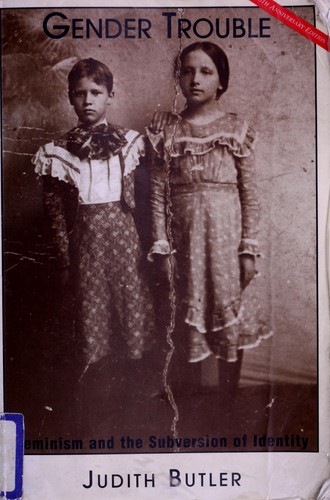
Gender Trouble
book by Judith Butler
heterotopia
certain cultural, institutional and discursive spaces that are somehow ‘other’: disturbing, intense, incompatible, contradictory or transforming
compulsory heterosexuality
social vision of heterosexuality as the natural inclination or obligation by both sexes
queer theology
theological method developed out of queer theory, positing that gender nonconformity has always been present in human history, including the Bible
discrimination against intersex people
the hatred of, contempt for, or prejudice against intersex people
necropolitics
Necropolitics is a sociopolitical theory of the use of social and political power to dictate how some people may live and how some must die. The deployment of necropolitics creates what Achille Mbembe calls deathworlds, or "new and unique forms of social existence in which vast populations are subjected to living conditions that confer upon them the status of the living dead." Mbembe, author of On the Postcolony, was the first scholar to explore the term in depth in his 2003 article, and later, his 2019 book of the same name. Mbembe identifies racism as a prime driver of necropolitics, stating
homonormativity
Homonormativity is the adoption of heteronormative ideals and constructs onto LGBT culture and identity. It is predicated on the assumption that the norms and values of heterosexuality should be replicated and performed among homosexual people. Those who assert this theory claim homonormativity selectively privileges cisgender homosexuality (that is coupled and monogamous) as worthy of social acceptance.
heterosociality
In sociology, heterosociality describes social relations with persons of the opposite sex or a preference for such relations, often excluding relationships of a romantic and sexual nature. The opposite of heterosociality is homosociality.
queer heterosexuality
heterosexual practice or identity controversially labelled queer
Queer Tango
type of dance
Queer ecology
a series of practices that reimagine nature, biology, and sexuality in the light of queer theory
queer coding
implicit representation of LGBTI characters
queer archaeology
an approach to archaeology that uses queer theory to challenge normative, and especially heteronormative, views of the past
queer pornography
pornography focusing on queer themes
bisexual theory
field of critical theory
Lambda nordica
Swedish periodical
FLINTA*
FLINTA* is a German acronym that stands for "", meaning women, lesbians, intersex, non-binary, trans and agender people. The asterisk represents all non-binary gender identities. To explicitly include queer individuals, the term FLINTAQ is sometimes used.