Category
page 1Reagents for biochemistry

antibody
thumb|upright=1.2|Each antibody binds to a specific antigen in a highly specific interaction analogous to a lock and key.

chemical reagent
thumb|Reagents, such as sulfur (pictured), are the starting materials used in chemical reactions.
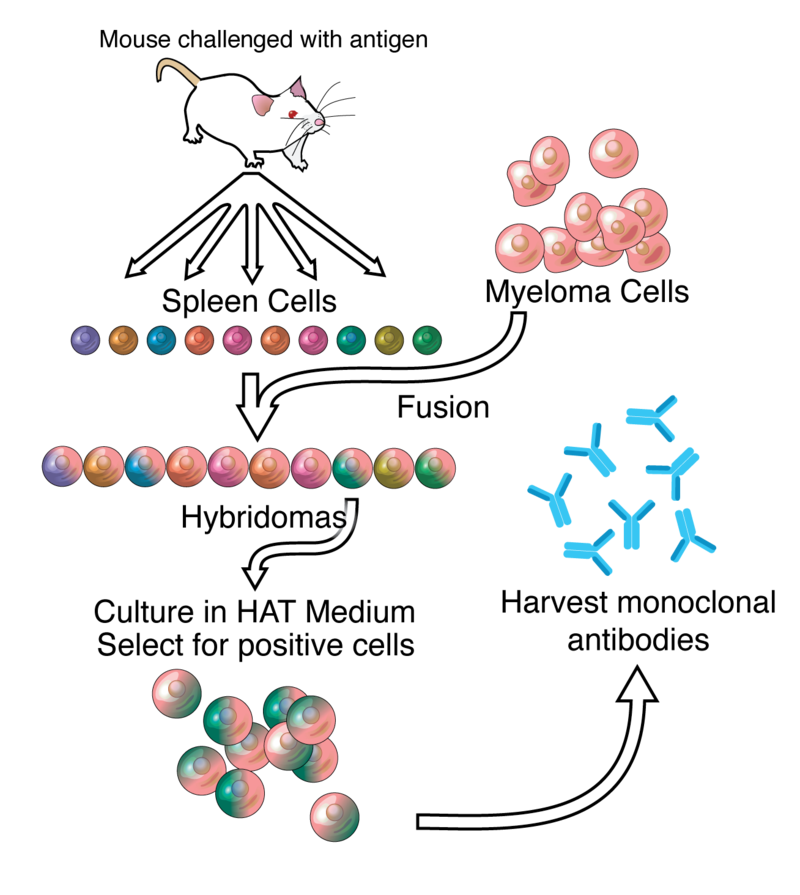
monoclonal antibody
monospecific antibody that is made by identical immune cells that are all clones of a unique parent cell
sodium lauryl sulfate
chemical compound

immunofluorescence microscopy
thumb|278x278px|Vasculature of porcine skin under fluorescence ([[Smooth muscle actin with AlexaFluor 488). Green = smooth muscle actin (SMA) with Alexa 488 fluorophore. Blue = DAPI counterstain. Red = auto-fluorescence. ]]

dicyclohexylcarbodiimide
is an organic compound with the chemical formula (C6H11N)2C. It is a waxy white solid with a sweet odor. Its primary use is to couple amino acids during artificial peptide synthesis. The low melting point of this material allows it to be melted for easy handling. It is highly soluble in dichloromethane, tetrahydrofuran, acetonitrile and dimethylformamide, but insoluble in water.
polyclonal antibodies
type of immunoglobulin

1-hydroxybenzotriazole
Hydroxybenzotriazole (abbreviated HOBt) is an organic compound with the formula . It is a derivative of benzotriazole. It is a white crystalline powder, which as a commercial product contains some water (~11.7% wt as the HOBt monohydrate crystal). Anhydrous HOBt is explosive. It is mainly used to suppress the racemization and to improve the efficiency of peptide synthesis.

1-ethyl-3-(3-(dimethylamino)propyl)carbodiimide
1-Ethyl-3-(3-dimethylaminopropyl)carbodiimide (EDC, EDAC or EDCI) is a water-soluble carbodiimide usually handled as the hydrochloride, which is a white solid.
5,5'-dithiobis(2-nitrobenzoic acid)
chemical compound
1-(9-fluorenyl)methyl chloroformate
chemical compound

BOP reagent
reagent commonly used in the synthesis of peptides

N-ethylmaleimide
'''N-Ethylmaleimide (NEM''') is an organic compound that is derived from maleic acid. It is a unstable substance that reacts rapidly with thiols and is commonly used to modify cysteine residues in proteins and peptides.
PyBOP
PyBOP (benzotriazol-1-yloxytripyrrolidinophosphonium hexafluorophosphate) is a reagent used to prepare amides from carboxylic acids and amines in the context of peptide synthesis. It can be prepared from 1-hydroxybenzotriazole and a chlorophosphonium reagent under basic conditions. It is a substitute for the BOP reagent that avoids the formation of the carcinogenic waste product HMPA. Thermal hazard analysis by differential scanning calorimetry (DSC) shows PyBOP is potentially explosive.
diisopropylcarbodiimide
'''N,'-Diisopropylcarbodiimide is a carbodiimide used in peptide synthesis. As a liquid, it is easier to handle than the commonly used N,''-dicyclohexylcarbodiimide, a waxy solid. In addition, N,''-diisopropylurea, its byproduct in many chemical reactions, is soluble in most organic solvents, a property that facilitates work-up.
Lowry protein assay
biochemical laboratory technique
1-hydroxy-7-azabenzotriazole
1-Hydroxy-7-azabenzotriazole (HOAt) is a triazole used as a peptide coupling reagent. It suppresses racemization that can otherwise occur during the reaction.
blocking antibody
an antibody which blocks the interaction of its antigen (target protein) with its interaction partners
3-Azidocoumarin
3-Azidocoumarin is an organic compound that is used in the area of bioconjugation. It is a derivative of coumarin, a natural product and precursor for the widely used Coumadin. Azidocoumarin has emerged as a widely applicable labeling agent in diverse biological systems. In particular, it participates in the aptly named click reaction with alkynes. Bioconjugation involves the labeling of certain cellular components and is applicable to fields such a proteomics and functional genomics with a detachable, fluorescent tag.