Category
page 1Religious leadership roles

Pope
The pope is the bishop of Rome and the head of the worldwide Catholic Church. He is also known as the supreme pontiff, Roman pontiff, or sovereign pontiff. From the 8th century until 1870, the pope was the sovereign or head of state of the Papal States, and since 1929 of the much smaller Vatican City State. From a Catholic viewpoint, the primacy of the bishop of Rome is largely derived from his role as the apostolic successor to Saint Peter, to whom primacy was conferred by Jesus, who gave Peter the Keys of Heaven and the powers of "binding and loosing", naming him as the "rock" upon which the

priest
A priest is a certain male religious leader authorized to perform the sacred rituals of a religion, especially as a mediatory agent between humans and one or more deities. They also have the authority or power to administer religious rites; in particular, rites of sacrifice to, and propitiation of, a deity or deities. Their office or position is the "priesthood", a term which also may apply to such persons collectively. A priest may have the duty to hear confessions periodically, give marriage counseling, provide prenuptial counseling, give spiritual direction, teach catechism, or visit those

imam
thumb|Imam presiding over prayer, Nasreddine Dinet, circa 1922
Imam (; , '; : , ') is an Islamic leadership position. For Sunni Muslims, imam is most commonly used as the title of a prayer leader of a mosque. In this context, imams may lead Islamic prayers, serve as community leaders, and provide religious guidance. Thus for Sunnis, anyone can study the basic Islamic teachings and become an imam.

cardinal
senior ecclesiastical official of the Catholic Church

caliphate
A caliphate ( ) is an institution or public office under the leadership of an Islamic steward with the title of caliph (; , ), a person considered a political–religious successor to the Islamic prophet Muhammad and a leader of the entire Muslim world (ummah). Historically, the caliphates were polities based on Islam which developed into multi-ethnic trans-national empires.
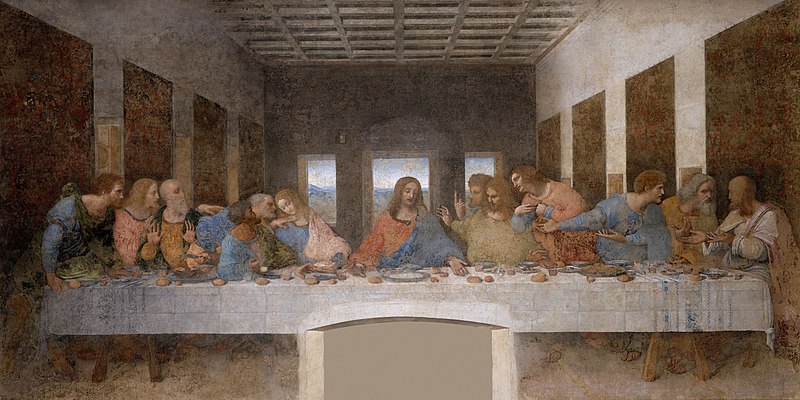
apostle
primary disciples of Jesus in the New Testament
.jpg)
abbot
right|thumb|Arms of a Catholic abbot are distinguished by a gold crozier with a veil attached and a black [[galero with twelve tassels (the galero of a territorial abbot would be green).]]

sheikh
Sheikh ( , , , , shuyūkh ) is an honorific title in the Arabic language, literally meaning "elder". It commonly designates a tribal chief or a Muslim scholar.

ulema
265px|thumb|Scholars at an Abbasid library. Maqamat of al-Hariri. Illustration by Yahyá al-Wasiti, [[Baghdad, 1237.]]

Amir
thumb|The court of the Durrani Empire|Durrani Emirate of [[Afghanistan (James Rattray, 1839)]]
Emir (; ' (), also transliterated as amir, is a word of Arabic origin that can refer to a male monarch, aristocrat, holder of high-ranking military or political office, or other person possessing actual or ceremonial authority. The title has a history of use in West Asia, East Africa, West Africa, Central Asia, and South Asia. In the modern era, when used as a formal monarchical title, it is roughly synonymous with "prince", applicable both to a son of a hereditary monarch, and to a reigning monarch

deacon
thumb|upright|Saint Stephen, one of the first seven deacons in the Christian Church, holding a [[Gospel Book in a 1601 painting by Giacomo Cavedone.]]
A deacon is a member of the diaconate, an office in Christian churches that is generally associated with service of some kind, but which varies among theological and denominational traditions.

Supreme Leader of Iran
The supreme leader of the Islamic Republic of Iran, officially styled as the leader of the Islamic Revolution or the leadership of the Islamic jurist by the Iranian Constitution, is the highest political and religious authority in Iran, taking precedence above the president who is the country's de jure head of state. The armed forces, judiciary, state radio and television, and other key government organizations such as the Guardian Council and Expediency Discernment Council are subject to the supreme leader.

Mahdi
thumb|An image from a Falnama|Falname made in India around 1610–1630, depicts [[Jesus fighting the Dajjal (right). Behind, the Mahdi with a veiled face.]]
mufti
A mufti (; , ) is an Islamic jurist qualified to issue a nonbinding opinion (fatwa) on a point of Islamic law (sharia). The act of issuing fatwas is called iftāʾ. Muftis and their fatāwa have played an important role throughout Islamic history, taking on new roles in the modern era.
%20reading%20a%20book.%20Gouache%20by%20an%20Indian%20artist%2C%20circa%2019th%20century.jpg)
mullah
Mullah () is an honorific title for Muslim clergy and Imams. The term is widely used in Iran, Afghanistan, Pakistan, and India, and is also used for a man who has higher education in Islamic theology and sharia law.

Ecumenical Patriarch of Constantinople
highest position in the Eastern Orthodox Church

archimandrite
thumb|250px|An archimandrite wearing his full habit, holding his Crosier#Eastern crosiers|pastoral staff, and minimally vested in an [[epitrachelion and epimanikia. His mitre stands on the table to his right.]]
Aga Khan
hereditary religious title

hegumen
Hegumen, hegumenos, or igumen (, trans. ), is the title for the head of a monastery in the Eastern Orthodox and Eastern Catholic Churches, or an archpriest in the Coptic Orthodox Church, similar to the title of abbot. The head of a convent of nuns is called a hegumenia or igumeni ().
Amir al-Mu'minin
title designating the supreme leader of an Islamic community

abbess
thumb|Eufemia Szaniawska, Abbess of the Benedictine Monastery in Nesvizh|Nieśwież with a [[crosier, , National Museum in Warsaw]]
thumb|Abbess Joanna van Doorselaer de ten Ryen, Waasmunster Roosenberg Abbey

marabout
In the Muslim world, the marabout () is a descendant of Muhammad (Arabic: سـيّد, romanized: sayyid and sidi in the Maghreb) and a Muslim religious leader and teacher who historically had the function of a chaplain serving as a part of an Islamic army, notably in North Africa and the Sahara region, in West Africa, and historically in the Maghreb.
marji'
Marja (; plural marājiʿ; ) is a title given to the highest level of Twelver Shia religious cleric, with the authority given by a hawzah (a seminary where Shi'a Muslim scholars are educated) to make legal decisions within the confines of Islamic law for followers and clerics below him in rank. The highest ranking marjiʿ is known as the marja al-mutlaq or marja al-taqlid al-mutlaq. A marji' is usually also a grand ayatollah.
prior
ecclesiastical title for a monastic superior
Dean of the College of Cardinals
president of the College of Cardinals
Grand Mufti
higher spiritual position of Muslim Ummah
Rinpoche
Rinpoche, also spelled Rimpoche (), is an honorific term used in the Tibetan language. It literally means "precious one", and may refer to a person, place, or thing—like the words "gem" or "jewel" (Sanskrit: Ratna).
Hujjat al-Islam
Islamic honoriic title
.jpg)
akhoond
250px|thumbnail
high priest
supreme priest in several ancient religions
ethnarch
Ethnarch (pronounced , also ethnarches, ) is a term that refers generally to political leadership over a common ethnic group or homogeneous kingdom. The word is derived from the Greek words (ethnos, "tribe/nation") and (archon, "leader/ruler"). ''Strong's Concordance'' gives the definition of 'ethnarch' as "the governor (not king) of a district".
murshid
Murshid () is Arabic for "guide" or "teacher", derived from the root r-sh-d, with the basic meaning of having integrity, being sensible, mature. Particularly in Sufism it refers to a spiritual guide. The term is frequently used in Sufi orders such as the Naqshbandiyya, Qādiriyya, Chishtiya, Shadhiliya and Suhrawardiyya.
Maulana
Mawlana (; from Persian, ), also spelled as Molana or Maulana, is a title preceding, mostly in South Asia, the name of respected Muslim religious leaders, in particular graduates of religious institutions, e.g. a madrassa or a darul uloom, or scholars who have studied under other Islamic scholars.
%20-%20(multiple%20figures)18th%20century%20Boston%20MFA.jpg)
mahasiddha
thumb|255px|Four Mahasiddhas (18th century, Boston MFA). Saraha in top left, Dombhi Heruka top right, [[Naropa bottom left, and Virupa bottom right.]]
Mawlawi
Islamic religious title given to Muslim religious scholars
Pir
Sufi master or spiritual guide
Allamah
Allamah () is an Islamic honorary title for a profound scholar, a polymath, a man of vast reading and erudition, or a great learned one.
elder
leader in the field of some Christian denominations
superintendent
head of an administrative division of a Protestant church
.jpg)
pontiff
thumb | right | Statue of Augustus as Pontifex Maximus
In Roman antiquity, a pontiff () was a member of the most illustrious of the colleges of priests of the Roman religion, the College of Pontiffs. The term pontiff was later applied to any high or chief priest and, in Roman Catholic ecclesiastical usage, to bishops, especially the pope, who is sometimes referred to as the Roman pontiff or the supreme pontiff.
Ganden Tripa
title of the spiritual leader of the Gelug school of Tibetan Buddhism

vardapet
thumb|upright|A vardapet's Crosier|crozier with a double-headed serpent, first quarter of the 19th century
thumb|upright|The composer Komitas, one of the most famous vardapets, in a (Armenian priest's cowl)
Grand Mufti of Saudi Arabia
Position of religious authority in Saudi Arabia

kahuna
thumb|Priest conducting religious ceremony honoring the Hawaiian god Lono in Waimānalo, Hawaii|Waimanalo, Hawaii
Kahuna (; ) is a Hawaiian word that refers to an expert in any field. Historically, it has been used to refer to doctors, surgeons and dentists, as well as priests, ministers, and sorcerers.
Grand Imam of al-Azhar
religious leader in Egypt
Islamic religious leaders
religious leadership in Islamic social circles

Shankaracharya
thumb|alt=Adi shankara| Adi Shankaracharya with his four disciples - Padmapadacharya, [[Sureshwaracharya, Hastamalakacharya and Totakacharya.]]
Gyalwang Drukpa
title in Buddhism

Kriwe
Kriwe Kriwaito (, ) or simply Kriwe (, ) was the chief priest in the old Baltic religion. Known primarily from the dubious 16th-century writings of Simon Grunau, the concept of kriwe became popular during the times of romantic nationalism. However, lack of reliable written evidence has led some researchers to question whether such pagan priest actually existed. The title was adopted by Romuva, the neo-pagan movement in Lithuania, when Jonas Trinkūnas was officially installed as krivių krivaitis in October 2002.

maphrian
thumb|right|upright=0.9|Baselios Joseph I, the current Maphrian of the East in the [[Syriac Orthodox Church]]
The Maphrian ( or maphryono), is the second-highest rank in the ecclesiastical hierarchy of the Syriac Orthodox Church, right below that of patriarch. The office of a maphrian is a maphrianate. There have been three maphrianates in the history of the Syriac Orthodox Church and one, briefly, in the Syriac Catholic Church.

heresiarch
thumb|In this Gustave Dore engraving, Dante and Virgil speak to a Heresiarch trapped within a burning tomb. Dante placed arch-heretics in the Sixth Circle of Hell.
Samaritan High Priest
Wikimedia list article

prince-abbot
thumb|Adolphus von Dalberg, Prince-Abbot of Fulda 1726–1737
īshān
Īshān (from Persian 'they'; ; ; ; ; ; ; ; ; ) is an honorific title given to Sufi leaders in Central Asia. According to Jianping Wang, "In the Sufi doctrine found in [[East Turkestan|E[ast] Turkestan]], the ishan has a serene nature, acting as an intermediary between Muslims and Allah. An ishan has leadership over his group, and can nominate his khalifa and hafiz as well as initiating maulid and buwi into the sub-order. Usually, an ishan will have inherited his position from within his family and pass it on to his descendants."
Athleta Christi
class of Early Christian soldier martyrs
Sayadaw
A sayadaw (, ; , and alternatively spelled hsayadaw, sayado, sayāḍo or sayāḍaw) is a Burmese Buddhist title used to reference the senior monk or abbot of a monastery. The word is a combination of Sanskrit word "acharya" (teacher) and the Burmese honorific "taw," which is used to denote nouns of religious or royal significance. Some distinguished sayadaws would often be referred to as a sayadawgyi (, as a sign of reverence. The terms "sayadaw" and "sayadawgyi" originally corresponded to the senior monks who taught the former Burmese kings. These sayadaws may be influential teachers of Buddhism
Al-Yamani
pre-messianic figure in Shia Islamic eschatology
Dedes
Alevitic religious leader

Sibghatullah Shah Rashidi
Pakistani freedom fighter
Hogon
thumb|right|240px|A Hogon, in Mali
A hogon is a spiritual leader in a Dogon village who plays an important role in Dogon religion.