Category
page 1Roman law

jurisprudence
thumb|A gavel and court minutes from 1861–1862, symbolic of legal decisions.

basilica
thumb|Digital reconstruction of the 2nd century BC Basilica Sempronia, in the [[Forum Romanum]]
thumb|19th century reconstruction of the 2nd century AD Basilica Ulpia, part of the [[Trajan's Forum, Rome]]
thumb|Ruins of Yererouk basilica 4th–5th century AD
thumb|Ruins of the late 5th century AD basilica at Mushabbak, Syria
thumb|Reconstruction of the basilica at Fano from a description by its architect [[Vitruvius|alt=]]

Roman law
legal system of ancient Rome and later the Roman and Byzantine Empire
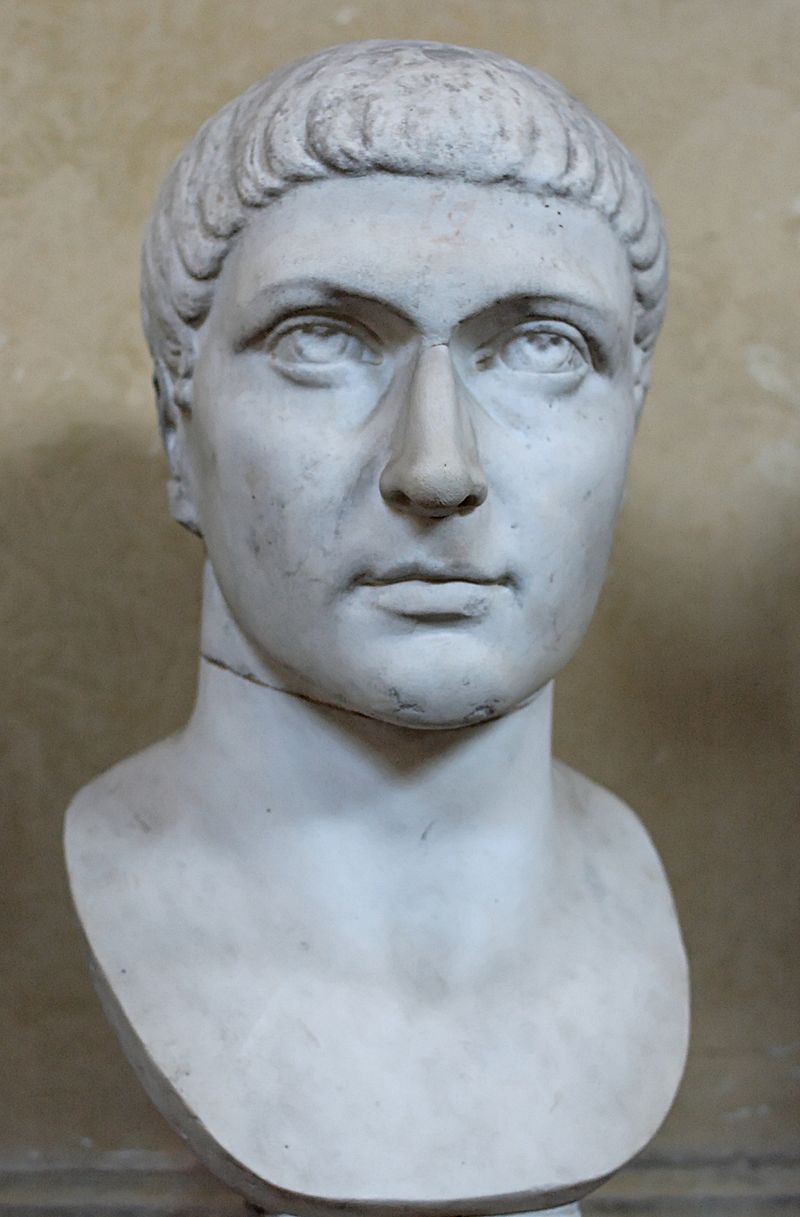
Edict of Milan
legalization of Christianity in the Roman Empire, 313
praetor
Praetor ( , ), also pretor, was the title granted by the government of ancient Rome to a man acting in one of two official capacities: (i) the commander of an army, and (ii) as an elected magistratus (magistrate), assigned to discharge various duties. The functions of the magistracy, the praetura (praetorship), are described by the adjective itself: the praetoria potestas (praetorian power), the praetorium imperium (praetorian authority), and the praetorium ius (praetorian law), the legal precedents established by the praetores (praetors). Praetorium, as a substantive, denoted the location fro
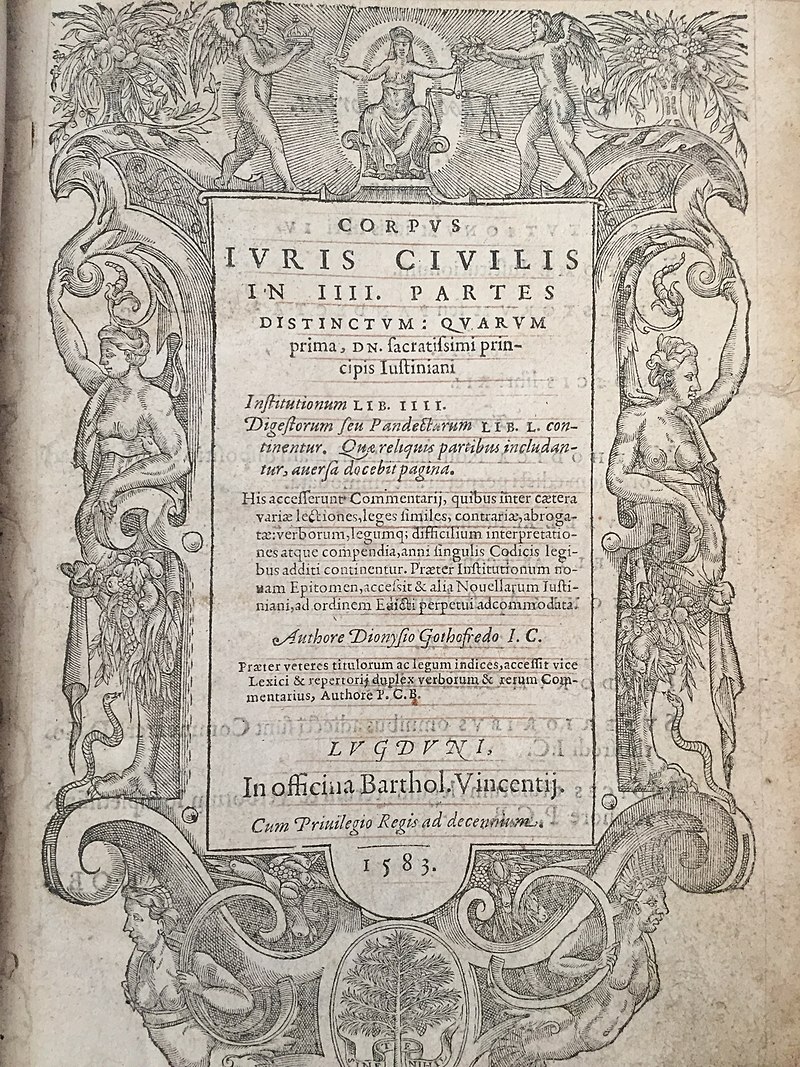
Corpus Juris Civilis
collection of fundamental works in jurisprudence as codified by Justinian
Twelve Tables
Roman statute
interregnum
An interregnum (plural interregna or interregnums) is a period of discontinuity or "gap" in a government, organization, or social order. Archetypally, it was the period of time between the reign of one monarch and the next (coming from Latin inter-, "between" and rēgnum, "reign" [from rex, rēgis, "king"]), and the concepts of interregnum and regency therefore overlap. Historically, longer and heavier interregna have been typically accompanied by widespread unrest, civil and succession wars between warlords, and power vacuums filled by foreign invasions or the emergence of a new power.
Codex Theodosianus
Compilation of laws of Roman Empire (438)
municipium
In ancient Rome, the Latin term '''''' (: ) referred to a town or city. Etymologically, the was a social contract among ('duty holders'), or citizens of the town. The duties () were a communal obligation assumed by the in exchange for the privileges and protections of citizenship. Every citizen was a .
cursus honorum
the order of public offices held by politicians in Ancient Rome
imperium
In ancient Rome, imperium was a form of authority held by a citizen to control a military or governmental entity. It is distinct from auctoritas and potestas, different and generally inferior types of power in the Roman Republic and Empire. One's imperium could be over a specific military unit, or it could be over a province or territory. Individuals given such power were referred to as curule magistrates or promagistrates. These included the curule aedile, the praetor, the consul, the magister equitum, and the dictator. In a general sense, imperium was the scope of someone's power, and could
Digest
Roman law digest

proscription
thumb|The Proscribed Royalist, 1651, painted by [[John Everett Millais c. 1853, in which a Puritan woman hides a fleeing Royalist proscript in the hollow of a tree]]

curia
Curia (: curiae) in ancient Rome referred to one of the original groupings of the citizenry, eventually numbering 30, and later every Roman citizen was presumed to belong to one. While they originally probably had wider powers, they came to meet for only a few purposes by the end of the Republic: to confirm the election of magistrates with imperium, to witness the installation of priests, the making of wills, and to carry out certain adoptions.

pomerium
thumb|Map of Rome in the time of the Roman Republic. The pomerium at that time is marked in pink; the Capitoline Hill|Capitoline and Aventine are extra pomerium, 'beyond the wall', with their boundaries in yellow.
The pomerium or pomoerium was a religious boundary around the city of Rome and cities controlled by Rome. In legal terms, Rome existed only within its pomerium; everything beyond it was simply territory (ager) belonging to Rome.
amicus curiae
Latin legal term meaning "friend of the court"
Roman magistrate
elected official in Ancient Rome
uti possidetis
wartime principle in international law
Edict of Toleration by Galerius
edict ending the Diocletianic persecution of Christianity in the East of the Roman Empire
nomen nescio
Latin phrase denoting an unnamed person
Code of Justinian
part of the 6th century codification of Roman law
Mos maiorum
customs and traditions of ancient Rome
Catiline Orations
set of speeches given by Marcus Tullius Cicero
collegiality
Collegiality is the relationship between colleagues, especially among peers, for example a fellow member of the same profession.
glossator
The scholars of the 11th- and 12th-century legal schools in Italy, France and Germany are identified as glossators in a specific sense. They studied Roman law based on the Digesta, the Codex of Justinian, the Authenticum (an abridged Latin translation of selected constitutions of Justinian, promulgated in Greek after the enactment of the Codex and therefore called Novellae), and his law manual, the Institutiones Iustiniani, compiled together in the Corpus Iuris Civilis. (This title is itself only a sixteenth-century printers' invention.) Their work transformed the inherited ancient texts into
tribus
grouping of Roman citizens
Curiate Assembly
people's assembly in ancient rome

Basilika
alt=|thumb|250x250px|Leo VI (right) and Basil I (left), from the 12th-century Madrid Skylitzes.
The Basilika (, "the imperial [laws]") was a collection of laws completed in Constantinople by order of the Byzantine emperor Leo VI the Wise during the Macedonian dynasty. This was a continuation of the efforts of his father, Basil I, to simplify and adapt the Emperor Justinian I's Corpus Juris Civilis code of law issued between 529 and 534 which had become outdated. The term comes from the Greek adjective Basilika meaning "Imperial (laws or enactments)" and not from the Emperor Basil's name; both
sumptuary law
law intended to control consumption, particulary such a law regulating apparel and textiles which may be worn by people of specified social strata
Negotiorum gestio

auctoritas
thumb|300px|Representation of a sitting of the Roman Senate: Cicero attacks Catiline, from a 19th-century fresco
Senatus consultum ultimum
"ultimate decree" of the ancient Roman senate

civitas
thumb|300px|A Roman military diploma, or certificate of successful military service, granting citizenship to a retiring soldier and the dependents he had with him at the time. The key phrase is "est civitas eis data" where means "citizenship".
res nullius
latin term from Roman law
Lex Canuleia
statute
Lex Hortensia
statute
Res publica
Latin phrase, meaning 'public affair'
senatus consultum
resolution of the ancient Roman Senate
colonies in antiquity
aspect of history
Superficies
Superficies is a Latin legal term referring to anything which is placed upon and attached to the ground, and most commonly refers to a building erected on land owned by another.
Lex Licinia Sextia
statute
Homo sacer
status in Roman law
collegium
any association in ancient Rome that acted as a legal entity
Institutes
introductory textbook of legal institutions (161 AD)
Novellae Constitutiones
one of the four components of the “Corpus juris civilis” drafted under the Byzantine emperor Justinian
list of Roman laws
Wikimedia list article
Lex Oppia
Roman law restricting female adornment
Latin Rights
ancient Roman set of legal rights
duumviri
The duumviri (Latin for 'two men'), originally duoviri and also known in English as the duumvirs, were any of various joint magistrates of ancient Rome. Such pairs of Roman magistrates were appointed at various periods of Roman history both in Rome itself and in the colonies and municipia.
Fiscus Judaicus
tax imposed on Jews in the Roman Empire
mancipatio
In Roman law, mancipatio (f. Latin manus, "hand"; and capere, "to take hold of") was a solemn verbal contract by which the ownership of certain types of goods (res mancipi) was transferred. Mancipatio was also the legal procedure for drawing up wills, emancipating children from their parents, and adoption.
Institutes of Justinian
sixth century codification of Roman law

otium
thumb|upright=1.2|Visitors to Los Angeles' Getty Villa, modeled after the [[Villa of the Papyri at Herculaneum, get a glimpse of otium as experienced at an ancient Roman villa.]]
Pro Milone
speech by Cicero
Lex Gabinia
statute
Potestas
Potestas is a Latin word meaning power or faculty. It is an important concept in Roman Law.
pandectists
The Pandectists were German university legal scholars in the early 19th century who studied and taught Roman law as a model of what they called Konstruktionsjurisprudenz (conceptual jurisprudence) as codified in the Pandects of Justinian (Berman).
Postglossators
The postglossators or commentators formed a European legal school which arose in Italy and France in the fourteenth century. They form the highest point of development of medieval Roman law.
Stipulatio
'''''' was the basic form of contract in Roman law. It was made in the format of question and answer.