Category
page 1Rubber

tire
thumb|Tire on a truck
thumb|Assorted new automotive road tires, showing a variety of tread patterns.
thumb|Tractor tires have substantial ribs and voids for traction in soft terrain.
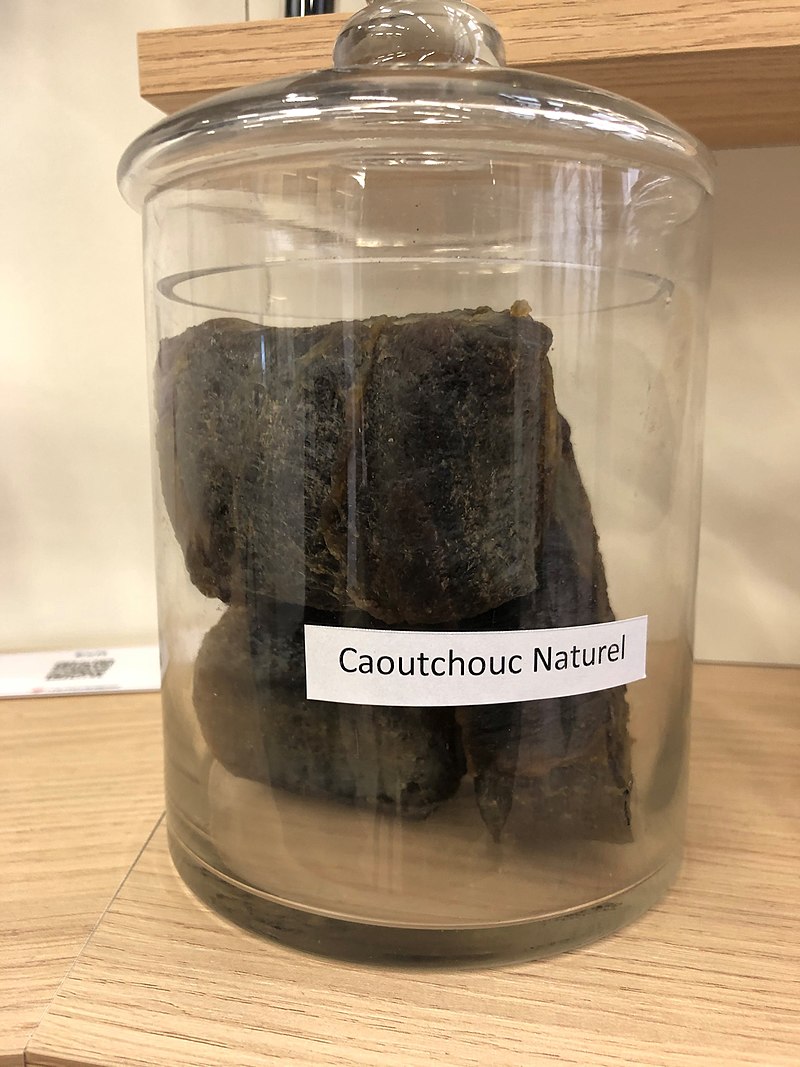
rubber
REDIRECT Natural rubber

latex
thumb|rubber tapping|Tapping of latex from [[Hevea brasiliensis, for use in rubber production]]

Hevea brasiliensis
species of plant
natural rubber
polymers of the organic compound isoprene, with minor impurities of other organic compounds; refined from latex harvested from rubber trees

gutta-percha
thumb|right|Palaquium gutta
synthetic rubber
any artificial elastomer

Hevea
Hevea is a genus of flowering plants in the spurge family, Euphorbiaceae, with about ten members. It is also one of many names used commercially for the wood of the most economically important rubber tree, H. brasiliensis. The genus is native to tropical South America but is widely cultivated in other tropical countries and naturalized in several of them. It was first described in 1775.

Taraxacum kok-saghyz
species of plant

Parthenium argentatum
species of plant

Manilkara bidentata
species of plant
foam rubber
rubber manufactured with a foaming agent

polyisoprene
alt=Pieces of polyisoprene in a jar|thumb|upright|Pieces of polyisoprene in Hutchinson SA|Hutchinson's Research and Innovation center in France

Castilla elastica
species of plant
latex and PVC fetishism
type of fetish towards latex clothing

Asclepias erosa
species of plant
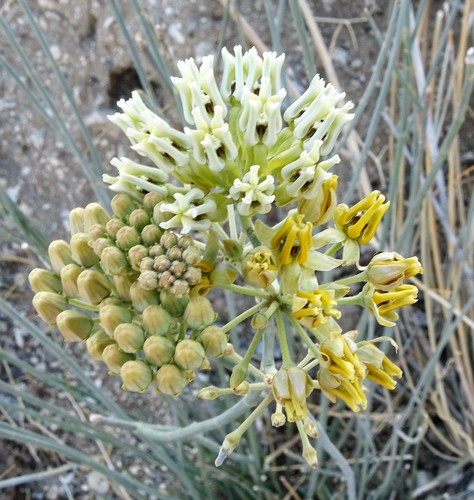
Asclepias subulata
species of plant

Taraxacum hybernum
species of plant
ethylene propylene rubber
type of synthetic elastomer
2-mercaptobenzothiazole
2-Mercaptobenzothiazole is an organosulfur compound with the formula . A white solid, it is a reagent in organic synthesis and, notably, for the sulfur vulcanization of rubber.
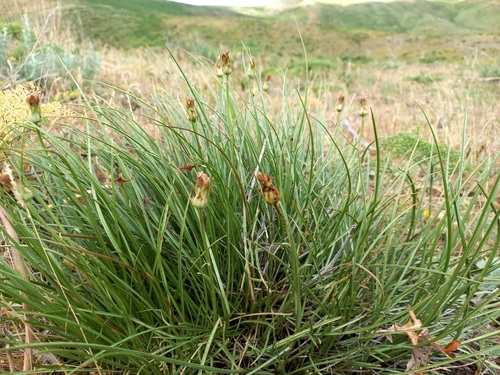
Scorzonera tau-saghyz
species of plant
silicone foam
accelerant
Accelerants, or accelerators, are substances that increase the rate of a natural or artificial chemical process. They play a major role in chemistry, as most chemical reactions can be hastened with an accelerant. Understanding accelerants is crucial in forensic science, engineering, and other fields where controlled chemical reactions are essential. Accelerants function by either altering a chemical bond, speeding up a chemical process, or changing the reaction conditions. Unlike catalysts, accelerants may be consumed during the process.
crumb rubber
granular rubber material from grinding scrap vehicle tires