Category
page 1Saponaceous plants

Dianthus
Dianthus ( ) is a genus of about 340 species of flowering plants in the family Caryophyllaceae, native mainly to Europe and Asia, with a few species in north Africa and in southern Africa, and one species (D. repens) in arctic North America. Common names include carnation (D. caryophyllus), pink (D. plumarius and related species), and sweet william (D. barbatus).

Manilkara zapota
evergreen tree

Althaea officinalis
species of plant
.jpg)
Yucca
Yucca ( ) is both the scientific name and common name for a genus native to North America from Panama to southern Canada. It contains 50 accepted species. In addition to yucca, they are also known as '''Adam's needle or Spanish-bayonet'. The genus is generally classified in the asparagus family in a subfamily with the Agave'', though historically it was part of the lily family. The species range from small shrubby plants to tree-like giants, such as the Joshua tree. All yuccas have rosettes of leaves that taper to points and inflorescences with many flowers that are mainly cream white with thi

Cyclamen
alt=A Botanical scan of Cyclamen persicum including tuber|right|frameless|354x354px
Cyclamen ( or ) is a genus of 25 species of perennial flowering plants in the family Primulaceae. In English, it is known by the common names sowbread or swinebread. Cyclamen species are native to Europe and the Mediterranean Basin east to the Caucasus and Iran, with one species in Somalia. They grow from tubers and are valued for their flowers with upswept petals and variably patterned leaves.
%20W2%20IMG%201899.jpg)
Sapindaceae
The Sapindaceae are a family of flowering plants in the order Sapindales known as the soapberry family. It contains 138 genera and 1,858 accepted species. Examples include horse chestnut, maples, ackee and lychee.

Agrostemma githago
species of plant

Silene vulgaris
species of plant

Lysimachia arvensis
species of plant

Saponaria officinalis
species of plant

saponin
Saponins (Latin sapon, 'soap' + -in, 'one of') are bitter-tasting, usually toxic plant-derived secondary metabolites. They are organic chemicals that become foamy when agitated in water and have high molecular weight. They are present in a wide range of plant species throughout the bark, leaves, stems, roots and flowers but particularly in soapwort (genus Saponaria), a flowering plant, the soapbark tree (Quillaja saponaria), common corn-cockle (Agrostemma githago L.), baby's breath (Gypsophila spp.) and soybeans (Glycine max L.). They are used in soaps, medicines (e.g., drug adjuvants), fire e

Gypsophila
Gypsophila () is a genus of flowering plants in the carnation family, Caryophyllaceae. They are native to Eurasia, Africa, Australia, and the Pacific Islands. Turkey has a particularly high diversity of Gypsophila taxa, with about 35 endemic species. Some Gypsophila are introduced species in other regions.

Saponaria
Saponaria (commonly known as soapworts) is a genus of flowering plants in the family Caryophyllaceae. It is usually characterized by pink or white flowers.

Gypsophila vaccaria
species of plant

Quillaja saponaria
species of plant

Samolus valerandi
species of plant

Silene baccifera
species of the genus Silene

Sapindus saponaria
species of plant

Sapindus mukorossi
species of plant

Ceanothus
Ceanothus is a genus of about 50–60 species of nitrogen-fixing shrubs and small trees in the buckthorn family (Rhamnaceae). Common names for members of this genus are buckbrush, California lilac, soap bush, or just ceanothus. The genus is native to North America, ranging from Canada and the United States south through Mexico to Panama, with the center of diversity in the California floristic province of the western United States and Mexico, where around ~42 species are endemic out of the roughly ~58 species in the genus. Most Ceanothus are shrubs, with some species rarely tree-like while other

Chlorogalum
The common names soap plant, soaproot and amole refer to the genus Chlorogalum. They are native to western North America, with some species in Oregon but they are mostly found in California. Common names of the genus and several species derive from their use as soap.

Yucca elata
species of perennial plant

Agave lecheguilla
species of plant

Leontice
Leontice is a group of perennial, tuberous herbs in the family Berberidaceae, first described as a genus by Linnaeus in 1753.
Leontice leontopetalum
species of plant
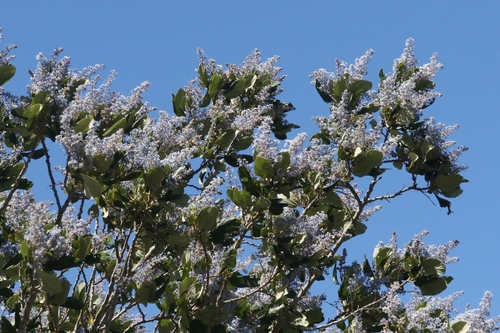
Ceanothus arboreus
species of plants

Chlorogalum pomeridianum
species of plant
Sarcoca dodecandra
species of plant
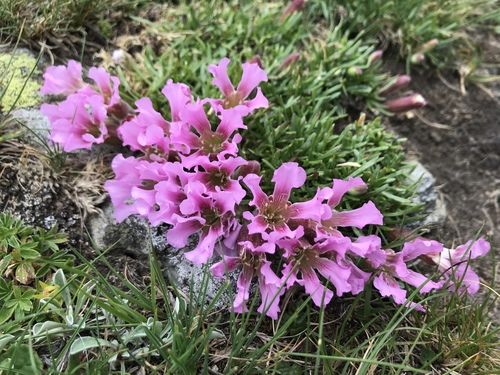
Saponaria pumila
species of plant

Jacquinia keyensis
species of plant

Noltea
Noltea is a monotypic genus of flowering plants. The single species, Noltea africana (commonly known as the soap bush or soap dogwood), is a small, bushy tree of about 4 metres that is endemic to the southern Cape of South Africa, where it grows beside rivers and in pockets of afro-montane forest. It has small, white, mildly fragrant flowers and when it grows larger it assumes a willow shape, with slightly weeping branches. The leaves are long and serrated and the young growth is purple in colour.
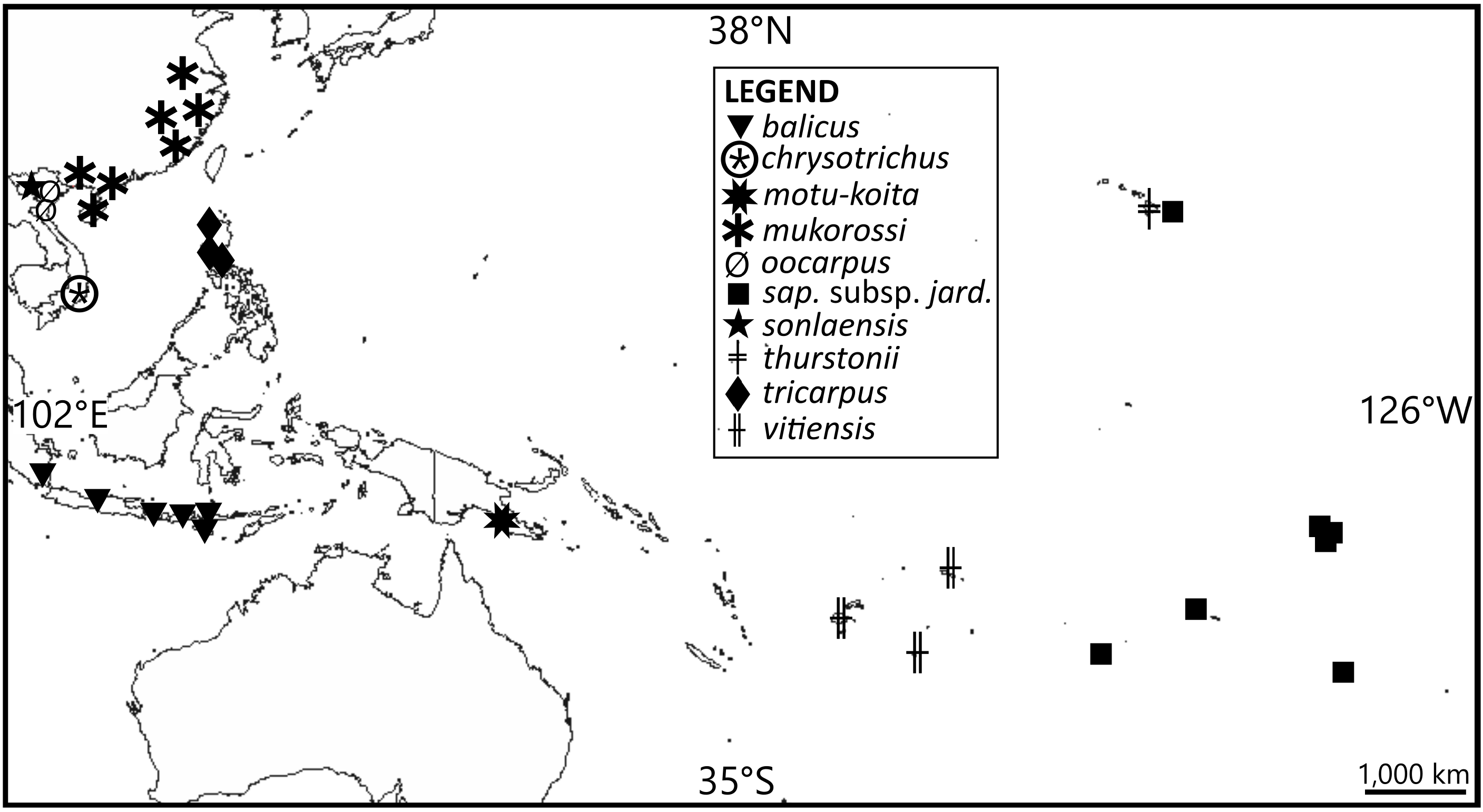
Sapindus chrysotrichus
species of plant