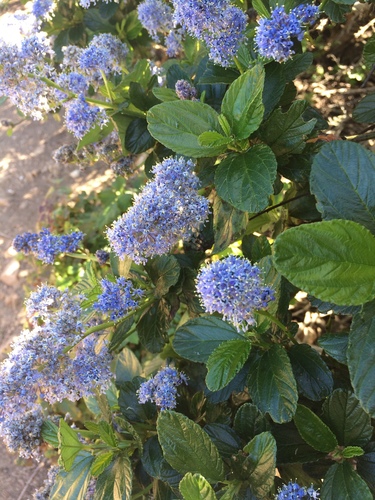
(c) sjdegen, some rights reserved (CC BY-NC) · cc-by-nc
Ceanothus
Sign in to saveAlso known as redroot, New Jersey tea
Ceanothus is a genus of about 50–60 species of nitrogen-fixing shrubs and small trees in the buckthorn family (Rhamnaceae). Common names for members of this genus are buckbrush, California lilac, soap bush, or just ceanothus. The genus is native to North America, ranging from Canada and the United States south through Mexico to Panama, with the center of diversity in the California floristic province of the western United States and Mexico, where around ~42 species are endemic out of the roughly ~58 species in the genus. Most Ceanothus are shrubs, with some species rarely tree-like while other
Species
blueblossom
GENUS
- KingdomPlantae
- PhylumTracheophyta
- ClassMagnoliopsida
- OrderRosales
- FamilyRhamnaceae
via GBIF · Kew POWO
Museum specimens
- Specimen records
- 2,294
- With media
- 1,666
- Family
- Rhamnaceae
- Collections
- IBUNAM, FC-UNAM, UCMP, FCF-UANL, SD, INECOL
- Recorded in
- Mexico, United States
Research
110 papersvia PubMed
Wikidata facts
- Instance of
- taxon
- Parent taxon
- Rhamnaceae
- Image
- Ceanothus americanus.jpg
Show 8 more facts
- taxon rank
- genus
- taxon name
- Ceanothus
- Commons category
- Ceanothus
- topic's main category
- Category:Ceanothus
- Commons gallery
- Ceanothus
- taxon common name
- Ceanothus
- described by source
- Encyclopædia Britannica 11th edition
Sources (2)
via Wikidata · CC0
~15 min read
Encyclopedic overview
15 sectionsContents
- Description
- Taxonomy
- Species
- Subgenus ''Ceanothus''
- Subgenus ''Cerastes''
- Hybrids
- Distribution
- Uses
- Wildlife
- Cultivation
- Royal Horticultural Society's Award of Garden Merit cultivars
- Propagation
- Other uses
- Nitrogen fixation
- References
Ceanothus is a genus of about 50–60 species of nitrogen-fixing shrubs and small trees in the buckthorn family (Rhamnaceae). Common names for members of this genus are buckbrush, California lilac, soap bush, or just ceanothus. The genus is native to North America, ranging from Canada and the United States south through Mexico to Panama, with the center of diversity in the California floristic province of the western United States and Mexico, where around ~42 species are endemic out of the roughly ~58 species in the genus. Most Ceanothus are shrubs, with some species rarely tree-like while others have a short mat-like habit. Species of Ceanothus can be evergreen or deciduous, may have thorns, and also have a diverse number of petal colors ranging from cream to deep blue to pink. Some reproduce strictly from seed, while others can resprout from their roots after a fire.
Valued as ornamental plants, prolific hybridization in Ceanothus makes them a popular source of horticultural cultivars, of which there are over 200 named selections. Ornamental Ceanothus hybrids have been cultivated since the 1830s, and a number of them have won the Royal Horticultural Society's Award of Garden Merit.
Excerpted from Wikipedia’s “Ceanothus” article, available under the CC BY-SA 4.0 licence.