Category
page 1Semantics

translation
thumb|upright=1.7|right|King Charles V of France|Charles V the Wise commissions a translation of [[Aristotle. First square shows his ordering the translation; second square, the translation being made. Third and fourth squares show the finished translation being brought to, and then presented to, the King.]]

semantics
thumb|alt=Diagram of the relation between word, object, and thought|A central topic in semantics concerns the relation between language, world, and mental concepts.|class=skin-invert-image
Semantics is the study of linguistic meaning. It examines what meaning is, how words get their meaning, and how the meaning of a complex expression depends on its parts. Part of this process involves the distinction between sense and reference. Sense is given by the ideas and concepts associated with an expression while reference is the object to which an expression points. Semantics contrasts with syntax, w

pseudonym
A pseudonym (; ) or alias () is a fictitious name that a person assumes for a particular purpose, which differs from their original or true name (orthonym). This also differs from a new name that entirely or legally replaces an individual's own. Many pseudonym holders use them because they wish to remain anonymous and maintain privacy, though this may be difficult to achieve as a result of legal issues.

demonym
A demonym (; ) or 'gentilic' () is a word that identifies a group of people (inhabitants, residents, natives) in relation to a particular place. Demonyms are usually derived from the name of the place (hamlet, village, town, city, region, province, state, country, and continent). Demonyms are used to designate all people (the general population) of a particular place, regardless of ethnic, linguistic, religious or other cultural differences that may exist within the population of that place. Examples of demonyms include Cochabambino, for someone from the city of Cochabamba; Indian for a person

definition
thumb|A definition states the meaning of a word using other words. This is sometimes challenging. Common dictionaries contain lexical descriptive definitions, but there are various types of definition – all with different purposes and focuses.

metonymy
thumb|The Pentagon is the headquarters building of the [[United States Department of Defense and is a common metonym for the US military and its leadership]]
Metonymy () is a figure of speech in which a concept is referred to by the name of something associated with that thing or concept. For example, the word "suit" may refer to a person from groups commonly seen wearing business attire, such as business executives, bankers, or lawyers.

oxymoron
An oxymoron (plurals: oxymorons and oxymora) is a figure of speech that juxtaposes concepts with opposite meanings within a word or in a phrase that is a self-contradiction. Examples would be "bittersweet" or "cruel kindness". As a rhetorical device, an oxymoron illustrates a point to communicate and reveal a paradox. A general meaning of "contradiction in terms" is recorded by the 1902 edition of the Oxford English Dictionary.
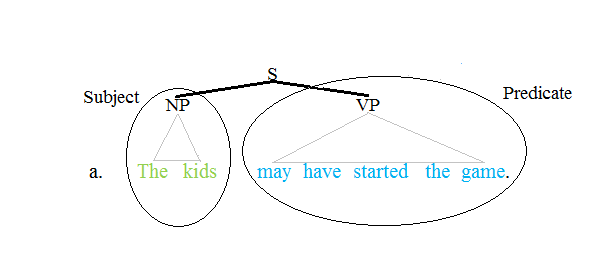
predicate
sentence constituent
pragmatics
In linguistics and the philosophy of language, pragmatics is the study of how context contributes to meaning. The field of study evaluates how human language is utilized in social interactions, as well as the relationship between the interpreter and the interpreted. Linguists who specialize in pragmatics are called pragmaticians. The field has been represented since 1986 by the International Pragmatics Association (IPrA).
.svg)
analogy
Analogy is a comparison or correspondence between two things (or two groups of things) because of a third element that they are considered to share.
inference
Inferences are steps in logical reasoning, moving from premises to logical consequences; etymologically, the word infer means to "carry forward". Inference is theoretically traditionally divided into deduction and induction, a distinction that dates at least to Aristotle (300s BC). Deduction is inference deriving logical conclusions from premises known or assumed to be true, with the laws of valid inference being studied in logic. Induction is inference from particular evidence to a universal conclusion. A third type of inference is sometimes distinguished, notably by Charles Sanders Peirce, c

discourse
Discourse is a generalization of the notion of a conversation to any form of communication. Discourse is a major topic in social theory, with work spanning fields such as sociology, anthropology, continental philosophy, and discourse analysis. Following work by Michel Foucault, these fields view discourse as a system of thought, knowledge, or communication that constructs our world experience. Since control of discourse amounts to control of how the world is perceived, social theory often studies discourse as a window into power. Within theoretical linguistics, discourse is understood more nar

pun
thumb|upright=1.25|Punch (magazine)|Punch, 25 February 1914. The cartoon is a pun on the word "Jamaica", which pronunciation is a [[homonym to the clipped form of "Did you make her?"
]]
pleonasm
Pleonasm (; , ) is redundancy in linguistic expression, such as "black darkness", "burning fire", or "the man he said". It is a manifestation of tautology by traditional rhetorical criteria. Pleonasm may also be used for emphasis, or because the phrase has become established in a certain form. Tautology and pleonasm are not consistently differentiated in literature.
grammatical mood
grammatical feature of verbs, used for signaling modality

logical negation
In logic, negation, also called the logical not or logical complement, is an operation that takes a proposition P to another proposition "not P", written \neg P, \mathord{\sim} P, P^\prime or \overline{P}. It is interpreted intuitively as being true when P is false, and false when P is true. For example, if P is "The dog runs", then "not P" is "The dog does not run". An operand of a negation is called a negand or negatum.

logical disjunction
logical connective OR
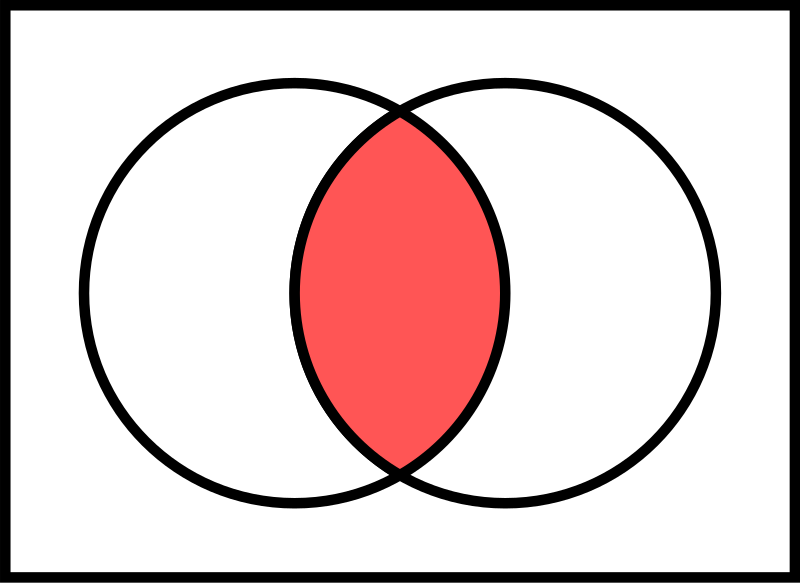
logical conjunction
logical connective AND

truth table
Mathematical table used in logic

allusion
Allusion, or alluding, is a figure of speech that makes a reference to someone or something (a person, object, location, etc.) without mentioning it by name or without explaining how it relates to the given context, so that the audience must realize the connection in their own minds. When a connection is directly and explicitly explained (as opposed to indirectly implied), it is instead often simply termed a reference. In the arts, a literary allusion puts the alluded text in a new context under which it assumes new meanings and denotations. Literary allusion is closely related to parody and p

material implication
logical connective between two assertions, frequently symbolized by a (most often double) arrow to the right

quantifier
logical operator specifying how many entities in the domain of discourse that satisfy an open formula
tautology
logical formula which is true in every possible interpretation

connotation
A connotation is a commonly understood cultural or emotional association that any given word or phrase carries, in addition to its explicit or literal meaning, which is its denotation.

ambiguity
thumb|250px|alt=Drawing of the back an anthropomorphic caterpillar, seated on a toadstool amid grass and flowers, blowing smoke from a hookah; a blonde girl in an old-fashioned frock is standing on tiptoe to peer at the caterpillar over the toadstool's edge|Sir John Tenniel's illustration of the Caterpillar for [[Lewis Carroll's ''Alice's Adventures in Wonderland'' is noted for its ambiguous central figure, whose head can be viewed as either a man's face with a pointed nose and chin smoking a pipe or as the end of an actual caterpillar, with the first two right "true" legs visible (1865).]]
modal logic
formal logic able to express concepts such as necessity, possibility, provability, obligation, knowledge etc.
tautology
statement which repeats the same idea, using near-synonymous morphemes, words, or phrases
speech act
utterance that serves a performative function

fidelity
thumb|right|220px|Doge's Palace, Venice|Palazzo Ducale in Venice: capital # 28 in the porch, featuring Virtues and vices — In fidelitate nulli gero (Fidelity)
exclusive or
true when either but not both inputs are true

reference
In logic, a reference is a relationship between objects in which one object designates, or acts as a means by which to connect to or link to, another object. The first object in this relation is said to refer to the second object. It is called a name for the second object. The next object, the one to which the first object refers, is called the referent of the first object. A name is usually a phrase or expression, or some other symbolic representation. Its referent may be anything – a material object, a person, an event, an activity, or an abstract concept.

deixis
In linguistics, deixis () is the use of words or phrases to refer to a particular time (e.g. then), place (e.g. here), or person (e.g. you) relative to the context of the utterance. Deixis exists in all known natural languages and is closely related to anaphora, with a sometimes unclear distinction between the two. In linguistic anthropology, deixis is seen as the same as, or a subclass of, indexicality.
valency
the number of arguments controlled by a predicate
anaphora
type of expression whose reference depends upon another referential element
sorites paradox
paradox that a heap of sand and a heap of sand minus one grain is also a heap, then one grain of sand is a heap
agent
in semantics, thematic relation that refers to the cause or initiator (often intentional) of an event

retronym
A retronym is a newer name for something that differentiates it from something else that is newer, similar, or seen in everyday life, thus avoiding confusion between the two.
denotation
In philosophy and linguistics, the denotation of a word or expression is its strictly literal meaning. For instance, the English word "warm" denotes the property of having high temperature. Denotation is contrasted with other aspects of meaning, in particular connotation. For instance, the word "warm" may evoke calmness, coziness, or kindness (as in the warmth of someone's personality) but these associations are not part of the word's denotation. Similarly, an expression's denotation is separate from pragmatic inferences it may trigger. For instance, describing something as "warm" often implic
categorization
cognitive process in which ideas and objects are recognized, differentiated, and understood
word-sense disambiguation
problem of natural language processing; identifying which sense of a word (has multiple meanings) is used in a sentence
linguistic modality
feature of language that allows for communicating things about, or based on, situations which need not be actual
endonym and exonym
linguistic terms
topic–comment
terms describing sentence structure in linguistics
semantic field
set of words grouped by meaning referring to a specific subject
onomasiology
Onomasiology (from onomāzο 'to name', which in turn is from ὄνομα onoma 'name') is a branch of linguistics concerned with the question "how do you express X?" It is in fact most commonly understood as a branch of lexicology, the study of words (although some apply the term also to grammar and conversation).
possible world
in philosophy, a complete and consistent way the world is or could have been
informal logic
branch of logic related to reasoning and argumentation
thematic relation
role that an entity plays with respect to a specific action or state
presupposition
In linguistics and philosophy, a presupposition is an implicit assumption about the world or background belief relating to an utterance whose truth is taken for granted in discourse. Examples of presuppositions include:
Jane no longer writes fiction.
Presupposition: Jane once wrote fiction.
Have you stopped eating meat?
Presupposition: you had once eaten meat.
Have you talked to Hans?
Presupposition: Hans exists.
coherence
in linguistics, what makes a text semantically meaningful
direct speech
sentence that reports speech or thought in its original form
conceptual model
representation of a system, made of the composition of concepts
semantic change
form of language change regarding the evolution of word usage
semantic memory
type of memory referring to general world knowledge that we have accumulated throughout our lives, which is intertwined in experience and dependent on culture
prototype theory
mode of graded categorization in cognitive science
mondegreen
A mondegreen () is a mishearing or misinterpretation of a phrase in a way that gives it a new meaning. Mondegreens are most often created by a person listening to a poem or a song; the listener, being unable to hear a lyric clearly, substitutes words that sound similar and make some kind of sense. The American writer Sylvia Wright coined the term in 1954, recalling a childhood memory of her mother reading the Scottish ballad "The Bonnie Earl o' Moray", and mishearing the words "laid him on the green" as "Lady Mondegreen".

cataphora
thumb | right | alt=A linguistic diagram of a cataphora in German | Example of a cataphora in German
In linguistics, cataphora (; from Greek, καταφορά, kataphora, "a downward motion" from κατά, kata, "downwards" and φέρω, pherō, "I carry") is the use of an expression or word that co-refers with a later, more specific expression in the discourse. The preceding expression, whose meaning is determined or specified by the later expression, may be called a cataphor. Cataphora is in contrast to anaphora which denotes cases where the order of the expressions is the reverse of that found in cataphora.

aptronym
thumb|A butcher's shop in Leerdam owned by "C. van der Ham"
An aptronym, aptonym, or euonym is a personal name aptly or peculiarly suited to its owner (e.g. their occupation). The word "euonym" (eu- + -onym), dated to late 1800, is defined as "a name well suited to the person, place, or thing named".
patient
grammar: participant of a situation upon whom an action is carried out
dynamic and formal equivalence
two dissimilar translation approaches