Category
page 1Sheep and goat diseases

leptospirosis

brucellosis
Brucellosis is a zoonosis (zoonotic disease) spread primarily via ingestion of unpasteurized milk from infected animals. It is also known as undulant fever, Malta fever, and Mediterranean fever.

foot-and-mouth disease
infectious and sometimes fatal viral disease that affects cloven-hoofed animals and caused by apthovirus

candidiasis

tularemia

Rift Valley fever
human disease
Q fever
disease caused by infection with Coxiella burnetii
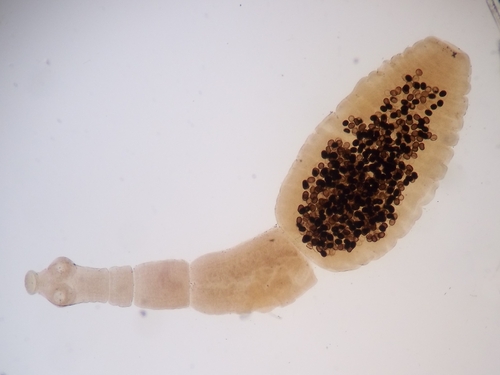
Echinococcus granulosus
species of worm

myiasis
Myiasis ( ), also known as flystrike or fly strike, is the parasitic infestation of the body of a live animal by fly larvae (maggots) that grow inside the host while feeding on its tissue. Although flies are most commonly attracted to open wounds and urine- or feces-soaked fur, some species (including the most common myiatic flies—the botfly, blowfly, and screwfly) can create an infestation even on unbroken skin. Non-myiatic flies (such as the common housefly) can be responsible for accidental myiasis.

scrapie
thumb|Ewe with scrapie with weight loss and hunched appearance
thumb|Same ewe as above with bare patches on rear end from scraping
paratuberculosis
Paratuberculosis is a contagious, chronic and sometimes fatal infection that primarily affects the small intestine of ruminants. It is caused by the bacterium Mycobacterium avium subspecies paratuberculosis. Infections normally affect ruminants (mammals that have four compartments of their stomachs, of which the rumen is one), but have also been seen in a variety of nonruminant species, including rabbits, foxes, and birds. Horses, dogs, and nonhuman primates have been infected experimentally. Paratuberculosis is found worldwide, with some states in Australia (where it is usually called bovine

cryptococcosis
Cryptococcosis is a potentially fatal fungal infection of mainly the lungs, presenting as a pneumonia, and in the brain, where it appears as a meningitis. Coughing, difficulty breathing, chest pain and fever are seen when the lungs are infected. When the brain is infected, symptoms include headache, fever, neck pain, nausea and vomiting, light sensitivity and confusion or changes in behavior. It can also affect other parts of the body including skin, where it may appear as several fluid-filled nodules with dead tissue.

sporotrichosis
Sporotrichosis, also known as '''rose handler's disease', is a fungal infection that may be localised to skin, lungs, bone and joint, or become systemic. It presents with firm painless nodules that later ulcerate. Following initial exposure to Sporothrix schenckii'', the disease typically progresses over a period of a week to several months. Serious complications may develop in people who have a weakened immune system.
fainting goat
goat breed

Haemonchus contortus
very common parasite of ruminants that attatch to the abomasal mucosa and feed on the blood

Small ruminant morbillivirus
contagious disease primarily affecting goats and sheep
contagious pustular dermatitis
skin disease and general infection in sheep, goats, chamois, reindeer and muskrats
blackleg
infectious bacterial disease

Schmallenberg virus
species of virus
foot rot
hoof infection commonly found in sheep, goats, and cattle
braxy
Braxy is an infectious disease which causes sudden death in sheep. It is caused by the bacterium Clostridium septicum.

louping ill
animal disease

Sheeppox virus
Sheeppox (or sheep pox, known as in Latin, in French, in German) is a highly contagious disease of sheep caused by a poxvirus different from the benign orf (or contagious ecthyma). This virus is in the family Poxviridae and genus Capripoxvirus. Sheeppox virus (SPV) is the most severe of all the animal pox diseases and can result in some of the most significant economic consequences due to poor wool and leather quality.
Akabane virus
species of virus
zygomycosis
Zygomycosis is the broadest term to refer to infections caused by bread mold fungi of the zygomycota phylum. However, because zygomycota has been identified as polyphyletic, and is not included in modern fungal classification systems, the diseases that zygomycosis can refer to are better called by their specific names: mucormycosis (after Mucorales), phycomycosis (after Phycomycetes) and basidiobolomycosis (after Basidiobolus). These rare yet serious and potentially life-threatening fungal infections usually affect the face or oropharyngeal (nose and mouth) cavity. Zygomycosis type infections
caseous lymphadenitis
animal disease
Corynebacterium pseudotuberculosis
species of bacterium
Mycoplasma agalactiae
species of bacterium
nutritional muscular dystrophy
disease caused by a deficiency of selenium and vitamin E in dietary intake
Visna-maedi virus
species of virus
contagious caprine pleuropneumonia
bacterial disease of goats
Mycoplasma adleri
species of gram-negative, anaerobic, bacteria isolated from the abscess of a goat
Jaagsiekte sheep retrovirus
species of virus
Chabertia ovina
species of nematodes
polioencephalomalacia
thumb|"Torticollis|Star-gazing" ewe with PEM
thumb|lateral recumbency and opisthotonos
Polioencephalomalacia (PEM), also referred to as cerebrocortical necrosis (CCN), is a neurological disease seen in ruminants that is caused by multiple factors, one of which is thiamine depletion in the body. Thiamine (vitamin B1) is a key chemical in glucose metabolism that, when deficient, is most threatening to neurological activity. In addition to altered thiamine status, an association with high sulfur intake has been observed as a potential cause of PEM. PEM may also be caused by other toxic or metabol
Mycoplasma ovipneumoniae
species of bacterium
ovine pulmonary adenocarcinoma
animal disease
border disease (sheep)
viral disease of sheep and goats caused by Pestivirus D
caprine arthritis encephalitis
lentiviral infection in goats that can lead to chronic disease of joints and, rarely, encephalitis