Category
page 1Sociological terminology

ideology
An ideology is a set of beliefs or values attributed to a person or group of persons, especially those held for reasons that are not purely about belief in certain knowledge, in which "practical elements are as prominent as theoretical ones". Formerly applied primarily to economic, political, or religious theories and policies, in a tradition going back to Karl Marx and Friedrich Engels, more recent use treats the term as mainly condemnatory.

work
activities performed as a means of support

tradition
thumb|upright=1.1|Traditions, an 1895 bronze tympanum (architecture)|tympanum by [[Olin Levi Warner over the main entrance of the Thomas Jefferson Building at the Library of Congress in Washington, D.C.]]
A tradition is a system of beliefs or behaviors (folk custom) passed down within a group of people or society with symbolic meaning or special significance with origins in the past. A component of cultural expressions and folklore, common examples include holidays or impractical but socially meaningful clothes (like lawyers' wigs or military officers' spurs), but the idea has also been applie

power
ability to influence the behavior of others

social class
group of people categorized in a hierarchy based on socioeconomic factors

trust
assumption of and reliance on the honesty of another party

social network
theoretical concept in sociology

social group
two or more humans who interact with one another

solidarity
thumbnail|upright=1.1|A raised fist symbolizing solidarity of the worker movement

success
thumb|A Nigerian man receives the [[smallpox vaccine in February 1969, as part of a global program that successfully eradicated the disease from the human population.]]
Success is the state or condition of meeting a defined range of expectations. It may be viewed as the opposite of failure. The criteria for success depend on context, and may be relative to a particular observer or belief system. One person might consider a success what another person considers a failure, particularly in cases of direct competition or a zero-sum game. Similarly, the degree of success or failure in a situation m

social contract
concept in political philosophy

socialization
In sociology, socialization (or socialisation) is the process through which individuals internalize the norms, customs, values and ideologies of their society. It involves both learning and teaching and is the primary means of maintaining social and cultural continuity over time. It is a lifelong process that shapes the behavior, beliefs, and actions of adults as well as of children.

social alienation
condition in social relationships

social norm
informal understanding of acceptable conduct
social status
position within social structure
responsibility
Responsibility may refer to:

identity
qualities, beliefs, personality, looks and/or expressions that distinguish a person or group

Western culture
heritage of norms, customs, belief and political systems, and artifacts and technologies associated with Europe (both indigenous and foreign origin)
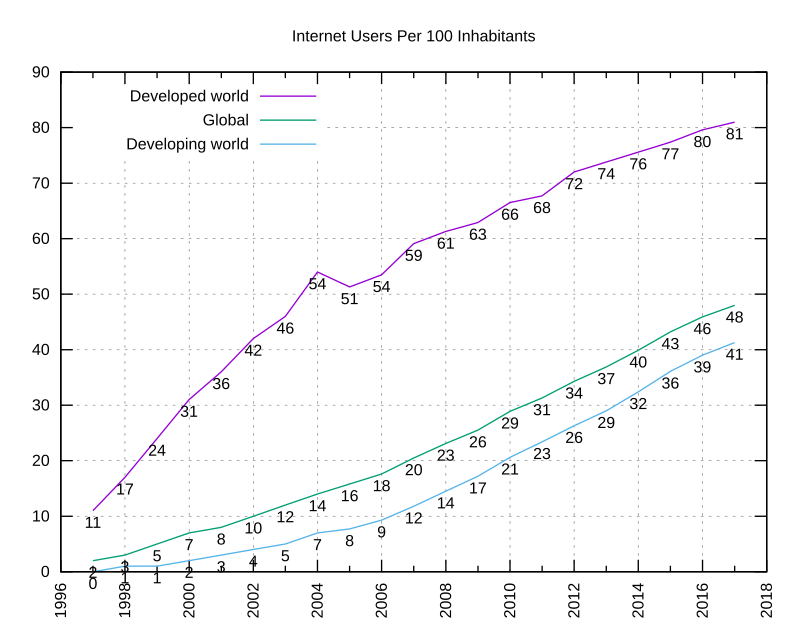
information society
form of society

quality of life
term for the quality of the various domains in human life and general well-being of individuals and societies

social structure
aggregate of patterned social arrangements in society
lifestyle
Lifestyle is the interests, opinions, behaviours, and behavioural orientations of an individual, group, or culture. The term "style of life" () was introduced by Austrian psychologist Alfred Adler in his 1929 book, The Case of Miss R., with the meaning of "a person's basic character as established early in childhood". The broader sense of lifestyle as a "way or style of living" has been documented since 1961. Lifestyle is a combination of determining intangible or tangible factors. Tangible factors relate specifically to demographic variables, i.e. an individual's demographic profile, whe
social capital
sociology concept

sphere of influence
area where a state has a level of political, military, economic or cultural influence
role
A role (also rôle or social role) is a set of connected behaviors, rights, obligations, beliefs, and norms as conceptualized by people in a social situation. It is an
expected or free or continuously changing behavior and may have a given individual social status or social position. It is vital to both functionalist and interactionist understandings of society. Social role theory posits the following about social behavior:
social exclusion
form of social disadvantage and relegation to the fringe of society

social stigma
type of discrimination or disapproval based on perceivable social characteristics that serve to distinguish a person from other members of a society

Ikigai
is a Japanese concept of an individual's definition of the meaning of their life.

modernity
Modernity, a topic in the humanities and social sciences, is both a historical period (the modern era) and the ensemble of particular socio-cultural norms, attitudes, and practices that arose in the wake of the Renaissancein the Age of Reason of 17th-century thought and the 18th-century Enlightenment. Commentators variously consider the era of modernity to have ended by 1930, with World War II in 1945, or as late as the period falling between the 1980s and 1990s; the following era is often referred to as "postmodernity". The term "contemporary history" is also used to refer to the post-1945 ti
anomie
In sociology, anomie or anomy () is a social condition defined by an uprooting or breakdown of any moral values, standards or guidance for individuals to follow. Anomie is believed to possibly evolve from conflict of belief systems and causes breakdown of social bonds between an individual and the community (both economic and primary socialization).

neurodiversity
thumb|right|Autistic art depicting the natural diversity of human minds

public
thumb|right|300px|The diverse public is symbolized in this sculpture situated in Montreal, Canada named "".
In public relations and communication science, publics are groups of individual people, and the public (a.k.a. the general public) is the totality of such groupings. This is a different concept to the sociological concept of the Öffentlichkeit or public sphere.

authority
asymmetric, hierarchical social relationship

self-fulfilling prophecy
prediction that directly or indirectly causes itself to become true, by the very terms of the prophecy itself, due to positive feedback between belief and behavior
Matilda effect
bias against acknowledging the achievements of women scientists

taste
personal and cultural pattern of choice and preference
public sphere
area in social life
social environment
setting in which people live or something happens, from a social perspective

popularity
In sociology, popularity is how much a person, idea, place, item or other concept is either liked or accorded status by other people. Liking can be due to reciprocal liking, interpersonal attraction, and similar factors. Social status can be due to dominance, superiority, and similar factors. For example, a kind person may be considered likable and therefore more popular than another person, and a wealthy person may be considered superior and therefore more popular than another person.
single person
marital status; person not in a marital relationship
Matthew effect
greater accumulation of wealth or status by those who already have it
mode of production
Marxist term for way of producing goods

hygge
thumb|Illustration of a hygge situation, with Meik Wiking's The Little Book of Hygge
thumb|"Hygge" sign in a restaurant in Nørrebro
base and superstructure
element of Marxist theory
social system
patterned series of interrelationships existing between individuals, groups, and institutions
social action
act which takes into account the actions and reactions of (other) individuals or agents
institutional racism
racism rooted in society's history
socioeconomics
REDIRECT Economic_sociology

tribalism
Tribalism is the state of being organized by, or advocating for, tribes or tribal lifestyles. Human evolution primarily occurred in small hunter-gatherer groups, as opposed to in larger and more recently settled agricultural societies or civilizations. With a negative connotation and in a political context, tribalism can also mean discriminatory behavior or attitudes towards out-groups, based on in-group loyalty.

mores
thumb|300px|right|A 19th-century children's book informs its readers that the Dutch people|Dutch were a "very industrious race", and that Chinese children were "very obedient to their parents".

socialite
thumb|Portrait of Georgiana, Duchess of Devonshire by [[Thomas Gainsborough. Lady Georgiana Cavendish, (1757–1806), an English socialite from the late 18th century]]
A socialite is a person, typically a woman from a wealthy or aristocratic background, who is prominent in high society. A socialite generally spends a significant amount of time attending various fashionable social gatherings, instead of having traditional employment.
social order
set or system of linked social structures, institutions, relations, customs, values and practices
McDonaldization
McDonaldization is a McWord. The McWord concept was first proposed by sociologist George Ritzer in his 1983 article in the Journal of American Culture and developed in his 1993 book The McDonaldization of Society. McDonaldization is a reconceptualization of rationalization and scientific management. Where Max Weber used the model of the bureaucracy to represent the direction of this changing society, Ritzer sees the fast-food restaurant as a more representative contemporary paradigm. Critiques of the McDonaldization thesis include Ahuvia and Izberk-Bilgi’s analysis of a countertrend they call
collective consciousness
shared beliefs and ideas in society
paralanguage
Paralanguage, also known as vocalics, is a component of meta-communication that may modify meaning, give nuanced meaning, or convey emotion, by using suprasegmental techniques such as prosody, including pitch, volume, intonation, etc. It is sometimes defined as relating to nonphonemic properties only. Paralanguage may be expressed consciously or unconsciously.
habitus
concept in sociology
social responsibility
ethical theory that an entity, be it an organization or individual, has an obligation to act to benefit society at large
sociological theory
theory advanced by social scientists to explain facts about the social world
social conflict
struggle for agency or power in society, when two or more actors oppose each other in social interaction
intersubjectivity
Intersubjectivity describes the shared understanding that emerges from interpersonal interactions.