Category
page 1Spirurida

onchocerciasis

Dirofilaria immitis
species of worm
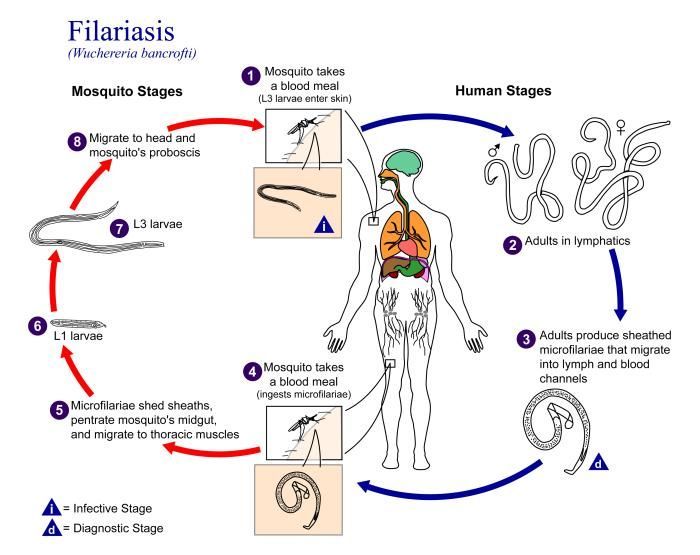
Wuchereria bancrofti
species of parasitic worm

Dracunculus medinensis
species of nematode

Loa loa
species of worm
Spirurida
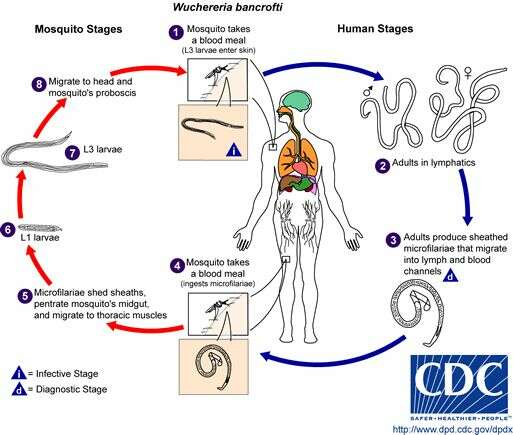
Spirurida falls under the phylum Nematoda class Chromadorea and order Rhabditida. They are characterized by their elongated, cylindrical bodies and unsegmented structure. Like all nematodes, they have neither a circulatory nor a respiratory system.

Brugia malayi
species of parasitic worm
Onchocerca volvulus
species of nematode
%20Surrounded%20by%20Neoplastic%20Lymphocytes%201.jpg)
Filarioidea
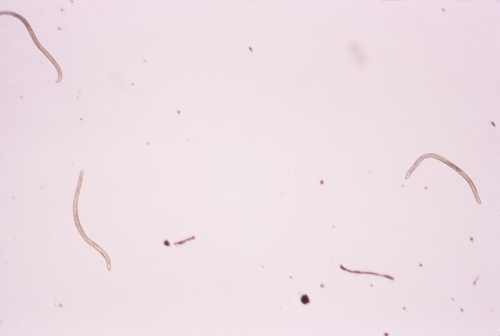
The Filarioidea are a superfamily of highly specialised parasitic nematodes. Species within this superfamily are known as filarial worms or filariae (singular filaria). Infections with parasitic filarial worms cause disease conditions generically known as filariasis. Drugs against these worms are known as filaricides.

Dirofilaria
Dirofilaria is a filarial (arthropod-borne) nematode (roundworm), in the family Onchocercidae. Some species cause dirofilariasis, a state of parasitic infection, in humans and other animals.

Dirofilaria repens
species of worm
Onchocercidae
The Onchocercidae are a family of nematodes in the superfamily Filarioidea. This family includes some of the most devastating human parasitic diseases, such as lymphatic filariasis, onchocerciasis, loiasis, and other filariases.
Placentonema gigantissima
species of Secernentea, a parasite of the placenta of sperm whales

Onchocerca
Onchocerca is a genus of parasitic roundworm. It contains one human parasite – Onchocerca volvulus – which is responsible for the neglected disease Onchocerciasis, also known as "river blindness" because the infected humans tend to live near rivers where host black flies live. Over 40 million people are infected in Africa, Central America, and South America. Other species affect cattle, horses, etc.
Anguillicoloides crassus
species of worm

Spiruridae
Spiruridae is family of nematodes in the order Spirurida. An unidentified parasitic larval member of this family has been recorded in the marsh rice rat (Oryzomys palustris) in a salt marsh at Cedar Key, Florida, and also in fiddler crabs (Uca) there; it is perhaps a bird parasite that does not reach maturity in the rice rat.
thelaziasis
Thelaziasis is the term for infestation with parasitic nematodes of the genus Thelazia. The adults of all Thelazia species discovered so far inhabit the eyes and associated tissues (such as eyelids, tear ducts, etc.) of various mammal and bird hosts, including humans. Thelazia nematodes are often referred to as "eyeworms".
Thelaziidae
Thelaziidae is a family of spirurian nematodes, which form the mid-sized lineage of the superfamily Thelazioidea. Like all nematodes, they have neither a circulatory nor a respiratory system.
Spirocerca lupi
species of worm
Mansonella
Mansonella is a genus of parasitic nematodes. It includes three species that are responsible for the disease mansonelliasis: Mansonella ozzardi, M. perstans, and M. streptocerca. A potential fourth species has been identified in Gabon in 2015 and proposed as a new species Mansonella sp. "DEUX". Whole-genome sequences from Mansonella perstans, Mansonella ozzardi, and the newly proposed species Mansonella sp. "DEUX" have been assembled.

Acuariidae
Acuariidae is a family of spirurian nematodes. Like all nematodes, they have neither a circulatory nor a respiratory system. They are the only family in superfamily Acuarioidea, and number about 40 genera and 300 species, most of which are parasites of birds.

Gongylonema pulchrum
species of worm
Physalopteridae
Physalopteridae is a family of spirurian nematodes, which belongs to the superfamily Physalopteroidea. Like all nematodes, they have neither a circulatory nor a respiratory system.

Gnathostoma
Gnathostoma is a genus of parasitic nematodes with multi-host life-cycles. Successive hosts include copepods, fish and amphibians, and carnivorous and omnivorous mammals. Infection with nematodes of some Gnathostoma species causes gnathostomiasis in humans.
Thelazia callipaeda
species of worm

Habronema
Habronema is a genus of nematodes in the order Spirurida.
Brugia timori
species of worm

Thelazia
Thelazia is a genus of nematode worms which parasitize the eyes and associated tissues of various bird and mammal hosts, including humans. They are often called "eyeworms", and infestation with Thelazia species is referred to as "thelaziasis" (occasionally spelled "thelaziosis"). Adults are usually found in the eyelids, tear glands, tear ducts, or the so-called "third eyelid" (nictitating membrane). Occasionally, they are found in the eyeball itself, either under the conjunctiva (the membrane that covers the white part of the eye) or in the vitreous cavity of the eyeball. All species of Thelaz
Thelazioidea
Thelazioidea is a superfamily of spirurian nematodes in the large order Spirurida. Like all nematodes, they have neither a circulatory nor a respiratory system.
Gnathostomatidae
Gnathostomatidae is a family of nematodes belonging to the order Spirurida.
Tetrameridae
Tetrameridae is a family of spirurian nematodes. It is the smallest of the large genera making up the bulk of the superfamily Habronematoidea. Like all nematodes, they have neither a circulatory nor a respiratory system. They are parasites, chiefly of birds and cetaceans.

Mastophorus muris
species of worm
Brugia
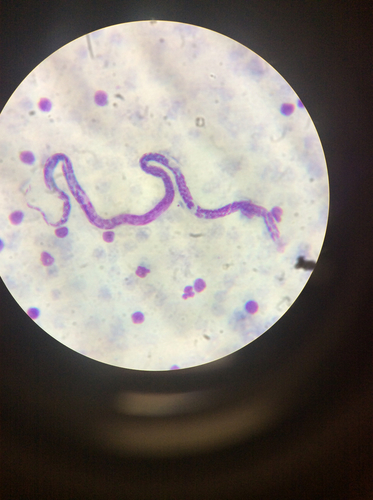
Brugia is a genus for a group of small roundworms. They are among roundworms that cause the parasitic disease filariasis. Specifically, of the five species known, Brugia malayi and Brugia timori cause lymphatic filariasis in humans; and Brugia pahangi and Brugia patei infect domestic cats, dogs and other animals. Brugia buckleyi specifically infects the Indian hare (Lepus nigricollis singhala). They are transmitted by the bite of mosquitos.

Gongylonema neoplasticum
species of Secernentea
Habronematoidea
Habronematoidea is a superfamily of spirurian nematodes in the large order Spirurida. Like all nematodes, they have neither a circulatory nor a respiratory system.
Mansonella streptocerca
species of worm

Gnathostoma spinigerum
parasitic nematode that causes gnathostomiasis in humans

Gongylonema
Gongylonema is a genus of thread-like nematode that was described by Molin in 1857. It is the only currently valid genus in the family Gongylonematidae, though the mysterious Spiruroides – usually placed in the Subuluridae, which are not closely related to Gongylonema among the Spiruria – might actually belong here. They are parasites of birds and mammals, transmitted by insects (especially beetles). Some 38 species are known, about 12 of which have been recorded in Europe.
Onchocerca tubingensis
species of worm
Cystidicolidae
Cystidicolidae is a family of spirurian nematodes. It was described by Skrjabin in 1946. All members of the family are parasites of fish.