Category
page 1Subduction volcanoes

Mount Fuji
volcano in Yamanashi and Shizuoka Prefectures, Japan
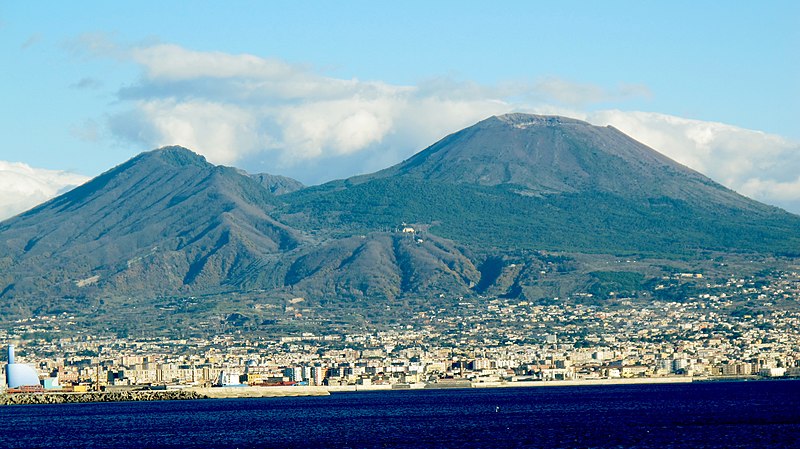
Mount Vesuvius
active stratovolcano in the Gulf of Naples, Italy

Mount Etna
active stratovolcano on the east coast of Sicily, Italy

Aconcagua
Aconcagua () is a mountain in the Principal Cordillera of the Andes mountain range, in Mendoza Province, Argentina. It is the second-most topographically prominent peak in the world, as well as the highest mountain in the Americas, the highest outside Asia, and the highest in both the Western Hemisphere and the Southern Hemisphere, with a summit elevation of . It lies northwest of the provincial capital, the city of Mendoza, about from San Juan Province, and from Argentina's border with Chile. Aconcagua is one of the Seven Summits, the highest peaks on each of the seven continents.

Krakatoa
Krakatoa (), also transcribed (), is a caldera in the Sunda Strait between the islands of Java and Sumatra in the Indonesian province of Lampung. The caldera is part of a volcanic island group (Krakatoa archipelago) comprising four islands. Two of them are known as Lang and Verlaten; another, Rakata, is the only remnant of an island, also called Krakatoa, mostly destroyed by an eruption in 1883 which created the caldera.
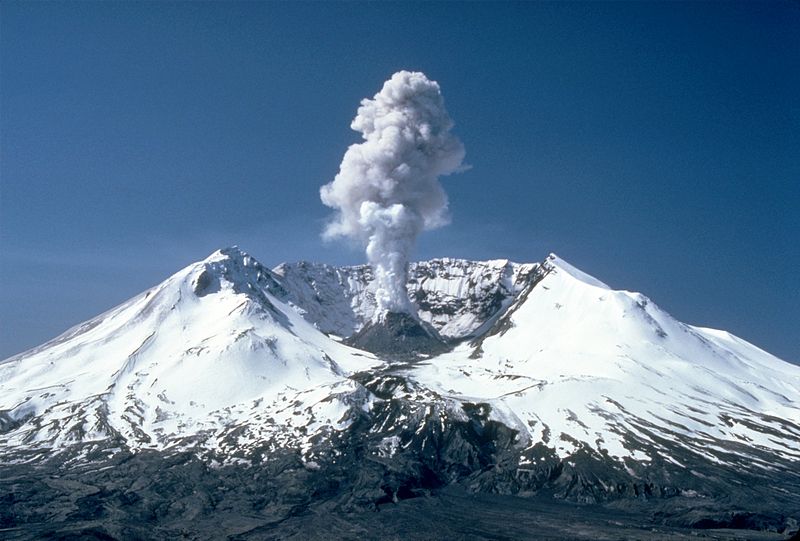
Mount St. Helens
volcano in Washington state

Merapi
active volcano in Central Java and Yogyakarta, Indonesia

Kos
Kos or Cos (; ) is a Greek island, which is part of the Dodecanese island chain in the southeastern Aegean Sea. Kos is the third largest island of the Dodecanese, after Rhodes and Karpathos; it has a population of 37,089 (2021 census), making it the second most populous of the Dodecanese after Rhodes. The island measures . Administratively, Kos constitutes a municipality within the Kos regional unit, which is part of the South Aegean region. The principal town of the island and seat of the municipality is the town of Kos.

Lake Toba
volcanic crater lake located in North Sumatra, Indonesia
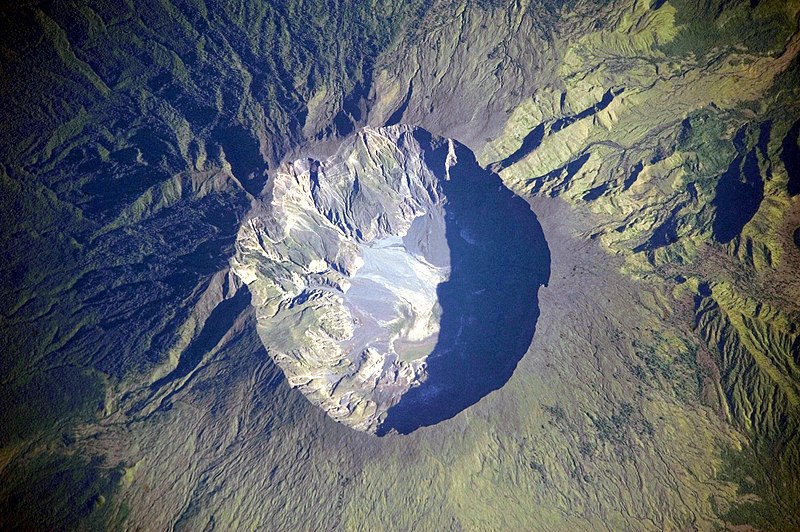
Tambora
stratovolcano on the island of Sumbawa in Indonesia

Popocatépetl
Popocatépetl ( , , ; ) is an active stratovolcano located in the states of Puebla, Morelos, and Mexico in central Mexico. It lies in the eastern half of the Trans-Mexican Volcanic Belt. At it is the second highest peak in Mexico, after Citlaltépetl (Pico de Orizaba) at . Popocatépetl is ranked 89th by prominence.

Mount Rainier
stratovolcano in the U.S. state of Washington

Pinatubo
active stratovolcano on the island of Luzon in the Philippines

Mount Aragats
mountain in the Lesser Caucasus

Mayon Volcano
Mayon (; , ), also known as Mount Mayon and Mayon Volcano, is an active stratovolcano in the province of Albay in Bicol, Philippines. A popular tourist destination, it is renowned for its "perfect cone" owing to its symmetric conical shape, and is regarded as sacred in Philippine mythology.

Cotopaxi volcano
Cotopaxi ( , , ) is an active stratovolcano in the Andes Mountains, located in Cotopaxi National Park in Cotopaxi Province, about south of Quito, and northeast of the city of Latacunga, Ecuador. It is the second highest summit in Ecuador (after Chimborazo), reaching a height of . Cotopaxi is among the highest active volcanoes in the world.

Milos
Milos or Melos (; , ; ) is a volcanic Greek island in the Aegean Sea, just north of the Sea of Crete. It is the southwestern-most of the Cyclades islands.

Nevis

Mount Pelée
active stratovolcano

Klyuchevskaya Sopka
active volcano located on the peninsula of Kamchatka in Russia
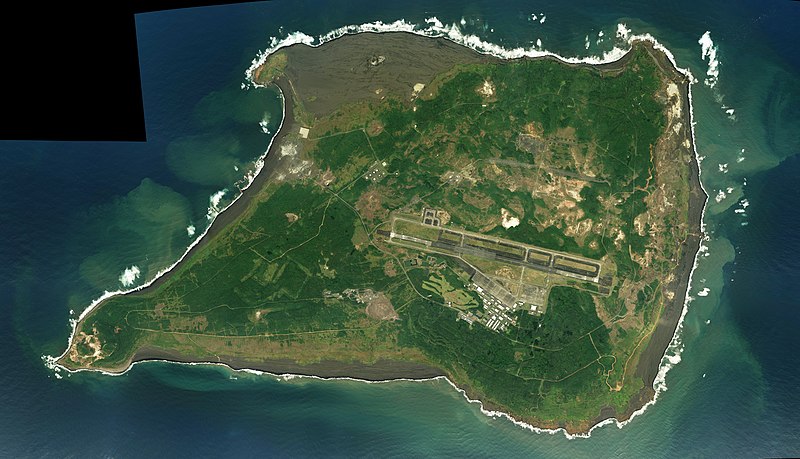
Iwo Jima
island of the Japanese Volcano Islands chain south of the Ogasawara Islands, site of the 1945 Battle of Iwo Jima

Llullaillaco
Llullaillaco ( or ) is a dormant stratovolcano on the border between Argentina (Salta Province) and Chile (Antofagasta Region). It is part of the Llullaillaco National Park and lies in the Puna de Atacama, a region of tall volcanic peaks on a high plateau close to the Atacama Desert, one of the driest places in the world. Its maximum elevation is most commonly given as , making it the second-highest active volcano in the world. Despite its height, it is not clear whether the volcano has any glaciers or merely patches of perennial snow and ice. Between and elevation there is a sparse plant cove

Mount Apo
highest mountain in the Philippines

Crater Lake
caldera lake in south-central Oregon and main feature of Crater Lake National Park

Nevado del Ruiz
volcanic mountain in Colombia
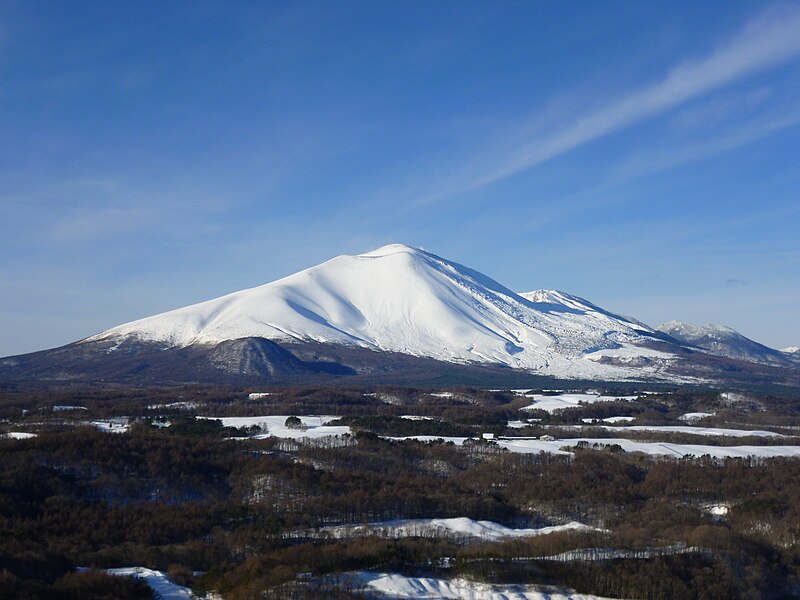
Mount Asama
volcano on the border of Gunma and Nagano prefectures in Japan

Sakurajima
Sakurajima (, ) is an active stratovolcano, formerly an island and now a peninsula, in Kagoshima Prefecture in Kyushu, Japan. It is the most active volcano in Japan.

Terceira Island
island in the Azores archipelago

Volcán de Fuego
volcano in Guatemala

Mount Aso
volcano in Kumamoto Prefecture, Japan
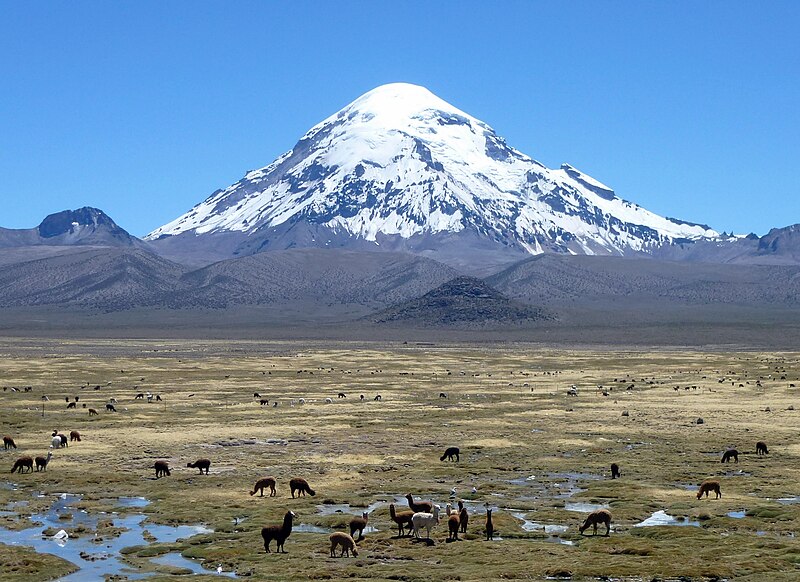
Nevado Sajama
mountain

Tungurahua volcano
thumb|False-color satellite image of Tungurahua (center right, with plume of ash emanating from it) and its neighbor Chimborazo (volcano)|Chimborazo (center left)
Tungurahua (; from Quichua tunguri (throat) and rahua (fire), "Throat of Fire") is an active stratovolcano located in the Cordillera Oriental of Ecuador. The volcano gives its name to the province of Tungurahua. Volcanic activity restarted on August 19, 1999, and is ongoing , with several eruptive episodes since then, the most recent lasting from February 26 to March 16, 2016.
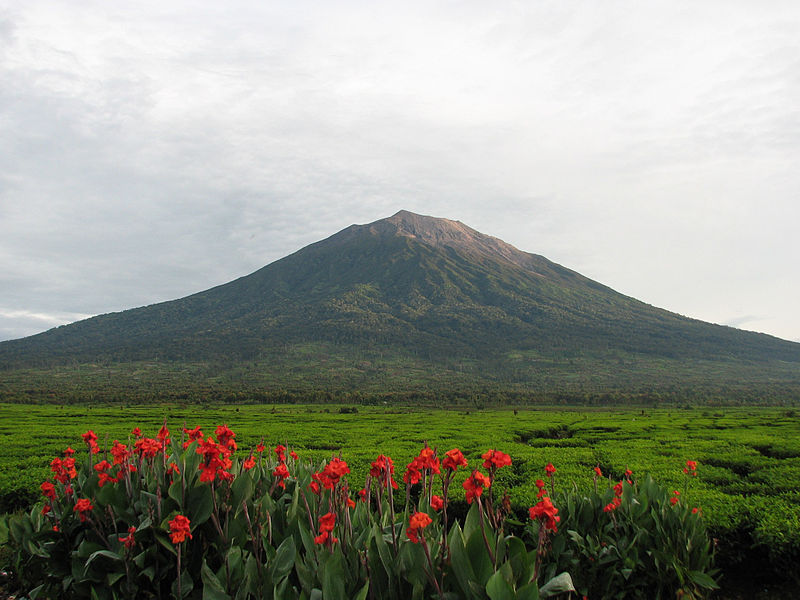
Mount Kerinci
mountain in Indonesia
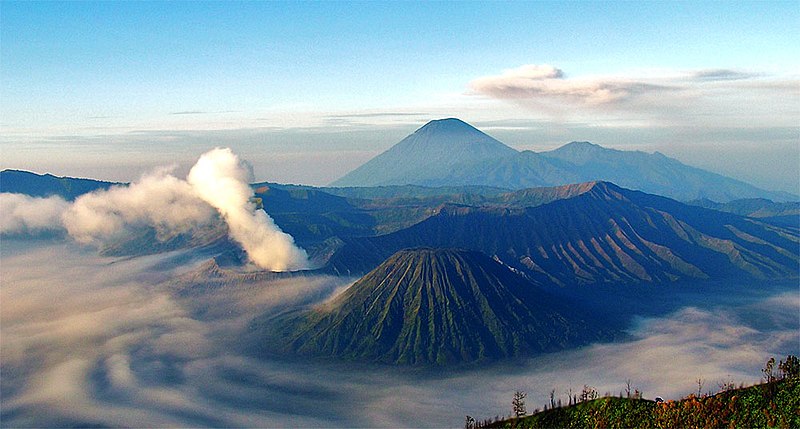
Mount Bromo
Active volcano in East Java, Indonesia

Galeras
Galeras (Urcunina among the 16th-century indigenous people) is an Andean stratovolcano in the Colombian department of Nariño, near the departmental capital Pasto. Its summit rises above sea level. It has erupted frequently since the Spanish conquest, with its first historical eruption being recorded on December 7, 1580. A 1993 eruption killed nine people, including six scientists who had descended into the volcano's crater to sample gases and take gravity measurements in an attempt to be able to predict future eruptions. It is currently the most active volcano in Colombia.
Colima
mountain

Mount Hood
stratovolcano in the Cascade Volcanic Arc in Oregon, United States
Mount Shasta
stratovolcano in Siskiyou County, California, United States
Mount Unzen
mountain in Nagasaki Prefecture, Japan

Copahue
Copahue () is a stratovolcano in the Andes on the border of Bío Bío Region, Chile and Neuquén Province, Argentina. There are nine volcanic craters along a line, the easternmost of which is historically the most active, and contains a 300 m (1000 ft) wide crater lake with a pH ranging between 0.18 and 0.30. Eruptions from this crater lake have ejected pyroclastic rocks and chilled liquid sulfur fragments. Although the lake emptied during the 2000 eruption, it later returned to its previous levels. Copahue means "sulphur waters" in Mapuche.

Parinacota
volcano on the border of Chile and Bolivia

Arenal Volcano
Active stratovolcano in Alajuela Province, Costa Rica
Trindade and Martim Vaz
archipelago in Atlantic belonging to Brazil

Novarupta
Novarupta is a volcano located on the Alaska Peninsula on a slope of Trident Volcano in Katmai National Park and Preserve, about southwest of Anchorage. Novarupta was formed in 1912, during the largest volcanic eruption of the 20th century, in which it released 30 times the volume of magma of the 1980 eruption of Mount St. Helens.

São Jorge Island
island of the Azores, Portugal

Irazú Volcano
mountain in Costa Rica
Mount Baker
stratovolcano in Washington State, United States
Cayambe
volcano in Ecuador

Ambrym
Ambrym is an inhabited volcanic island in Malampa Province in the archipelago of Vanuatu. It is located near the center of the archipelago of Vanuatu, and also hosts one of the most active volcanoes in the world, which includes lava lakes in two craters near the summit. The largest and most populous settlement is Port Vato.
Orchid Island
volcanic island in the Pacific Ocean part of Taiwan
.jpg)
Licancabur
Licancabur () is a prominent, stratovolcano on the Bolivia–Chile border in the Central Volcanic Zone of the Andes. It is capped by a summit crater which contains Licancabur Lake, a crater lake that is among the highest lakes in the world. There are no glaciers owing to the arid climate. Numerous plants and animal species live on the mountain. The volcanoes Sairecabur and Juriques are north and east of Licancabur, respectively.

Misti
Misti is a volcano in the southern Peruvian Andes, rising above Arequipa, Peru’s second-largest city. It has a steep conical profile and two nested summit craters. The inner crater contains an active lava plug or dome, pierced by vents that emit volcanic gases. The summit reaches above sea level, on the rim of the outer crater. Snow covers the summit but does not persist, and there are no glaciers. The upper slopes are largely barren, while lower elevations support scrub and other bushy vegetation.
Acotango
Acotango is the central and highest of a group of stratovolcanoes straddling the border of Bolivia and Chile. It is high. The group is known as Kimsa Chata and consists of three mountains: Acotango, Umurata () north of it and Capurata () south of it.
Santa María
active volcano in Guatemala

Pacaya
Pacaya is an active complex volcano in Guatemala, which first erupted approximately 23,000 years ago and has erupted at least 23 times since the Spanish conquest of Guatemala. It rises to an elevation of . After being dormant for over 70 years, it began erupting vigorously in 1961 and has been erupting frequently since then. Much of its activity is Strombolian, but occasionally Plinian eruptions also occur, sometimes showering the area of the nearby Departments with ash.

Ijen
Bezymianny
Bezymianny ( Bezymyannyyi, meaning unnamed) is an active stratovolcano in Kamchatka, Russia. Bezymianny volcano had been considered extinct until 1955. Activity started in 1955, culminating in a dramatic eruption on 30 March 1956. This eruption, similar to the 1980 eruption of Mount St. Helens, produced a large horseshoe-shaped crater that was formed by a sector collapse and an associated lateral blast. Subsequent episodic but ongoing lava dome growth, accompanied by intermittent explosive activity and pyroclastic flows, has largely filled the 1956 crater. The most recent eruption of lava flow
Marapi
complex volcano in West Sumatra, Indonesia
Mount Adams
Southern Washington stratovolcano in the Cascade Volcanic Arc
Lassen Peak
lava dome in the Cascade Range