Category
page 1Taxa described in 1855

Tsuga
thumb|Tsuga heterophylla
Tsuga (, from Japanese (), the name of Tsuga sieboldii) is a genus of conifers in the subfamily Abietoideae of Pinaceae, the pine family. The English-language common name "hemlock" arose from a perceived similarity in the smell of its crushed foliage to that of the unrelated plant hemlock. Unlike the latter, Tsuga species are not poisonous.
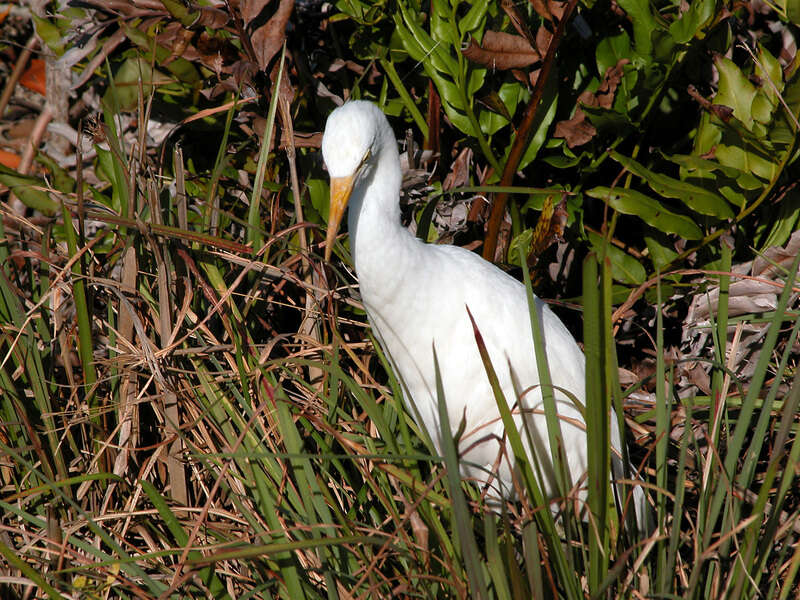
Bubulcus
genus of birds
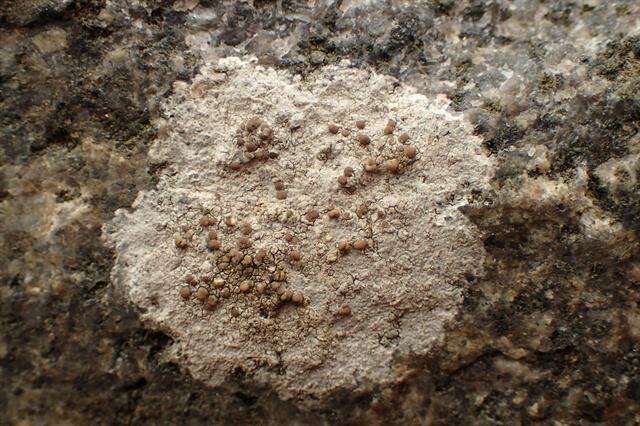
Lecanoraceae
The Lecanoraceae are a family of lichenized fungi in the order Lecanorales. Species of this family have a widespread distribution.
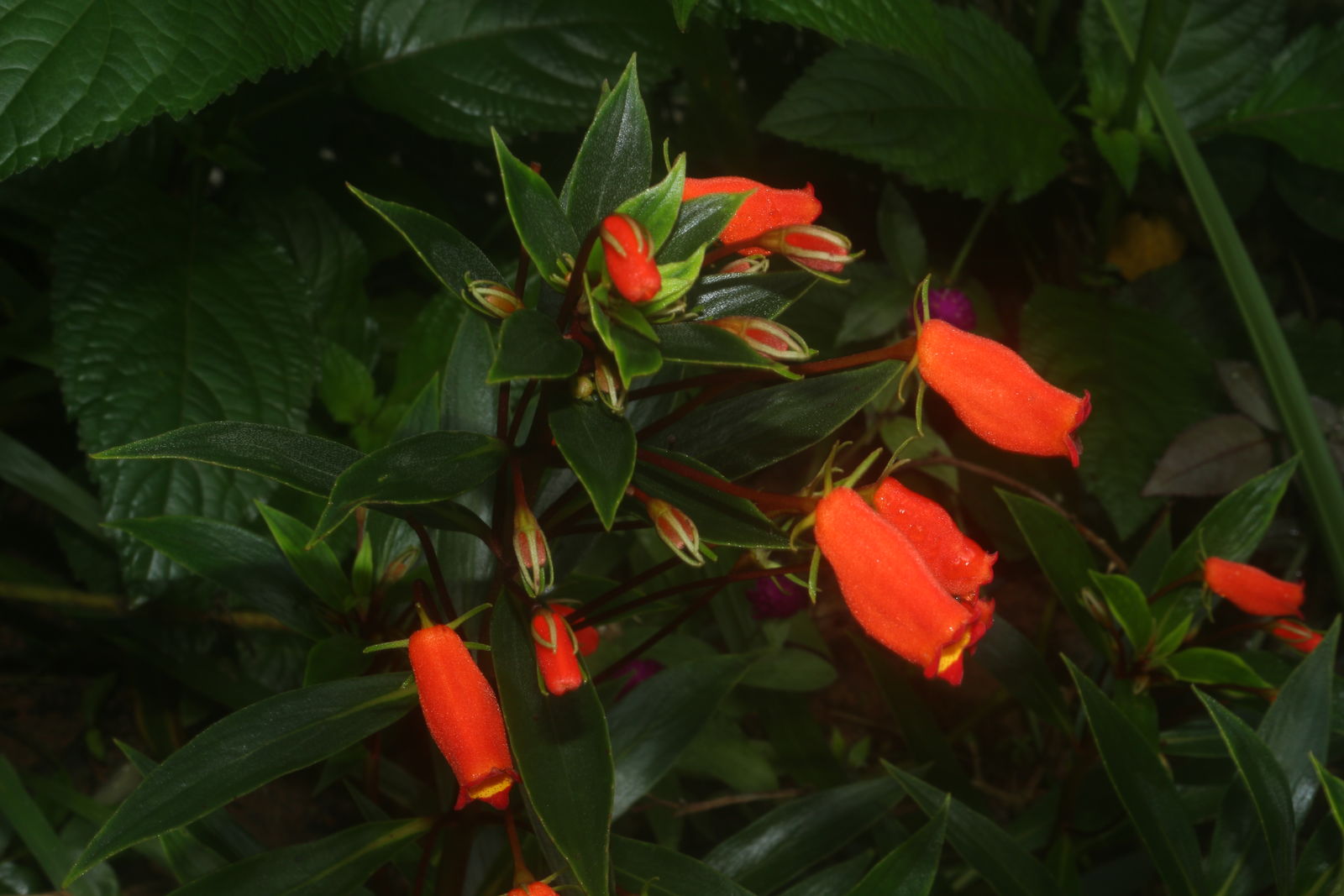
Seemannia
thumb|right|Seemannia sylvatica, yellow-flowered form
Pertusariaceae
The Pertusariaceae are a family of lichen-forming fungi in the order Pertusariales.

Lecidella
Lecidella is a genus of crustose lichens in the family Lecanoraceae.

Lecanactis
Lecanactis is a genus of crustose lichens, commonly called old wood lichens. The mycobiont (fungus partner) is in the family Roccellaceae. The photobiont is an algae in the genus Trentepohlia. These lichens typically grow as thin crusts on tree bark or rocks, producing small black fruiting bodies that may appear as round discs or elongated slits. The genus contains about 20 species found worldwide, with some species considered rare and threatened by habitat loss.
Dacampiaceae
Dacampiaceae is a family of fungi belonging to the order Pleosporales. The family was circumscribed in 1855 by the German lichenologist Gustav Wilhelm Körber.
Stiphrornis
Stiphrornis is a genus of passerine birds containing the forest robins. These are members of the Old World flycatcher family Muscicapidae and are found in the tropical rain-forests of West Africa. The genus formerly contained only a single species, the forest robin, but this species complex has been split so that the genus now contains three species.
Laccoptera
Laccoptera is a genus of tortoise beetles in the family Chrysomelidae. There are more than 60 described species in Laccoptera. They are found in Africa, south and east Asia, and Australia.
Sporastatia
Sporastatia is a genus of crustose lichens in the family Sporastatiaceae. It has four species. Sporastatia lichens are long-lived species that grow on siliceous or weakly calcareous rocks in arctic and alpine locales.
Thelidium
Thelidium is a genus of lichen-forming fungi in the family Verrucariaceae. The genus was established in 1855 by the Italian lichenologist Abramo Bartolommeo Massalongo, who distinguished it from related genera by its point-like fruiting bodies with distinctive double walls and granular spores. These lichens form thin crusts on rock surfaces and reproduce through tiny, black, flask-shaped structures that contain spores. The genus includes about 27 species found worldwide, ranging from common European species to more recently discovered ones from Asia and Australia.
Porpidia
Porpidia is a genus of crustose lichens in the family Lecideaceae. Porpidia species primarily inhabit siliceous rocks, pebbles, and stonework, with rare occurrences on bark, wood, and compacted soil. The thallus, or body of the lichen, varies in appearance from thick and crusty to barely visible. It may form a continuous layer or develop cracks resulting in a segmented, structure. The colour of the thallus ranges from grey and white to orange.
Thelopsis
Thelopsis is a genus of lichen-forming fungi in the family Gyalectaceae. The genus was established by the Finnish lichenologist William Nylander in 1855 and contains small bark-dwelling crustose lichens that form thin crusts on surfaces. These lichens make flask-shaped fruiting bodies called perithecia, which contain numerous small ascospores divided by cross-walls. Recent molecular studies have revealed that the genus forms a closely related group within the broader Gyalecta complex, leading to taxonomic revisions that now recognise about a dozen species worldwide.
Hymeneliaceae
Hymeneliaceae is a family of lichen-forming fungi in the order Baeomycetales. It contains three genera and about 40 species. The family was circumscribed by German lichenologist Gustav Wilhelm Körber in 1855.
Lophostoma
genus of plants
Artace
Artace is a genus of moths in the family Lasiocampidae. The genus was erected by Francis Walker in 1855.
Psorotichia
Psorotichia is a genus of saxicolous (rock-dwelling) lichens in the family Lichinaceae. The genus can be distinguished from other rock-dwelling lichens by its distinctive dark colouration and granular texture. Unlike many lichens that form leafy or branched structures, Psorotichia species create only thin, crusty patches that blend closely with the rock surface. Their small fruiting bodies are often difficult to spot without magnification, appearing as tiny dark dots embedded in the crust.
Eumenogaster
Eumenogaster is a genus of moths in the subfamily Arctiinae erected by Gottlieb August Wilhelm Herrich-Schäffer in 1855.
Lempholemma
Lempholemma is a genus of lichen-forming fungi in the family Porocyphaceae. It comprises 14 species of gelatinous lichens that grow on rocks, mortar, bryophytes, or soil. These lichens form thin, often inconspicuous mats that can take various shapes—from wart-like crusts to tiny leaf-shaped scales or delicate tufts—and turn dark blue-green and gelatinous when damp due to their partnership with nitrogen-fixing cyanobacteria. Established as a genus in 1855 by the German lichenologist Gustav Wilhelm Körber to separate certain gelatinous lichens from the genus Collema, Lempholemma species typicall
Pleopsidium
Pleopsidium is a genus of lichen-forming fungi in the family Acarosporaceae (order Acarosporales). The widespread genus was circumscribed by lichenologist Gustav Wilhelm Körber in 1855. After a 2025 revision of the genus, it comprises eight species.
Stenocybe
Stenocybe is a genus of fungi in the family Mycocaliciaceae. It has 14 species.
Suana
Suana is a genus of moths in the family Lasiocampidae. The genus was erected by Francis Walker in 1855.
Endococcus
Endococcus is a genus of lichenicolous (lichen-dwelling) in the family Lichenotheliaceae. It has 44 species. The genus was circumscribed by the Finnish botanist William Nylander in 1855. Although at least one source places the genus in the Verrucariaceae, a 2016 study of the type species, Endococcus rugulosus, determined that it should instead be placed in the family Lichenotheliaceae of the order Dothideales; this classification echoes a placement proposed in 1979 by David Hawksworth.
Normandina
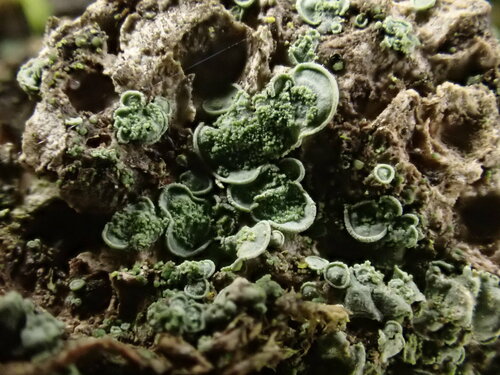
Normandina is a genus of lichen-forming fungi in the family Verrucariaceae. It has five species of crustose and squamulose (scaly) lichens.
Leptorhaphis
Leptorhaphis is a genus of lichens in the family Naetrocymbaceae. Members of the genus are commonly called birchbark dot lichens. The genus comprises eight recognized species that are widely distributed, primarily growing on the bark of deciduous trees such as birch, aspen, and larch. Most species lack a visible thallus and are considered saprobic rather than truly lichenized, as they generally do not form a stable partnership with algae.
Pyrrhospora
Pyrrhospora is a genus of lichen-forming fungi in the family Lecanoraceae. The genus was established in 1855 by the German lichenologist Gustav Wilhelm Körber, who named it after the distinctive reddish-brown colour of the spores, combining Greek words meaning 'reddish-brown' and 'spore'. These lichens form thin crusty films on rocks and tree bark, producing button-shaped fruiting bodies that start reddish-brown and turn almost black with age. The genus contains eight species and is distinguished by its unique spore colouration and chemical compounds including anthraquinone pigments that give
Protopteridae
REDIRECT Protopterus
Schaereria
Schaereria is a genus of lichen-forming fungi. It is the sole genus in the family Schaereriaceae, which itself is the only family in the Schaereriales, an order in the subclass Ostropomycetidae of the class Lecanoromycetes. Most Schaereria species are crustose lichens that live on rocks. Schaereria was first proposed by Gustav Wilhelm Körber in 1855 and was later taken up by other lichenologists despite periods of disuse.
Placidium
Placidium is a genus of crustose to squamulose to almost foliose lichens. The genus is in the family Verrucariaceae. Most members grow on soil (are terricolous), but some grow on rock (saxicolous). The fruiting bodies are perithecia, flask-like structures immersed in the lichen body (thallus) with only the top opening visible, dotting the thallus. Lichen spot tests are all negative. Members of the genus lack rhizines, but otherwise resemble members of the genus Clavascidium.
Thelenella
Thelenella is a genus of lichen-forming fungi in the family Thelenellaceae. These inconspicuous lichens form thin, crust-like growths that are tightly attached to their substrates and appear as dull whitish, pale grey, or light brown patches. Species of Thelenella are commonly found in damp, shaded environments where they grow on tree bark, living leaves, moss cushions, rock faces, and moss-rich soil. The genus is distinguished by its thick-walled fruiting bodies that are mostly embedded within the lichen crust and contain multicellular spores with multiple cross-walls.
Porocyphus
Porocyphus is a genus of lichen-forming fungi in the family Porocyphaceae. The genus was established in 1855 by the German lichenologist Gustav Wilhelm Körber to distinguish certain lichens from the related genus Collema, based on differences in their reproductive structures. Porocyphus species are found worldwide and are characterised by their pore-like fruiting bodies and simple spores. They form dark, gelatinous crusts on rocks, soil, and bark.
Harpidium
Harpidium is a genus of lichen-forming fungi in the family Harpidiaceae. The genus contains three species. Harpidium was circumscribed in 1855 by German lichenologist Gustav Wilhelm Körber, with Harpidium rutilans assigned as the type species.
Thelignya
Thelignya is a genus of fungi within the family Lichinaceae. It is monotypic, containing only the single species Thelignya fuliginea.
Lopadium
genus of fungi
Acanthotritus
Acanthotritus is a genus of beetles in the family Cerambycidae, containing a single species, Acanthotritus dorsalis. It was described by White in 1855.
Ctenocella
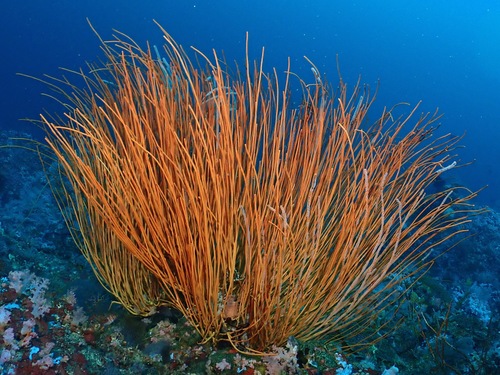
genus of cnidarians
Gomphillus
Gomphillus is a genus of lichen-forming fungi in the family Gomphillaceae.
Trigonopterum
Trigonopterum is a genus of flowering plants belonging to the family Asteraceae. It contains a single species, Trigonopterum laricifolium, commonly known as the needle-leafed daisy. Its native range is the Galapagos Islands in Ecuador.
Pyrenocarpon
Pyrenocarpon is a fungal genus in the family Lichinaceae. It is monospecific, containing the single species Pyrenocarpon thelostomum, a lichen. This rare lichen is found only in shaded stream beds in parts of Britain, including Exmoor, the Pennines, and the Scottish Highlands. It was first described as a distinct genus in 1855 by the Italian lichenologist Vittore Trevisan based on its unique waxy fruiting structures. The species grows as a thin, reddish-brown crust on hard rocks that are kept constantly wet by flowing water.
Phylliscum
Phylliscum is a genus of lichen-forming fungi in the family Phylliscaceae. These lichens are small and often appear as tiny dark patches or scales tightly pressed against rock surfaces. They are easily overlooked due to their minute size, but can be found on exposed rocks in dry, sunny locations around the world.

Chiasmus
genus of insects
Zwackhia
Zwackhia is a genus of crustose lichens in the family Lecanographaceae. It has six species. These lichens form thin, film-like crusts on bark and rock surfaces, often with a subtle orange tint from their algal partner. They produce distinctive elongated, slit-like fruiting bodies that remain narrow rather than opening into disc shapes.
Massalongia
genus of fungi
Solenopsora
Solenopsora is a genus of lichen-forming fungi in the family Catillariaceae. It has 15 species, with a mostly Northern Hemisphere distribution.