Category
page 1Taxa described in 1857
Dilipa
Dilipa is a genus of butterflies in the family Nymphalidae.
Onygenaceae
The Onygenaceae are a family of fungi in the Ascomycota, class Eurotiomycetes.

Hesperocnide
Hesperocnide is a small genus of nettles containing two species. These are annual herbs covered in stinging hairs and toothed leaves.

Ovidia
Ovidia Meisn. is a genus of plants in the family Thymelaeaceae native to Bolivia and southern South America. (Ovidia Raf. is a synonym for Commelina.)
Melaspilea
Melaspilea is a genus of fungi in the family Melaspileaceae. The genus includes both lichen-forming species that grow on tree bark and lichenicolous species that parasitise other lichens. Originally, Melaspilea encompassed a broad and diverse group of species, but a 2015 molecular study narrowed its circumscription, showing that many species historically placed in the genus actually belonged to unrelated lineages. In its current sense, Melaspilea belongs to the family Melaspileaceae and order Eremithallales within Dothideomycetes and is characterised by dark fruiting bodies with single-septum
Pilophorus
genus of fungi
Clathrospora
Clathrospora is a genus of fungi in the family Diademaceae. The widespread genus contained five species in 2008, the genus increased to 20 species by 2023.
Rhoiacarpos
Rhoiacarpos is a genus of flowering plants belonging to the family Santalaceae. It contains a single species, Rhoiacarpos capensis, a subshrub or shrub native to the Cape Provinces and KwaZulu-Natal in South Africa.
Lithographa
Lithographa is a genus of lichen-forming fungi in the family Xylographaceae. These rock-dwelling lichens form tightly attached crusts that crack into small tile-like patches, typically appearing in shades of grey, brown, or nearly black. The genus includes six species found primarily in cold regions and high mountains, where they grow on hard rock surfaces in harsh environments. They reproduce through distinctive elongated or round fruiting bodies that appear as dark slits or discs embedded in the crusty surface.
Kuettlingeria
Kuettlingeria is a genus of saxicolous (rock-dwelling), crustose lichens in the family Teloschistaceae. Species are characterized by a white or gray thallus and the presence of anthraquinones in the apothecial and , with the exception of Kuettlingeria diphyodes, which entirely lacks anthraquinones. First described by Italian botanist Trevisan in 1857, the genus includes 15 recognized species, although it is believed to be more diverse with additional unnamed species. These lichens are predominantly found in the Northern Hemisphere, particularly in the Mediterranean region, and grow on limeston
Rhotana
Rhotana is a large genus of planthoppers from the family Derbidae, tribe Rhotanini, with more than 70 species. Most species have been reported from the rainforests of Borneo, Indonesia and New Guinea, but the distribution of the genus extends over a much wider area in southern and south-eastern Asia, as far north as southern Japan and including parts of the Pacific islands as well as Australia. The species are the largest in the tribe Rhotanini, typically between 5–6 mm from head to the tip of the wings. The forewings frequently have striking patterns and colours, some species have also marks
Isaca
Isaca is a genus of Malesian planthoppers in the subtribe Drabescina, erected by Francis Walker in 1857.
Actinosphaerium
Actinosphaerium is a genus of heliozoa, amoeboid unicellular organisms with many axopodial filaments that radiate out of their cell. It is classified within the monotypic family Actinosphaeriidae and suborder Actinosphaerina. Species of Actinosphaerium are distinguished by their large number of nuclei in each cell. Their axopodia sometimes terminate on the surface of nuclei. Vacuoles are abundant in the periphery of the cytoplasm.
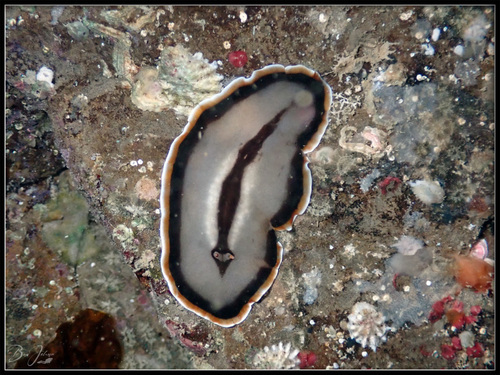
Callioplana
Callioplana is a genus of flatworm polyclads belonging to the Callioplanidae family.
Monerolechia
Monerolechia is a genus of lichen-forming fungi in the family Caliciaceae. These lichens form crusty patches that break into small blocks or flakes, typically coloured chocolate to grey-brown, and produce black fruiting bodies for reproduction. Most species in this genus start life as parasites on other lichens before developing their own independent growth, which helps distinguish them from similar-looking lichen groups.