Category
page 1Taxa described in 2001

Agaricomycetes
The Agaricomycetes are a class of fungi in the division Basidiomycota. The taxon is roughly identical to that defined for the Homobasidiomycetes (alternatively called holobasidiomycetes) by Hibbett & Thorn, with the inclusion of Auriculariales and Sebacinales. It includes not only mushroom-forming fungi, but also most species placed in the deprecated taxa Gasteromycetes and Homobasidiomycetes. Within the subdivision Agaricomycotina, which already excludes the smut and rust fungi, the Agaricomycetes can be further defined by the exclusion of the classes Tremellomycetes and Dacrymycetes, which a
.png)
Ustilaginomycotina
The Ustilaginomycotina is a subdivision within the division Basidiomycota of the kingdom Fungi. It consists of the classes Ustilaginomycetes and Exobasidiomycetes, and in 2014 the subdivision was reclassified and the two additional classes Malasseziomycetes and Monilielliomycetes added. The name was first published by Doweld in 2001; Bauer and colleagues later published it in 2006 as an isonym. Ustilagomycotina and Agaricomycotina are considered to be sister groups, and they are in turn sister groups to the subdivision Pucciniomycotina.
.jpg)
Fistulinella
Fistulinella is a genus of bolete fungi in the family Boletaceae. The genus has a pantropical distribution, and contains 15 species. Fistulinella was circumscribed by German mycologist Paul Christoph Hennings in 1901.
Epipygidae
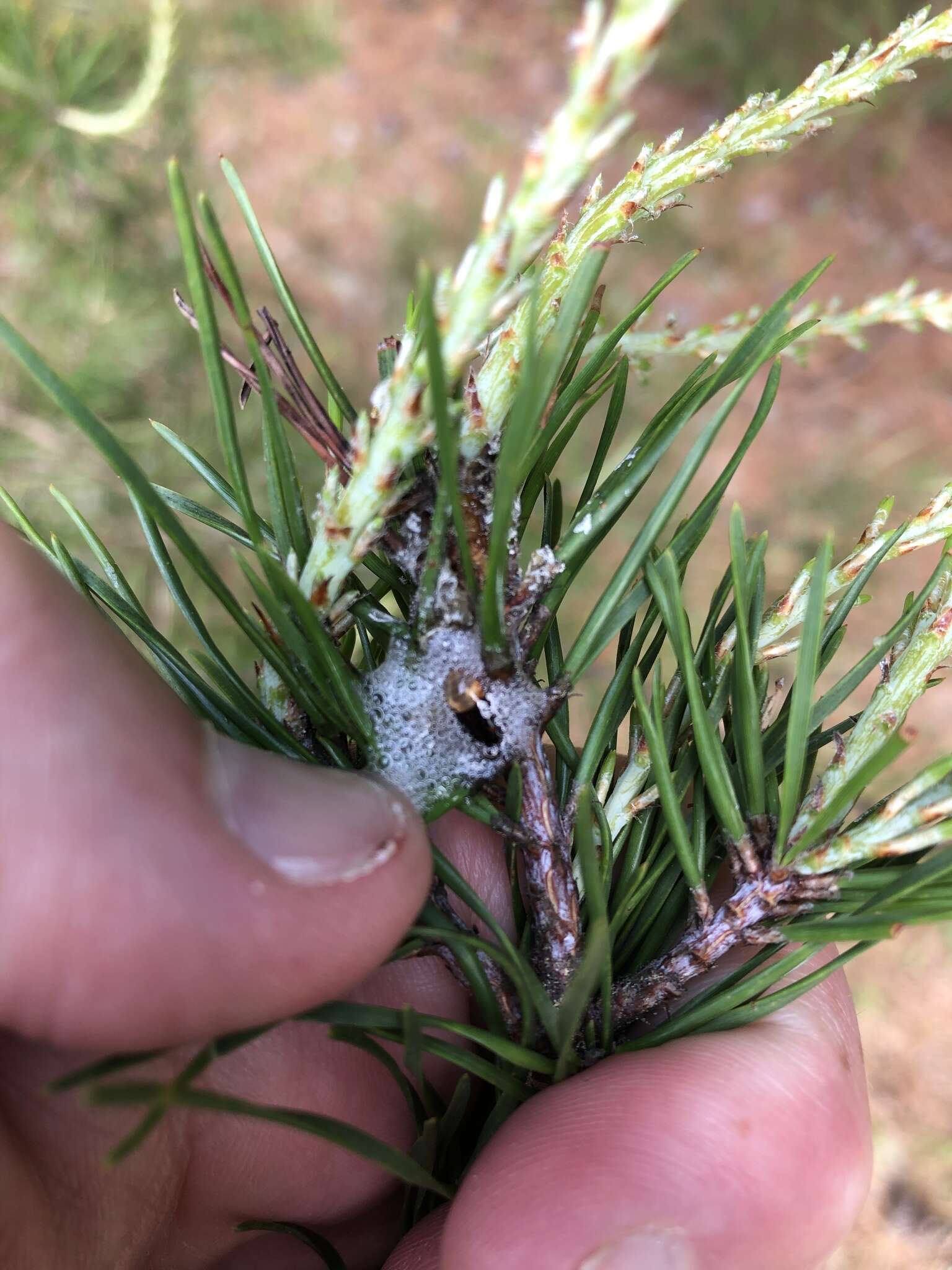
Epipyginae is a lineage of froghoppers in the insect family Aphrophoridae. There are at least three genera and about five described species in Epipyginae, found in the American tropics. In addition, there are more than 20 undescribed species in the group.
Mankyua chejuensis
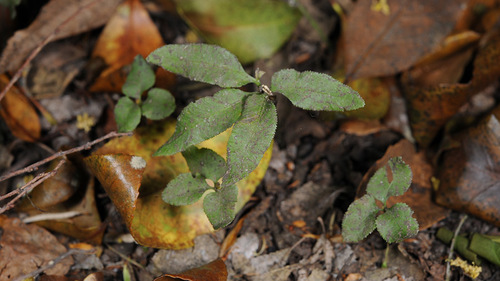
Mankyua is a monotypic genus and fern in the Ophioglossales. Its only species, M. chejuense, grows only on Jeju Island of South Korea.
While this plant is clearly ophioglossoid in the broad sense, its precise cladistic position is uncertain. It has a fused sporangial structure similar to Ophioglossum, but a vegetative structure, with palmately-radiating pinnae, reminiscent of Helminthostachys. It may be a basal offshoot of the ophioglossoid clade sensu stricto.
Sporidiobolales
REDIRECT Sporidiobolaceae
Calvitimela
Calvitimela is a fungal genus in the family Tephromelataceae, comprising 11 species of lichen. These lichens grow tightly attached to rocks, appearing as thin, crust-like layers on their surface. They are primarily found in alpine and arctic regions around the world. Calvitimela species are characterised by their (segmented) thallus and black, shiny, convex apothecia (fruiting bodies). The genus currently includes eleven recognised species, though recent genetic studies have revealed unexpected diversity within this group. Calvitimela lichens are known for their varied secondary metabolites, w
Kaisupeea
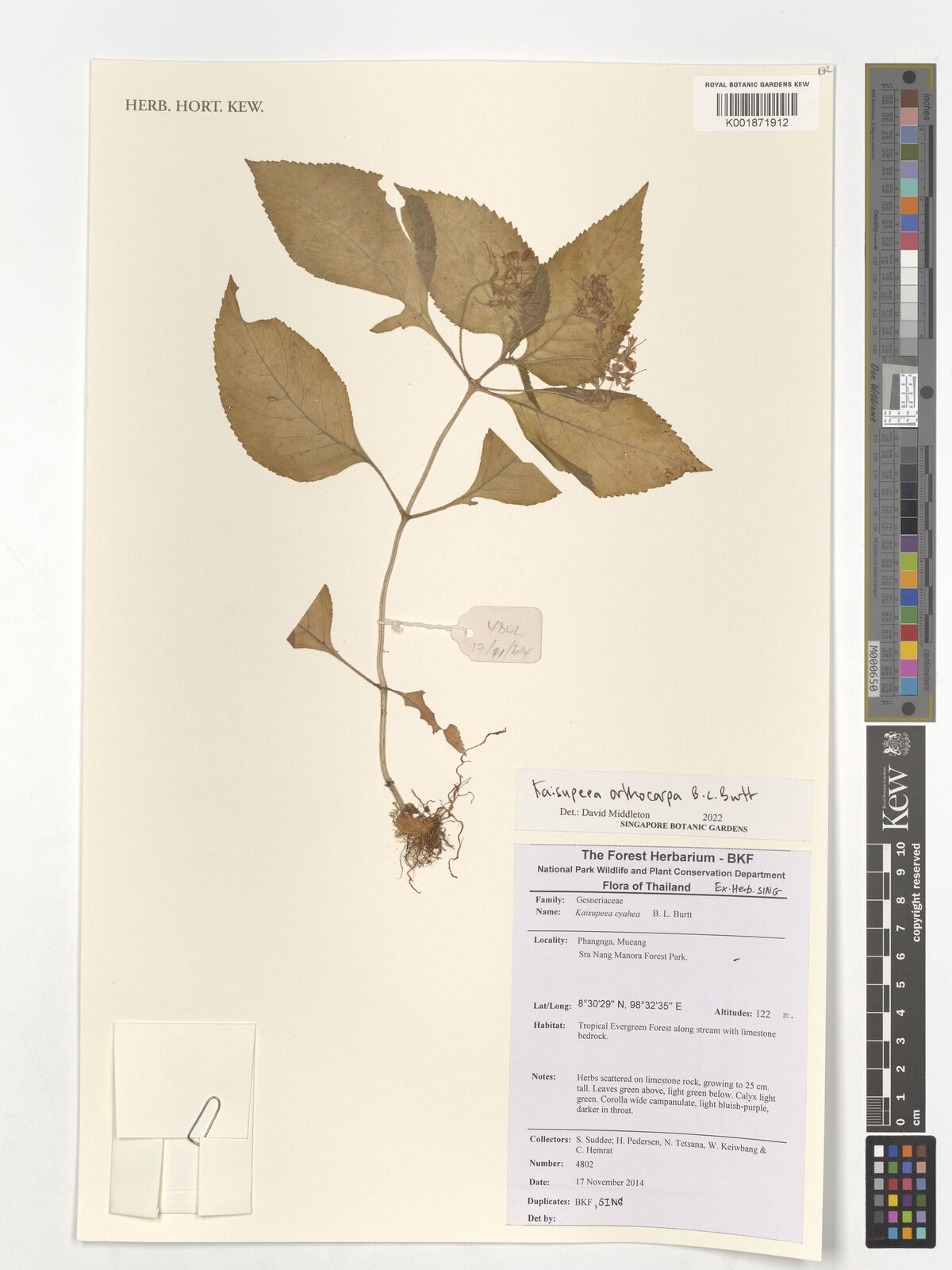
Kaisupeea is a genus of flowering plants belonging to the family Gesneriaceae.

Pycnora
Pycnora is a small genus of lichen-forming fungi in the monotypic family Pycnoraceae. The genus was established in 2001 by the Austrian lichenologist Josef Hafellner, who named it by combining references to its conspicuous black reproductive structures and its relationship to the lichen genus Lecanora. These wood-dwelling lichens form thin grey crusts on the smooth surfaces of dead wood in cool northern and mountain forests, where they colonise fallen tree trunks and branches that have lost their bark. The genus contains three species and is distinguished by its readily visible black fruiting
Abdopus
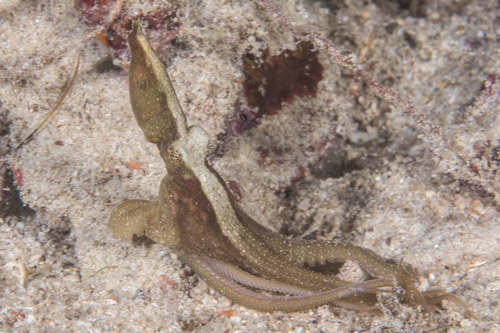
thumb | right | alt=Image of Abdopus on the sea floor. | Image of Abdopus on the sea floor.
Abdopus is a genus of octopuses in the family Octopodidae.
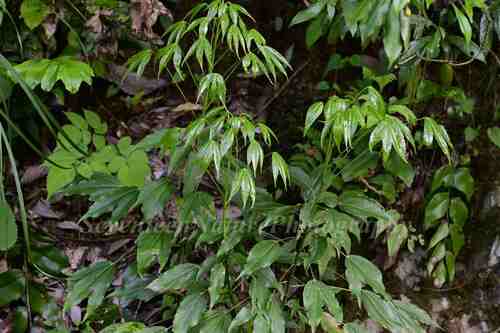
Metapanax
Metapanax is a genus of flowering plants in the family Araliaceae, comprising two species. They are endemic to central and southern China and Vietnam.

Dacrymycetales
The Dacrymycetes are a class of fungi in the Basidiomycota. The class currently contains the single order Dacrymycetales, with a second proposed order Unilacrymales now treated at the family level. The order contains four families and has a cosmopolitan distribution.
Cystofilobasidiaceae
The Cystofilobasidiaceae are a family of fungi in the order Cystofilobasidiales. Phylogenetic analyses shows that this family is clearly distinct from other yeast-like families of the Tremellomycetes. The family currently contains the single genus Cystofilobasidium. Additional genera previously referred to the Cystofilobasidiaceae are now placed in the Mrakiaceae.

Ainoa
Ainoa is a genus of lichens in the family Baeomycetaceae. It was named in honour of the German lichenologist Aino Henssen. These rock-dwelling lichens form thin crusts that break into small flakes and are distinguished by their abundant dark brown to black button-like fruiting bodies that sit on short stalks. The genus includes three species found in cool mountainous regions, where they grow on hard siliceous rocks and can withstand repeated cycles of wetting and drying.
Didazoon
Didazoon haoae is an extinct species of vetulicolid vetulicolian described by Shu, et al. based on fossils found in the Qiongzhusi (Chiungchussu) Formation, Yu'anshan Member (Eoredlichia zone), Lower Cambrian, in the Dabanqiao area (Kunming), about 60 km northwest of Chengjiang, China.
Sporidiobolaceae
The Sporidiobolales are an order of fungi in the subdivision Pucciniomycotina. The order contains a single family, the Sporidiobolaceae, which currently contains three genera. Most species are known only from their yeast states. Hyphal states produce teliospores from which auricularioid (tubular and laterally septate) basidia emerge, bearing basidiospores. Species occur worldwide and have been isolated (as yeasts) from a wide variety of substrates. Two species, Rhodotorula mucilaginosa and R. glutinis, have been known to cause disease in humans.

Coniarthonia
Coniarthonia is a genus of lichen-forming fungi in the family Arthoniaceae. The genus comprises about fourteen species of crustose lichens that grow on tree bark, mainly in tropical and subtropical regions. They are distinguished by their powdery, crimson to scarlet fruiting bodies, which contain abundant crystallized red pigments, a feature that sets them apart from other lichens in the order Arthoniales. The genus was established in 2001 by the Austrian lichenologist Martin Grube, who separated these species from the large, variable genus Arthonia.
Cuniculitremaceae
The Cuniculitremaceae are a family of fungi in the order Tremellales. There are three genera in the family. Sterigmatosporidium polymorphum parasitizes other fungi growing in insect galleries in wood. It does not produce basidiocarps (fruit bodies), but has septate basidia similar to those found in the genus Tremella. Most species are known only from their yeast states.
Pachyascaceae
REDIRECT Pachyascus
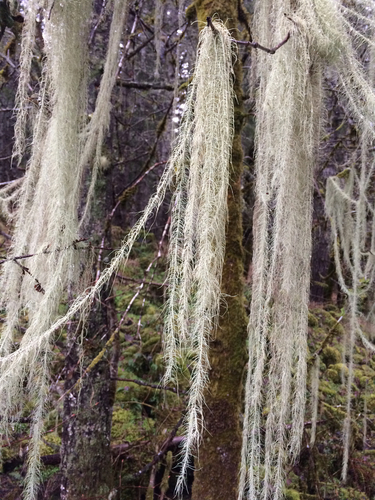
Dolichousnea
Dolichousnea is a genus of fruticose lichens in the family Parmeliaceae. It has three species. The widely distributed type species, Dolichousnea longissima, is found in boreal regions of Asia, Europe, and North America.
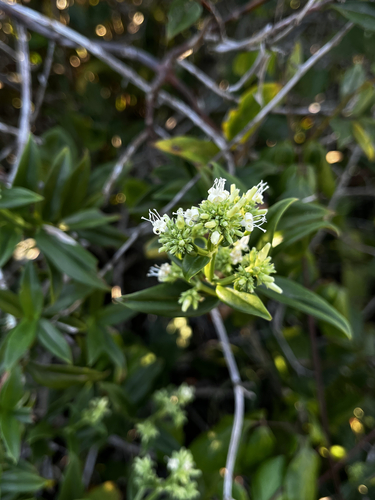
Denscantia
Denscantia is a genus of flowering plants in the family Rubiaceae. The genus is native to the Atlantic Forest of eastern Brazil.
Protomicarea
thumb | right | alt=Lichens of Calvert Island. D. Protomicarea limosa, McMullin 19698 (CANL). | Lichens of Calvert Island. D. Protomicarea limosa, McMullin 19698 (CANL).
Protomicarea is a genus of lichen-forming fungi in the family Psoraceae. The genus contains two species: Protomicarea limosa (the type) and Protomicarea alpestris. Protomicarea was circumscribed by lichenologist Josef Hafellner in 2001.

Bryodina
Bryodina is a genus of two species of crustose lichens in the family Lecanoraceae. It was first proposed as a distinct genus by Austrian lichenologist Josef Hafellner in the early 1990s, but the name was validly published only in 2001 when Hafellner supplied a formal Latin and typification. It is distinguished from the morphologically similar genus Bryonora by the clearly separated and , and by the thin-walled ascospores.
Squamella
Squamella is a fungal genus in the family Cladoniaceae. The genus is monotypic, containing the single species Squamella spumosa, a squamulose lichen found in Australia. The genus was established in 2001 for a lichen collected in the McIlwraith Range of far-northern Queensland, distinguished by its flattened, leaf-like scales that develop foam-like masses of tiny at their tips. It lacks the stalked structures typical of related genera and grows on bark in seasonal monsoon forests. Its precise evolutionary relationships remain uncertain due to the absence of DNA sequence data.
Clitella nutricula
species of chordates
Volvocisporium
Volvocisporiaceae is a fungal family in the class Exobasidiomycetes. The family contains the single genus Volvocisporium, which in turn contains the single species Volvocisporium triumfetticola, found on the leaves of Triumfetta rhomboidea in India.

Aspilidea
Aspilidea is a genus of rock-dwelling crustose lichens in the family Megasporaceae (order Pertusariales). It was introduced for the species Aspilidea myrinii, but a five-locus phylogenetic study recovered two distinct taxa in the genus and treated Aspilidea as an early-diverging lineage within Megasporaceae. In the same study, all North American records previously attributed to A. myrinii were found to be misidentifications, with many representing a second species, Aspilidea subadunans.
Cyllamyces
Cyllamyces is a fungal genus in the family Neocallimastigaceae. This is a monotypic genus, containing the single species Cyllamyces aberensis.
Micronuclearia
Micronuclearia is a genus of free-living protozoa containing the single species Micronuclearia podoventralis. While originally thought to be a nucleariid, as reflected in the name, it is now inferred to be a member of the taxon Rigifilida, and to belong to the 'CRuMs' assemblage (whereas nucleariids are opisthokonts).
Uleiellaceae
The Uleiellaceae are a family of smut fungi in the order Ustilaginomycetes. The family contains the single genus Uleiella, which has two species.
Brunneosporella aquatica
Brunneosporella is a fungal genus in the Annulatascaceae family of the Ascomycota. The relationship of this taxon to other taxa within the Sordariomycetes class is unknown (incertae sedis), and it has not yet been placed with certainty into any order. This is a monotypic genus, containing the single species Brunneosporella aquatica. The type specimen was found in rotting wood, found submerged in fresh water in Hong Kong.