Category
page 8Taxonbars without primary Wikidata taxon IDs
Mobulavermis
Mobulavermis () (meaning "Mobula worm") is an extinct genus of Cambrian kerygmachelid lobopodian from the Pioche Shale, the Combined Metals Member of the Pioche Formation in Nevada; USA. The type species is M. adustus, known from the holotype and paratype.
Manipulonyx
Manipulonyx is an extinct genus of alvarezsaurid theropod dinosaurs known from the Late Cretaceous (Maastrichtian age) Nemegt Formation of Mongolia. The genus contains a single species, Manipulonyx reshetovi, known from a partial skeleton. This includes the most complete forelimb known from any member of the alvarezsaurid subfamily Parvicursorinae, including all of the proximal bones. Manipulonyx has been interpreted as an ovivore (egg-eater), with unique ossified spikes on the wrist that helped the animal to grasp eggs and an enlarged claw on the functionally-monodactyl hand being used to pun
Chamaeleontiformes
Chamaeleontiformes is a hypothesized clade (evolutionary grouping) of iguanian lizards defined as all taxa sharing a more recent common ancestor with Chamaeleo chamaeleon (the common chamaeleon) than with Hoplocercus spinosus (the Brazilian spiny-tailed lizard), Polychrus marmoratus (bush lizard), or Iguana iguana (green iguana). It was named by paleontologist Jack Conrad in 2008 to describe a clade recovered in his phylogenetic analysis that included the extinct genus Isodontosaurus, the extinct family Priscagamidae, and the living clade Acrodonta, which includes agamids and chameleons. It is
Catasigerpes acuminatus
species of insect
Macrocoma buettikeriana
species of leaf beetle
Baptanodon
Baptanodon is an ichthyosaur of the Late Jurassic period (160-156 million years ago), named for its supposed lack of teeth (although teeth of this genus have since been discovered). It had a graceful long dolphin-shaped body, and its jaws were well adapted for catching squid. Major fossil finds of this genus have been recorded in North America. The type species, Sauranodon natans, was originally included under Sauranodon in 1879, but this name was preoccupied.
Vanescaves
Vanescaves is a probable clade of strisorean birds that include the clades Steatornithiformes (the oilbird), Nyctibiiformes (the potoos), Podargiformes (frogmouths), and Apodimorphae (owlet-nightjars, swifts, and hummingbirds). Some molecular studies do support the grouping of these birds, others offer conflicting positions of the non-apodimorphaean strisoreans. In 2019 the authors Chen et al. performed a combined analysis using 2289 ultra-conserved elements [UCEs], 117 morphological characters from extant and fossil taxa found support in this clade. The authors then proposed to name this grou
Catasigerpes erlangeri
species of insect
Harpaginae
Harpaginae is a subfamily of the bird of prey family Accipitridae. The species are found in Central and South America.
Heptamegacanthus
Heptamegacanthus is a genus of acanthocephalans (thorny-headed or spiny-headed parasitic worms) containing a single species, Heptamegacanthus niekerki, that is a parasite of the endangered giant golden mole. It is found only in isolated forests in the Transkei and near East London, both in South Africa. The worms are about 4 mm long and 2 mm wide with minimal sexual dimorphism. An individual's body consists of a short, wide trunk and a tubular feeding and sucking organ called the proboscis which is covered with hooks. The hooks are used to pierce and hold the rectal wall of its host.
Phylloceratina
The Phylloceratina are a suborder of ammonoid cephalopods, belonging to the Ammonitida, whose range extends from the Lower Triassic to the Upper Cretaceous. Shells of the Phylloceratina are generally smooth with small to large umbilici and complex sutures with leaf-like phylloid saddle endings and lobes with thornlike projections.
Macrocoma zarudnii
species of leaf beetle
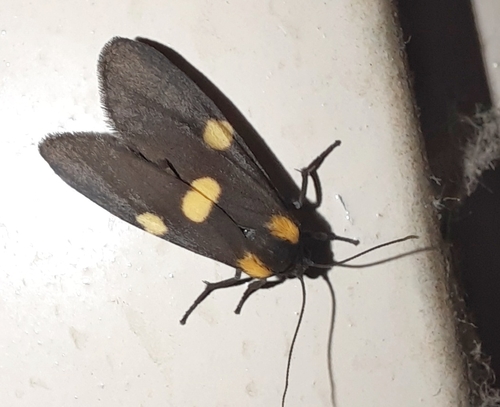
Miltochrista indica
species of insect
Cariocecus bocagei
extinct species of ornithopod dinosaurs
Lusura chera
Tifama is a monotypic moth genus in the family Notodontidae (the prominent moths) erected by Francis Walker in 1855. Its only species, Tifama chera, was first described by Dru Drury in 1773. The species is known to occur in Suriname and Brazil.
Galgadraco
Galgadraco is an extinct genus of azhdarchid pterosaurs known from the Late Cretaceous (Maastrichtian age) Serra da Galga Formation of Brazil. The genus contains a single species, Galgadraco zephyrius, known from a fragment of the upper beak. It represents the first pterosaur described from the Bauru Group.
Colotis hildebrandtii
species of insect

Green sulfur bacteria
phylum of bacteria
Eotephradactylus
Eotephradactylus (meaning "ash-winged dawn goddess") is an extinct genus of pterosaurs known from the Late Triassic of what is now Arizona, United States. The genus contains a single species, Eotephradactylus mcintireae, discovered in 2011 and named in 2025. It is known from part of the lower jaw, isolated teeth, and possibly a wing bone found in the Chinle Formation, which dates to the Norian age. These bones were found in a bone bed in addition to many other species, including various fish, mammal precursors, turtles, and other reptiles.
Hypogeomys australis
species of mammal
Heptalitha boliviensis
species of insect
Clarkeia sabulalis
species of insect
Musankwa
Musankwa is an extinct genus of massopodan sauropodomorph dinosaurs from the Late Triassic (Norian) Pebbly Arkose Formation of Zimbabwe. The genus contains a single species, Musankwa sanyatiensis, known from an incomplete hindlimb. Musankwa represents the fourth dinosaur genus to be named from Zimbabwe.
Griphopithecus suessi
species of mammal
Echimyini
Echimyini is a tribe of echimyid rodents, proposed in 2016, and containing 13 extant genera: all of the tree rats Echimys, Phyllomys, Makalata, Pattonomys, Toromys, Diplomys, Santamartamys, and Isothrix, the long recognized dactylomines Dactylomys, Olallamys, and Kannabateomys, and the enigmatic and previously classified as eumysopines Lonchothrix and Mesomys. All these spiny rats genera are arboreal. Worth of note, the arboreal genus Callistomys – the painted-tree rat – does not belong to the tribe Echimyini. Because it is phylogenetically closer to Myocastor, Hoplomys, Proechimys, and Thrich
Petoskey stone
type of fossil
Moncina
Moncina is a subtribe of butterflies in the skipper subfamily Hesperiinae.
Gesta propertius
species of insect
Mustela mopbie
Species of mammal
Aphaurosuchus
Aphaurosuchus is an extinct genus of baurusuchid mesoeucrocodylian known from the Late Cretaceous Bauru Basin of São Paulo, southern Brazil. It contains two species, Aphaurosuchus escharafacies and Aphaurosuchus kaiju.
Chromeornis
Chromeornis (; ) is an extinct genus of longipterygid enantiornithean bird known from the Early Cretaceous (Aptian age) Jiufotang Formation of China. The genus contains a single species, Chromeornis funkyi, known from most of an articulated skeleton preserved on a slab and counterslab. This specimen was found with a mass of gastroliths in the esophagus, but these were likely not the gizzard stones expected in the gizzard of some birds. Instead, they may have been the result of an illness, with the animal dying after attempting to regurgitate them.
Kinglet
The kinglets or crests are small birds in the family Regulidae. Species in this family were formerly classified with the Old World warblers. "Regulidae" is derived from the Latin word regulus, diminutive for "king", and refers to the coloured crowns of adult birds. This family has representatives in Eurasia and North America. There are six species in this family; one, the Madeira firecrest (Regulus madeirensis), was only recently split from the common firecrest as a separate species. The ruby-crowned kinglet differs sufficiently in its voice and plumage to be afforded its own genus, Corthylio.
Saileriolidae
Saileriolidae is a family of true bugs and is considered a basal or "primitive" family within the stink bug lineage. They are found only in Asia. Originally included within the family Urostylididae, the group has recently been recognized as a separate family-rank lineage.
Medusavirus
Medusavirus is a genus of nucleocytoplasmic large DNA viruses that is the sole representative of Mamonoviridae (from mamono (), the Japanese word for "monster" in reference to Megaviricetes + -viridae). It was first isolated from a Japanese hot spring in 2019. It notably encodes all five types of histones — H1, H2A, H2B, H3, and H4 — which are involved in DNA packaging in eukaryotes, raising the possibility that they may have been involved in the origin of eukaryotes. The virus can harden amoebae of the species Acanthamoeba castellanii into stone-like cysts, but infection usually causes infect
Pogonostoma
Pogonostoma is a genus of tiger beetles endemic to Madagascar.
Alpenus diversatus
species of insect
Aethalodelphis
thumb | right
Aethalodelphis is a genus of dolphins that was erected in 2025. The Pacific white-sided dolphin (Aethalodelphis obliquidens) and dusky dolphin (Aethalodelphis obscurus) are the only members of the genus. These species were formerly included in the genus Lagenorhynchus, but several studies demonstrated that Lagenorhynchus as previously constituted was polyphyletic. As a result, in 2025 the Pacific white-sided dolphin and dusky dolphin were reclassified into the new genus Aethalodelphis.
Propterodactylus
Propterodactylus (meaning "before Pterodactylus") is an extinct genus of transitional monofenestratan pterosaurs from the Late Jurassic Painten Formation of Germany. The genus contains a single species, P. frankerlae, known from a complete articulated skeleton. Before its naming, Propterodactylus was referred to as the "Painten " in the scientific literature.
Pangupterus
Pangupterus (meaning Pangu wing) is a genus of pterodactyloid pterosaur from the Early Cretaceous Jiufotang Formation of China. It was first described and named by Lü Junchang et al.

Coxsackie A virus
group of viruses
Asthenotricha sjostedti
species of moth
Akharhynchus
Akharhynchus (meaning "another snout") is an extinct genus of tropeognathine pteranodontoid pterosaurs possibly from the Cretaceous Kem Kem Group of Morocco. The genus contains a single species, A. martilli, known from a small fragment of the premaxillae.
Macrocoma aladina
species of leaf beetle
Gongshuilong
Gongshuilong () is an extinct genus of saurolophine hadrosaurid dinosaur known from the Late Cretaceous (Maastrichtian age) Lianhe Formation of China. The genus contains a single species, Gongshuilong fanwei, known from a bonebed representing the disarticulated remains of at least two individuals. Gongshuilong is a member of the group Brachylophosaurini within the Hadrosauridae, and it is the second member of this otherwise North American clade, following Wulagasaurus, found in Asia. It is also the first hadrosaurid to be named from fossils found in South China. Gongshuilong is characterized b
Ungava brown bear
extinct population of grizzly bears
Yeneen
Yeneen is an extinct genus of titanosaurian sauropod dinosaurs known from the Late Cretaceous (Santonian age) Bajo de la Carpa Formation of Argentina. The genus contains a single species, Yeneen houssayi, known from at least one partial skeleton. Its discovery highlights the diversity of titanosaurs in this formation, which also includes Bonitasaura, Inawentu, Overosaurus, Rinconsaurus, and Traukutitan.
Phyllocnistis magnoliaeella
species of insect
Cheke's wood rail
Extinct species of bird
Huaxiadraco
Huaxiadraco (meaning "Hua Xia [China] dragon") is a genus of tapejarid pterodactyloid pterosaur from the Aptian-age Lower Cretaceous Jiufotang Formation of Chaoyang, Liaoning, China. It is the third valid genus of tapejarid from the Jehol Biota, after Sinopterus and Eopteranodon. It contains one species, Huaxiadraco corollatus, originally assigned to the defunct genus Huaxiapterus.

Erinnyis guttularis
species of insect
Machimosauridae
Machimosauridae is an extinct family of teleosauroid thalattosuchian crocodyliforms. The family was first identified in 2016, when fossils of teleosauroid thalattosuchians, including an indeterminate close relative of Lemmysuchus and Machimosaurus, were described from the Middle Jurassic (Bathonian) of Morocco. The family was largely expanded in 2020 when the systematics of Teleosauroidea were re-reviewed. Members of this family generally were larger than the teleosaurids.
Macrocoma budura
species of leaf beetle
Maocyon
Maocyon ("dog from Maoming") is an extinct genus of hyaenodonts from extinct paraphyletic subfamily Hyainailourinae within paraphyletic family Hyainailouridae, that lived during the late Eocene in China. It is a monotypic genus that contains the species M. peregrinus.
Megalocnidae
Megalocnidae is an extinct family (alternatively considered to be a superfamily as Megalocnoidea) of sloths, native to the islands of the Greater Antilles from the Early Oligocene to the Mid-Holocene. They are known from Cuba, Hispaniola and Puerto Rico, but are absent from Jamaica. While they were formerly placed in the Megalonychidae alongside two-toed sloths and ground sloths like Megalonyx, recent mitochondrial DNA and collagen sequencing studies place them as the earliest diverging group basal to all other sloths. or as an outgroup to Megatherioidea. They displayed significant diversity i
Magnipterygius
Magnipterygius is an extinct genus of primitive ichthyosaur found in the Early Jurassic (Lower Toarcian) Posidonia Shale of Dotternhausen, Germany. The holotype specimen is SMNS96922, a nearly complete articulated skeleton. This genus is well known as a small-sized ichthyosaur, of around length, making it the second genus of that size after the Triassic. Due to the similarities with the genus Stenopterygius it has been classified as a member of the family Stenopterygiidae.
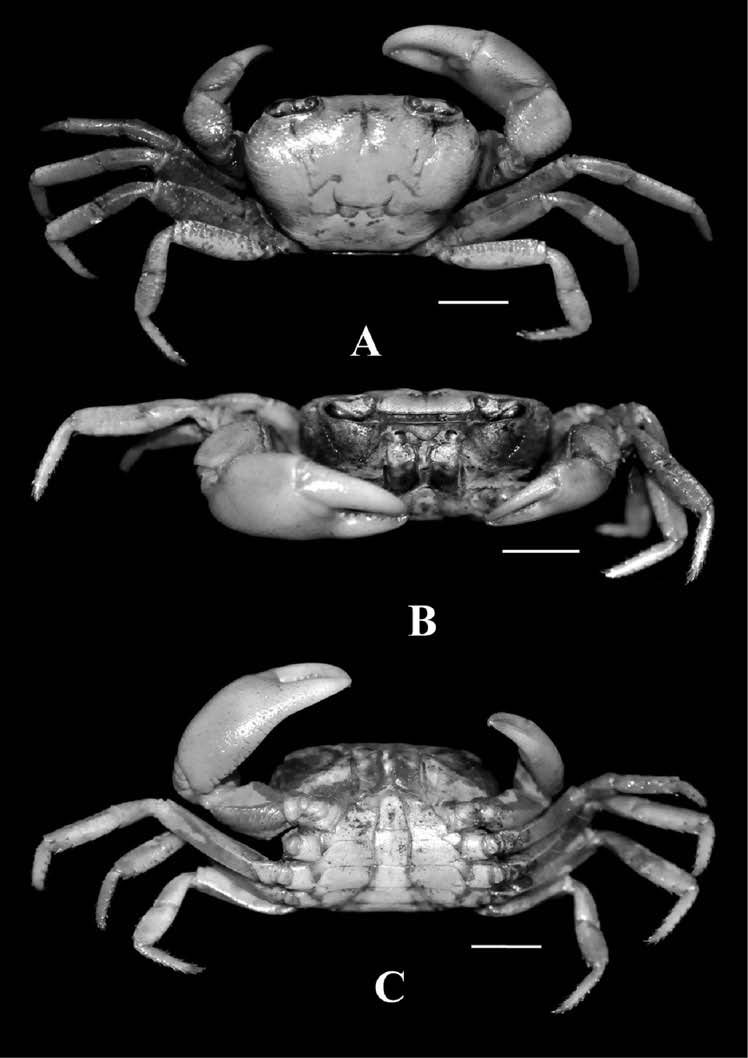
Ghatiana
Ghatiana is a genus of freshwater crabs, found among the Western Ghats in India.
Erratus
Erratus is an extinct genus of marine arthropod from the Cambrian of China. Its type and only species is Erratus sperare. Erratus is likely one of the most basal known arthropods, and its discovery has helped scientists understand the early evolution of arthropod trunk appendages. Some of the stem-arthropods like radiodonts did not have legs, instead they had flap like appendages that helped them swim. Erratus on the other hand had not only flaps but also a set of primitive legs. It also supported the theory that the gills of aquatic arthropods probably evolved into the wings and lungs of terr
Paleoanguimorpha
Paleoanguimorpha is a clade of anguimorphs comprising Shinisauria (represented today by shinisaurids) and Goannasauria (represented today by Varanoidea which includes the families Lanthanotidae and Varanidae). Morphological studies in the past also classified helodermatids and pythonomorphs with the varanoids in the clade Platynota, while the Chinese crocodile lizard was classified as a xenosaurid. Current molecular work finds no support in these groupings and instead has found the helodermatids more related to Diploglossa in the sister clade Neoanguimorpha, while the Chinese crocodile lizard
Bothriocroton hydrosauri
Australian tick species
Spathagnathus
Spathagnathus (meaning "spatula jaw") is a genus of ctenochasmatid pterosaur from the Late Jurassic Solnhofen Limestone of Germany. The type and only species is Spathagnathus roeperi, known from a single jawbone. It is the oldest known member of Gnathosaurinae, and the second pterosaur from the Solnhofen's Brunn quarry after the rhamphorhynchid Bellubrunnus. The unique dental anatomy of the taxon is thought to indicate a diet of tough, hard-shelled prey items.