Category
page 1Terpenes and terpenoids
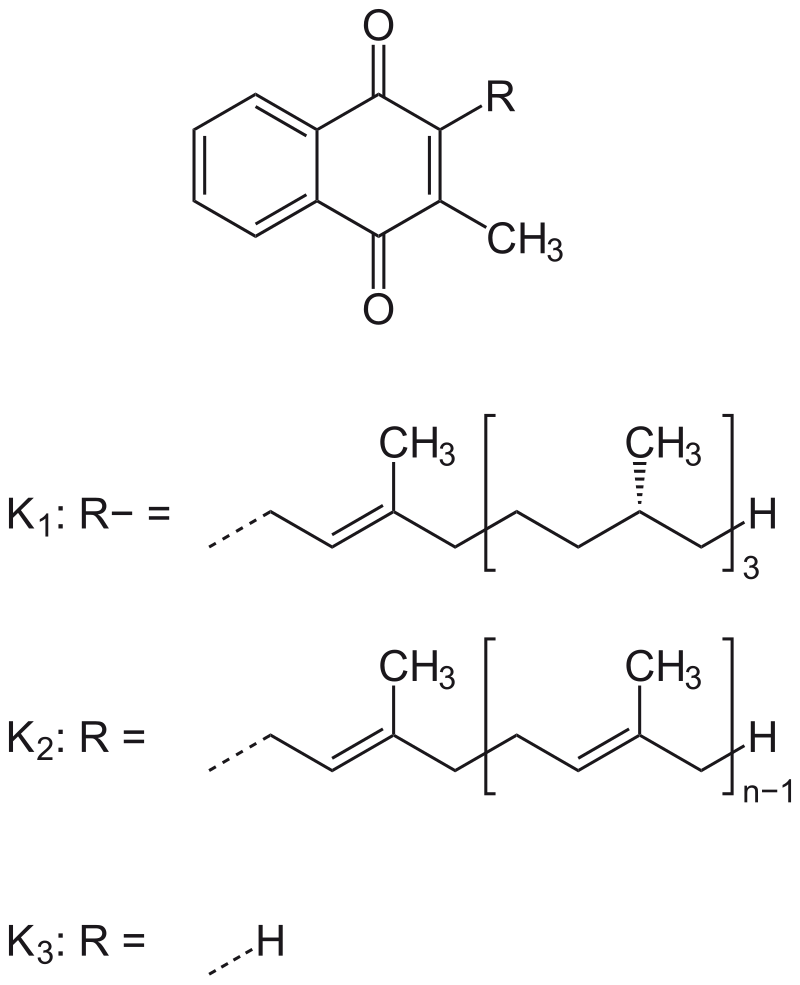
vitamin K
fat-soluble vitamins found in foods and marketed as dietary supplements

terpene
thumb|upright|Many terpenes are derived commercially from conifer resins, such as those made by this pine.

turpentine
Turpentine (which is also called spirit of turpentine, oil of turpentine, terebenthine, terebenthene, terebinthine and, colloquially, turps) is a fluid obtainable by the distillation of resin harvested from living trees, mainly pines. Principally used as a specialized solvent, it is also a source of material for organic syntheses.
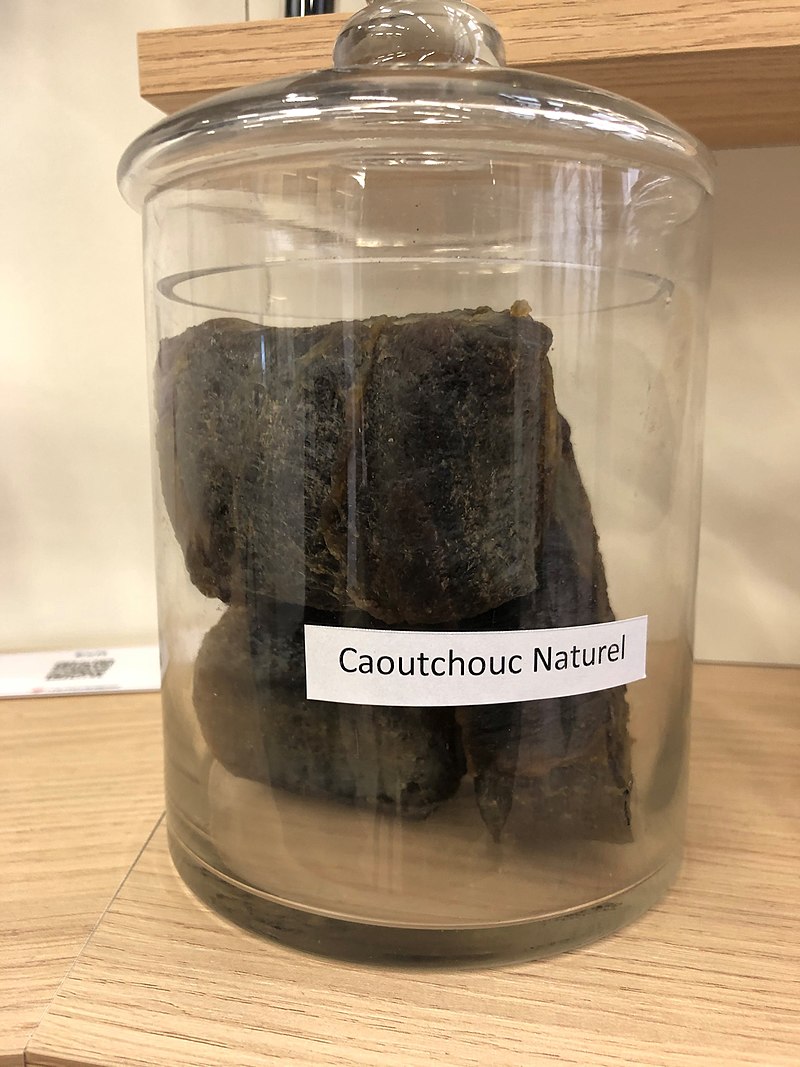
natural rubber
polymers of the organic compound isoprene, with minor impurities of other organic compounds; refined from latex harvested from rubber trees
terpenoids
The terpenoids, also known as isoprenoids, are a class of naturally occurring organic chemicals derived from the 5-carbon compound isoprene and its derivatives called terpenes, diterpenes, etc. While sometimes used interchangeably with "terpenes", terpenoids contain additional functional groups, usually containing oxygen. When combined with the hydrocarbon terpenes, terpenoids comprise about 80,000 compounds. They are the largest class of plant secondary metabolites, representing about 60% of known natural products. Many terpenoids have substantial pharmacological bioactivity and are therefore
salvinorin A
chemical compound

camphene
Camphene is a bicyclic organic compound. It is one of the most pervasive monoterpenes. As with other terpenes, it is insoluble in water, flammable, colorless, and has a pungent smell. It is a minor constituent of many essential oils such as turpentine, cypress oil, camphor oil, citronella oil, neroli, ginger oil, valerian, and mango. It is produced industrially by isomerization of the more common alpha-pinene using a solid acid catalyst such as titanium dioxide.
griseofulvin
Griseofulvin is an antifungal medication used to treat dermatophytoses (ringworm). This includes fungal infections of the nails and scalp, as well as the skin when antifungal creams have not worked. It is taken by mouth.

cantharidin
Cantharidin is an odorless, colorless fatty substance of the terpenoid class, which is secreted by many species of blister beetles. Its main current use in pharmacology is treating molluscum contagiosum and warts topically. It is a burn agent, poisonous in large doses. It has been historically used as an aphrodisiac (in preparations sold under the name "Spanish fly"). In its natural form, cantharidin is secreted by the male blister beetle, and given to the female as a copulatory gift during mating. Afterwards, the female beetle covers her eggs with it as a defense against predators.

resiniferatoxin
Resiniferatoxin (RTX) is a naturally occurring chemical found in resin spurge (Euphorbia resinifera), a cactus-like plant commonly found in Morocco, and in Euphorbia poissonii found in northern Nigeria. It is a potent functional analog of capsaicin, the active ingredient in chili peppers.
monoterpene
Monoterpenes are a class of terpenes that consist of two isoprene units and have the molecular formula C10H16. Monoterpenes may be linear (acyclic) or contain rings (monocyclic and bicyclic). Modified terpenes, such as those containing oxygen functionality or missing a methyl group, are called monoterpenoids. Monoterpenes and monoterpenoids are diverse. They have relevance to the pharmaceutical, cosmetic, agricultural, and food industries.
dolichol-20
Dolichol refers to any of a group of long-chain mostly unsaturated organic compounds that are made up of varying numbers of isoprene units terminating in an α-saturated isoprenoid group, containing an alcohol functional group.

azadirachtin
Azadirachtin, a chemical compound belonging to the limonoid group, is a secondary metabolite present in neem seeds. It is an insecticide used particularly in organic farming.
limonin
Limonin is a limonoid, and a bitter, white, crystalline substance found in citrus and other plants. It is also known as limonoate D-ring-lactone and limonoic acid di-delta-lactone. Chemically, it is a member of the class of compounds known as furanolactones.
bactoprenol
Bactoprenol also known as dolichol-11 and (isomerically vaguely) C55-isoprenyl alcohol (C55-OH) is a lipid first identified in certain species of lactobacilli. It is a hydrophobic alcohol that plays a key role in the growth of cell walls (peptidoglycan) in Gram-positive bacteria.
ambroxide
Ambroxide, widely known by the brand name Ambroxan, is a naturally occurring terpenoid and one of the key constituents responsible for the odor of ambergris. It is an autoxidation product of ambrein. Ambroxide is used in perfumery for creating ambergris notes and as a fixative. Ambroxide has a scent with woody, musky and slightly salty nuances. Another name for ambroxan is ambrocenide. Small amounts (< 0.01 ppm) are used as a flavoring in food.
bornyl acetate
chemical compound
tinyatoxin
Tinyatoxin (TTX or TTN) is an analog of the neurotoxin resiniferatoxin. It occurs naturally in Euphorbia poissonii.
limonoid
thumb|right|Chemical structure of the prototypical limonoid limonin
all-trans-pentaprenyl diphosphate
chemical compound
(±)-isobornyl acetate
chemical compound
polyprenol
Polyprenols are natural long-chain isoprenoid alcohols of the general formula H-(C5H8)n-OH, where n is the number of isoprene units. Any prenol with more than 4 isoprene units is a polyprenol. Polyprenols play an important function, acting as natural bioregulators and are found in small quantities in various plant tissues. Dolichols, which are found in all living creatures, including humans, are their 2,3-dihydro derivatives.
tetraprenylacetone
Teprenone (or geranylgeranylacetone), sold under the brand name Selbex, is a medication used for the treatment of gastric ulcers.
rotundone
Rotundone is a sesquiterpene originally discovered in the tubers of Java grass (Cyperus rotundus). Rotundone is also present in the essential oils of black pepper, marjoram, oregano, rosemary, basil, thyme, and geranium, as well as in some Syrah wines. It imparts a peppery aroma.
Callicarpenal
Callicarpenal is a terpenoid that has been isolated from plants of the genus Callicarpa (beautyberry). It acts as an insect repellent against mosquitoes (Aedes aegypti and Anopheles stephensi) and fire ants. It also has activity against ticks (Ixodes scapularis and Amblyomma americanum).
luteone
terpenoid chemical compound