Category
page 1Vespidae

Vespa
Hornets are wasps of the genus Vespa in the subfamily Vespinae (the vespine wasps). They are the largest of the eusocial wasps, with some species reaching in length. They are similar in appearance to their close relatives the yellowjackets, but are distinguished from other vespine wasps by the relatively large top margin of the head. Worldwide, 22 species of Vespa are recognized. Most species only occur in the tropics of Asia, though the European hornet (V. crabro) is widely distributed throughout Europe, Russia, North America, and north-eastern Asia. Wasps of the genus Dolichovespula native t

Vespa crabro
species of insect

Vespidae
thumb|right|Palaeovespa florissantia, late [[Eocene]]

Vespa velutina
species of insect

Vespula vulgaris
species of insect

Asian giant hornet
species of insect

Vespula germanica
species of insect.

Vespa orientalis
species of insect
Vespinae
The subfamily Vespinae contains the largest and best-known groups of eusocial wasps, including true hornets (the genus Vespa), and the "yellowjackets" (genera Dolichovespula and Vespula). The remaining genus, Provespa, is a small, poorly known group of nocturnal wasps from Southeast Asia. One genus, Palaeovespa, has been described in the Paleocene to Eocene fossil records of North America and Europe. Collectively, the group can be found on all continents except Antarctica, and several of these wasps are invasive species, introduced beyond their native ranges, and can be major pests.
thumb|left

Vespula
Vespula is a small genus of social wasps, widely distributed in the Northern Hemisphere. Along with members of their sister genus Dolichovespula, they are collectively known by the common name yellowjackets (or yellow jackets) in North America. Vespula species have a shorter oculomalar space (shown in the figure below right) and a more pronounced tendency to nest underground than Dolichovespula.

Polistinae
The Polistinae is a subfamily of eusocial wasps belonging to the family Vespidae. They are closely related to the yellowjackets and true hornets of the subfamily Vespinae and are divided into four tribes. With about 1,100 species total, it is the second-most diverse subfamily within the Vespidae, and while most species are tropical or subtropical, they include some of the most frequently encountered large wasps in temperate regions.

Dolichovespula
Dolichovespula is a small genus of social wasps distributed widely throughout the Northern Hemisphere. The yellow and black members of the genus are known by the common name yellowjackets in North America, such as Dolichovespula norwegica, along with members of their sister genus Vespula. In a study on the nesting biology of Dolichovespula, a colony of D. maculata with 771 workers was reported as having the largest recorded population count.

Vespa affinis
species of insect
Masarinae
subfamily of insects

Median wasp
species of insect

Greater banded hornet
species of insect

Provespa
Provespa is a small genus of Vespidae, made up of nocturnal wasps from Southeast Asia, sometimes referred to as "night wasps" or "night hornets", though they are not true hornets (genus Vespa). They are the only nocturnal members of the subfamily Vespinae, and also the only vespines where new colonies are formed by swarming (one queen attended by a large number of workers, similar to honey bees). They tend to build their nests from fibrous plant material, making them a uniform greyish brown colour which is often difficult to locate.

Vespa basalis
species of insect

Dolichovespula saxonica
species of insect

Dolichovespula sylvestris
species of insect

Vespula austriaca
species of insect

Vespa bicolor
species of insect

Vespula rufa
species of insect

Dolichovespula norwegica
species of insect

bald-faced hornet
species of insect

Vespa ducalis
species of insect
Paper wasps

Polybia
Polybia is a genus of eusocial wasps ranging from Central to South America (Mexico to Brazil, Argentina). Some produce enough honey to be collected and eaten by local people.

Vespa simillima
species of insect
.jpg)
Stenogastrinae
The Stenogastrinae are a subfamily of social wasps included in the family Vespidae. They are sometimes called hover wasps owing to the particular hovering flight of some species. Their morphology and biology present interesting peculiarities.

Vespa dybowskii
species of insect
%20(30591274156).jpg)
Brachygastra
Honey wasps are species in the genus Brachygastra (from Ancient Greek βραχύς (brakhús), meaning "short", and γαστήρ (gastḗr), meaning "belly") of the family Vespidae. Brachygastra comprises 17 species of social paper wasps. The ancestral species are thought to have diverged about 32 million years ago within diverse Amazon rainforest. Subsequent speciation within the genus is thought to have mostly occurred between 23 Ma and 10 Ma, during the time of the Andean uplift when the landscape was significantly altered due to tectonic activity. The current cladistic organisation of the genus has been

Dolichovespula adulterina
species of insect

Vespa soror
species of insect

Vespa luctuosa
species of hymenopterans

Vespa analis
species of insect

Mischocyttarus
Mischocyttarus is a very large, primarily Neotropical genus of social wasps with a few species found also in the Nearctic region. It is the only member of the tribe Mischocyttarini; the asymmetrical tarsal lobes of Mischocyttarus separates it from the tribe Epiponini. Mischocyttarus is the largest genus of social wasps, containing over 200 species and subspecies. Mischocyttarus wasps build a relatively simple, single comb nest. Sometimes, the nest is built within a meter of the nest of Polistes carnifex. Foraging adults bring nectar and small caterpillars back to the nest to feed to the develo

Dolichovespula omissa
species of wasp
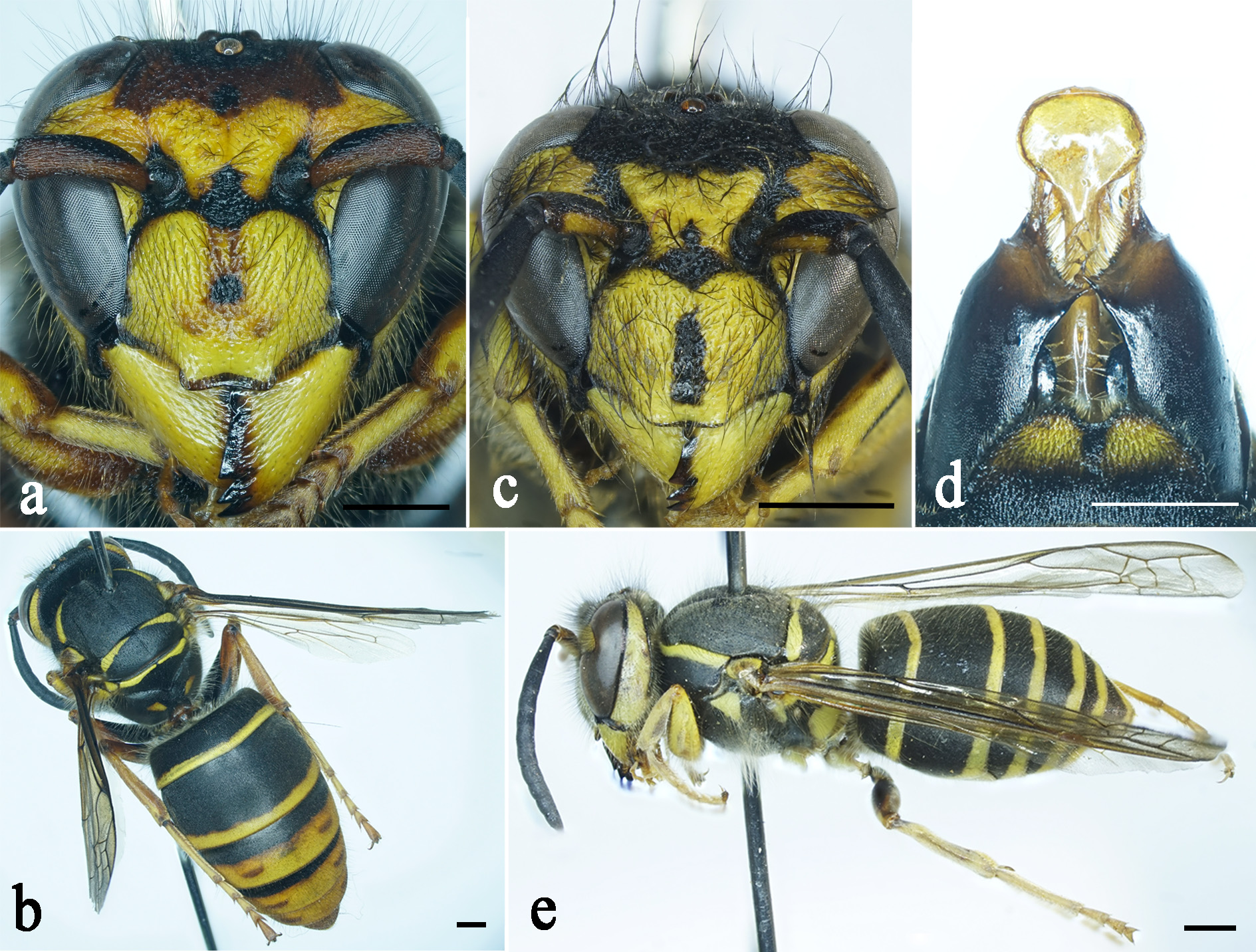
Vespula flaviceps
species of insect

Vespa vivax
species of insect
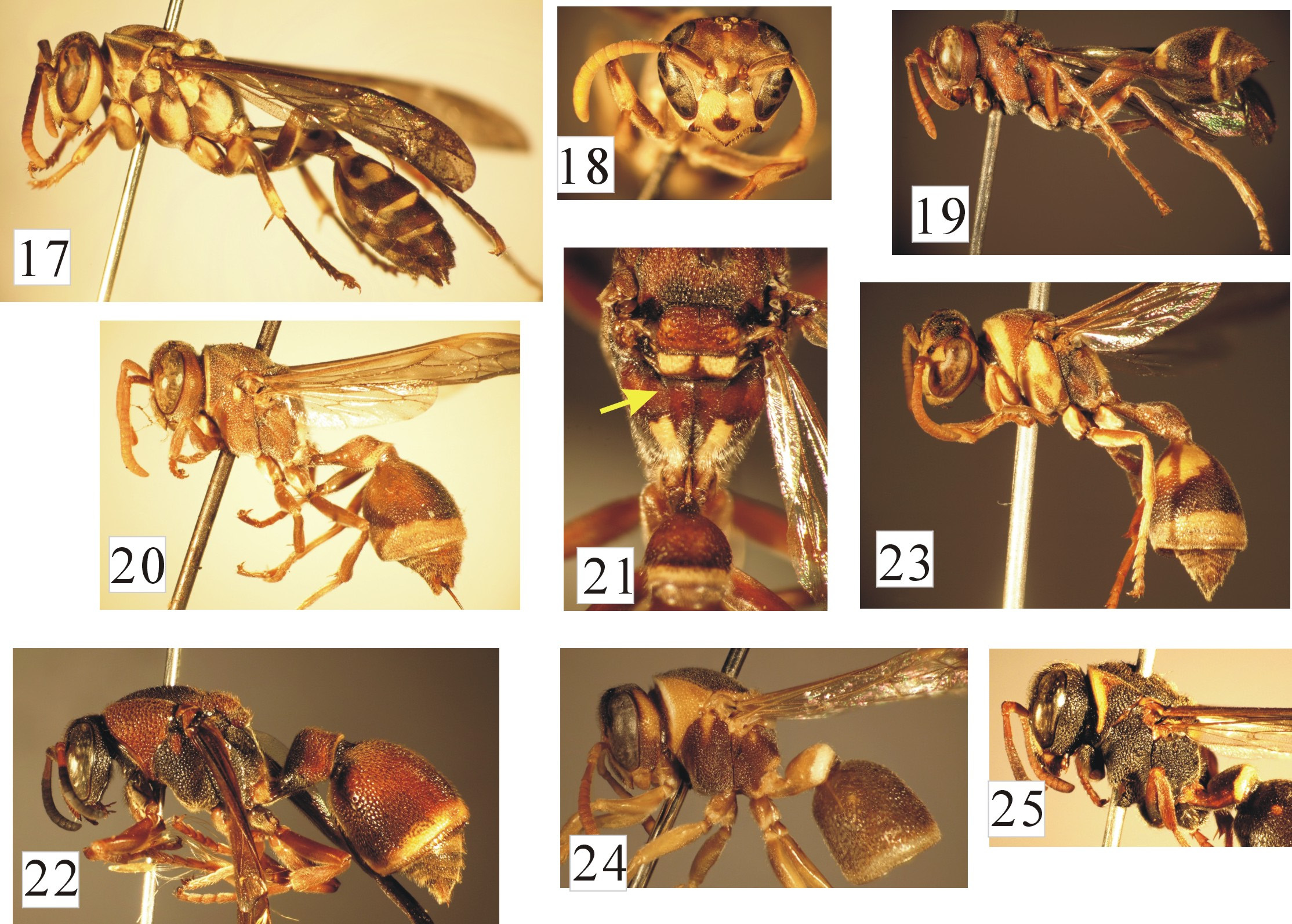
Ropalidia marginata
species of insect

Palaeovespa
Palaeovespa is an extinct genus of wasp in the Vespidae subfamily Vespinae. The genus currently contains eight species: five from the Priabonian stage Florissant Formation in Colorado, United States, two from the middle Eocene Baltic amber deposits of Europe, and one species from the late Paleocene of France.

Ancistrocerus parietum
species of insect
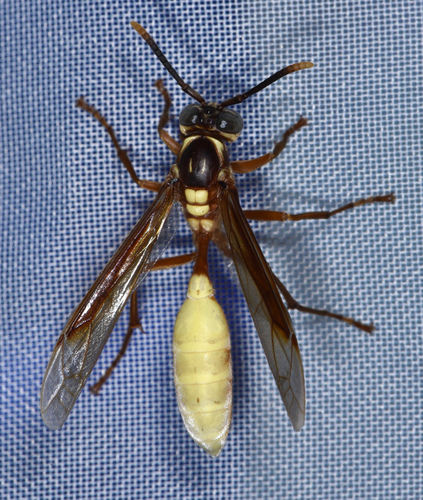
Apoica
Apoica is a genus of eusocial paper wasp found throughout the Central and South American tropics. These wasps are truly nocturnal, carrying out their foraging activities after the setting of the sun. They prefer to construct their nests, which have an open comb like many paper wasps, under large leaves, or in shrubs. During the day, wasps covering the comb fan their wings to cool the nest, keeping it at a suitable temperature for larval development.
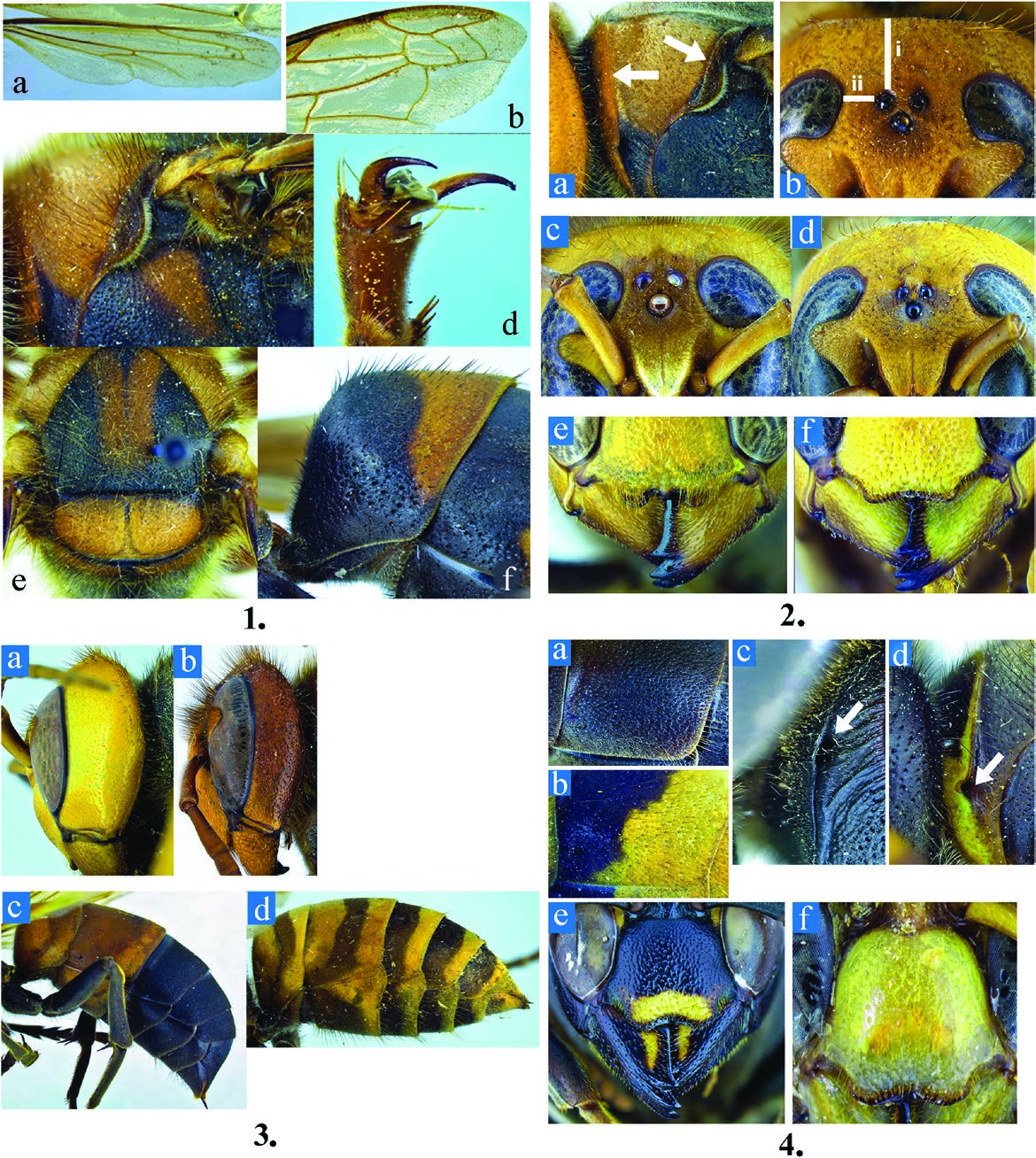
Vespa binghami
species of insect
Polybia paulista
species of wasp
Euparagiinae
The Euparagiinae are a small subfamily of rare wasps in the family Vespidae containing a single extant genus Euparagia. The group had a cosmopolitan distribution in past geological times extending back to the Early Cretaceous, but is now a geographically relict taxon known only from the desert regions of the Southwestern United States and northwestern Mexico.
Dolichovespula arenaria
species of wasp
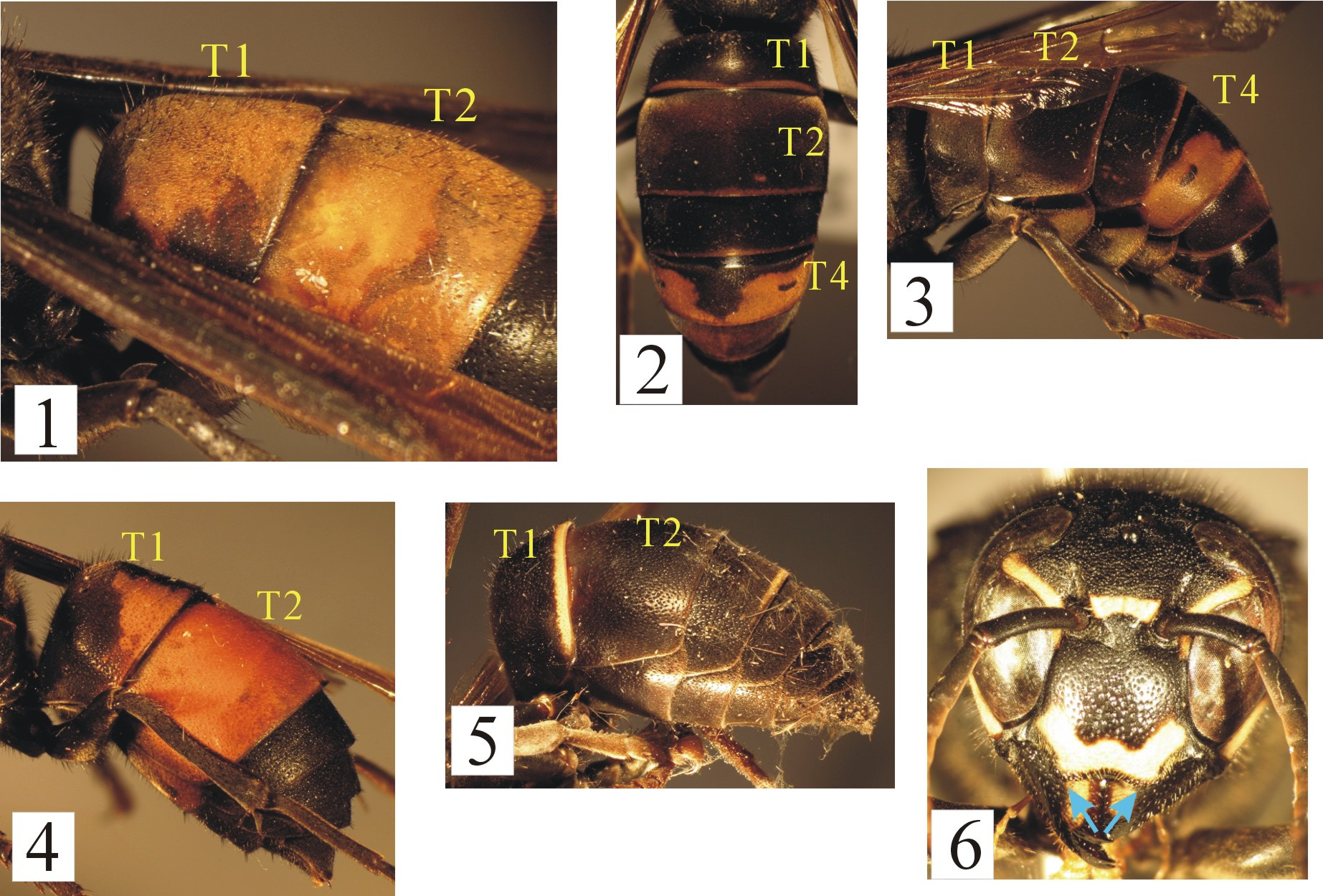
Vespa fervida
species of insect
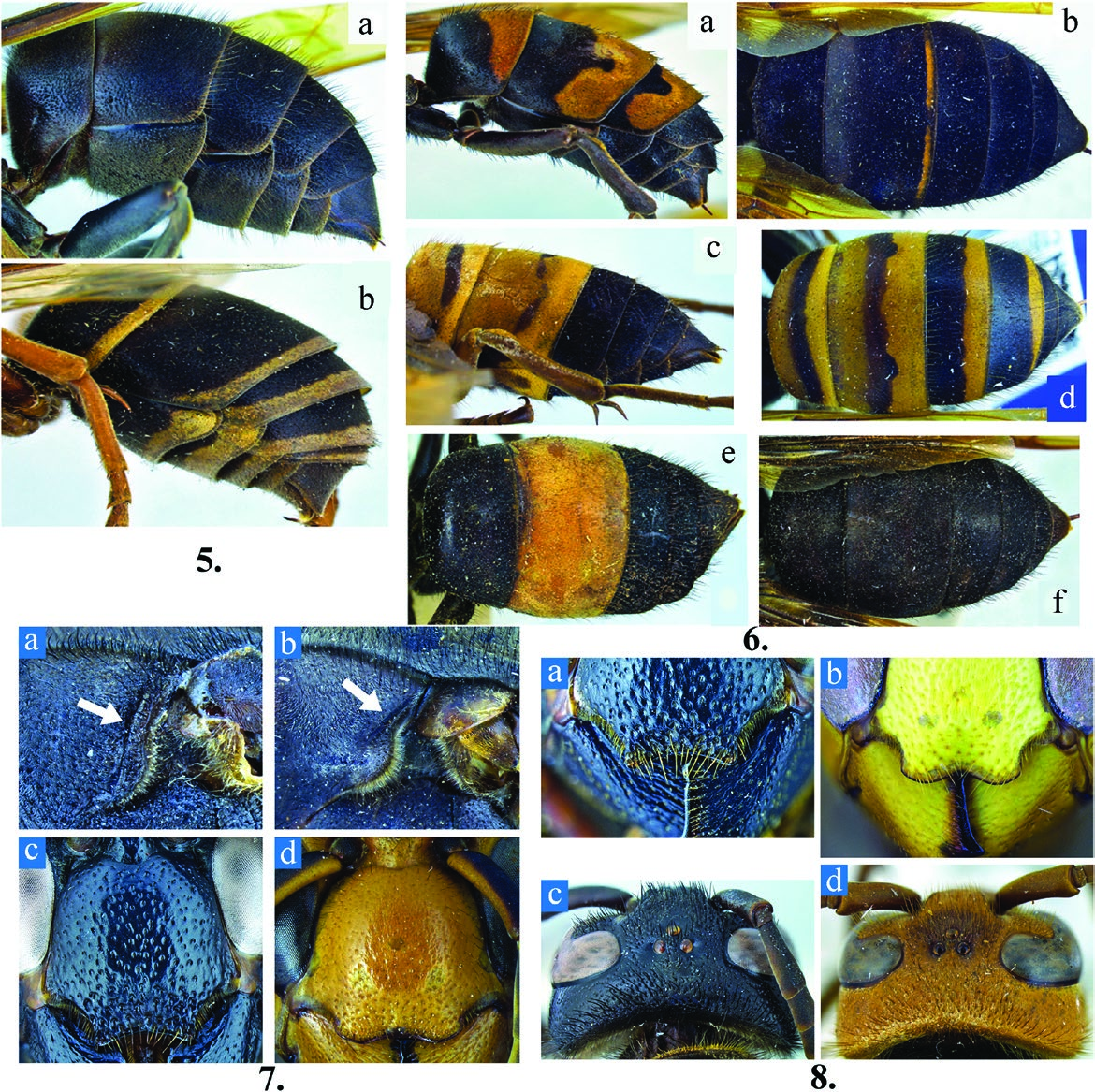
Vespa philippinensis
species of hymenopterans

Ropalidia
Ropalidia is a large genus of eusocial paper wasps (Polistinae) in the tribe Ropalidiini distributed throughout the Afrotropical, Indomalayan and Australasian biogeographical regions. The genus Ropalidia is unusual because it contains both independent and swarm-founding species. Ropalidia romandi is one of the swarm founding species, meaning that new nests are founded by a large group of workers with a smaller number of inseminated females (egg-laying foundresses), while Ropalidia revolutionalis is independent-founding, meaning that each nest is founded by a single foundress.

Vespa bellicosa
species of hymenopterans
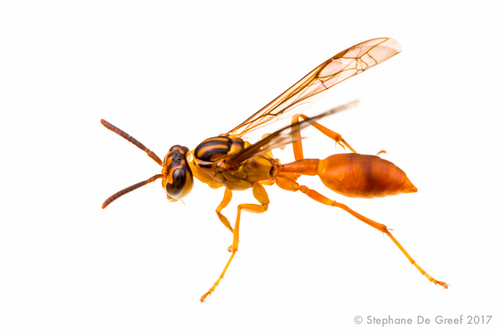
Agelaia
Agelaia is a genus of Neotropical social wasps (family Vespidae), with species from Mexico to northern Argentina. 17 of the 33 described species are found in Brazil. These species are swarm founders that nest in cavities. The nest generally is without an envelope, with that of A. areata a notable exception for having a complete envelope.

Parachartergus
Parachartergus is a genus of epiponine social wasps belonging to the subfamily Polistinae.
Vespula pensylvanica
species of insect
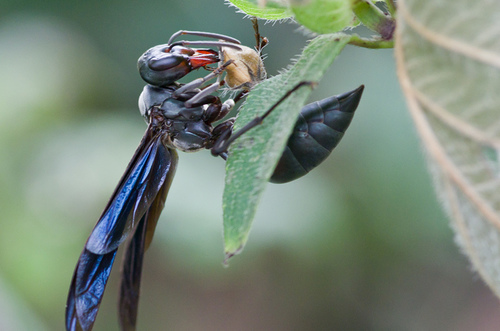
Synoeca
Synoeca is a genus of eusocial paper wasps found in the tropical forests of the Americas. Commonly known as warrior wasps or drumming wasps, they are known for their aggressive behavior, a threat display consisting of multiple insects guarding a nest beating their wings in a synchronized fashion, and an extremely painful sting (rating at the highest level of 4 in the Schmidt sting pain index). The sting is barbed and if used often kills the wasp, which may be the reason why such a striking defensive display is used. This display escalates from drumming inside the nest to hundreds of wasps movi
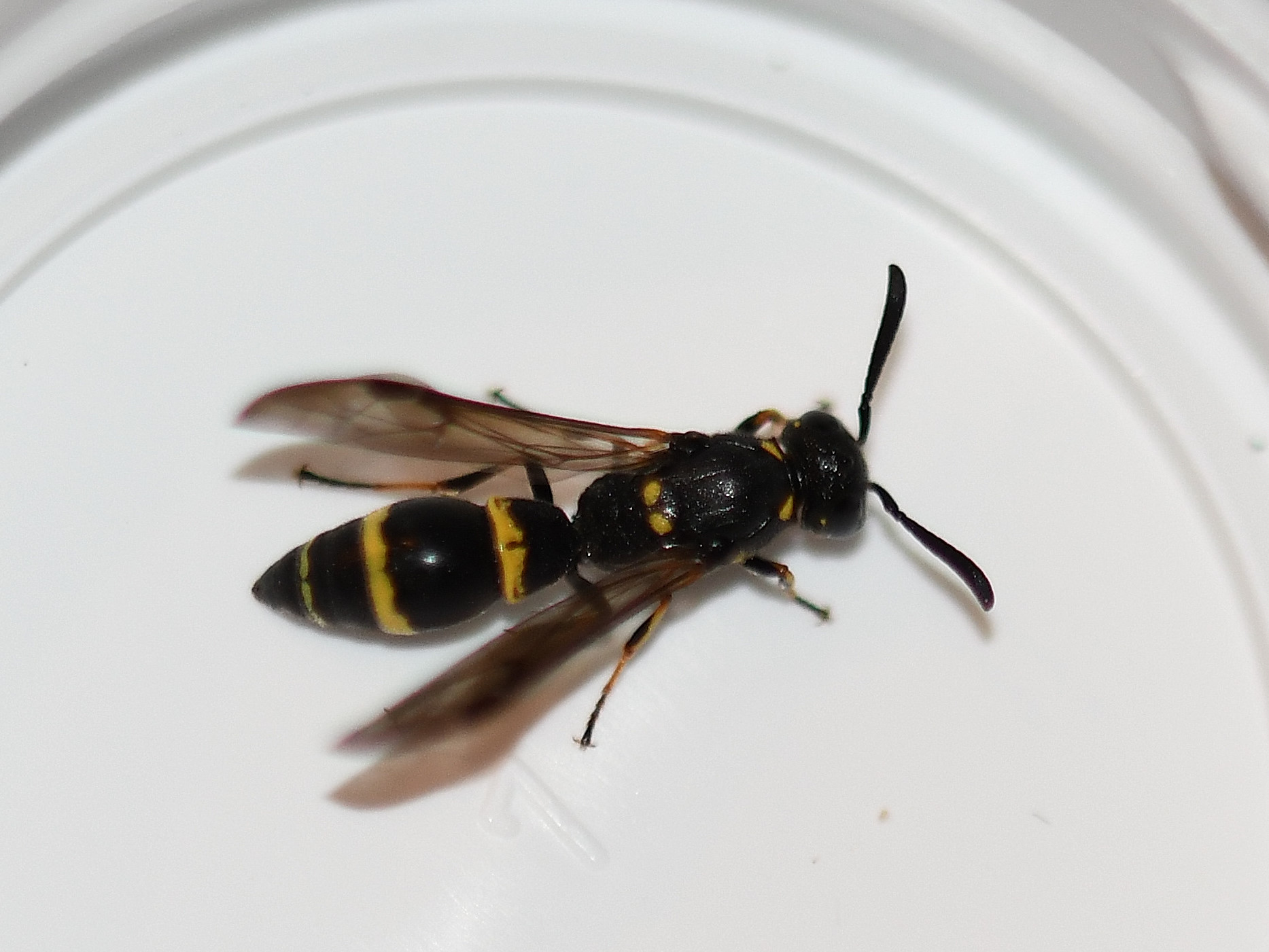
Symmorphus bifasciatus
species of insect
Paravespula
Paravespula is a small subgenus of yellowjacket wasps, including some of the best-known wasp species in the world: the German wasp, Vespula germanica; the eastern yellowjacket Vespula maculifrons; the western yellowjacket Vespula pensylvanica; and the common wasp, Vespula vulgaris. It is occasionally treated as a separate genus, but this is not widely accepted.

Agelaia multipicta
species of eusocial wasp of Mexico, Argentina and southern Brazil

Euparagia
Euparagia is a genus of wasps in the family Vespidae, the only extant genus in the subfamily Euparagiinae.