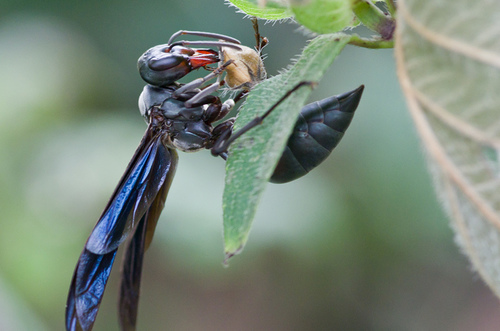
(c) djhiker, some rights reserved (CC BY-NC), uploaded by djhiker · cc-by-nc
Synoeca
Sign in to saveSynoeca is a genus of eusocial paper wasps found in the tropical forests of the Americas. Commonly known as warrior wasps or drumming wasps, they are known for their aggressive behavior, a threat display consisting of multiple insects guarding a nest beating their wings in a synchronized fashion, and an extremely painful sting (rating at the highest level of 4 in the Schmidt sting pain index). The sting is barbed and if used often kills the wasp, which may be the reason why such a striking defensive display is used. This display escalates from drumming inside the nest to hundreds of wasps movi
Species
Northern Warrior Wasp
GENUS
- KingdomAnimalia
- PhylumArthropoda
- ClassInsecta
- OrderHymenoptera
- FamilyVespidae
via GBIF
Museum specimens
- Specimen records
- 84
- With media
- 26
- Family
- Vespidae
- Collections
- CEDESU-UAC, ECOSUR
- Recorded in
- Mexico
Wikidata facts
Show 3 more facts
- Commons category
- Synoeca
- taxon rank
- genus
- taxon name
- Synoeca
Sources (1)
via Wikidata · CC0
~3 min read
Encyclopedic overview
5 sectionsContents
- Distribution and habitat
- Species
- Venom and potential utilisation
- References
- External links
Synoeca is a genus of eusocial paper wasps found in the tropical forests of the Americas. Commonly known as warrior wasps or drumming wasps, they are known for their aggressive behavior, a threat display consisting of multiple insects guarding a nest beating their wings in a synchronized fashion, and an extremely painful sting (rating at the highest level of 4 in the Schmidt sting pain index). The sting is barbed and if used often kills the wasp, which may be the reason why such a striking defensive display is used. This display escalates from drumming inside the nest to hundreds of wasps moving on to the envelope of the nest and continuing to drum. If this does not deter the threat only then do the wasps begin to sting.
==Distribution and habitat== The genus has a wide range within the Americas, with specimens being found in the tropical and subtropical portions thereof. S. septentrionalis is generally found in the northern part of the range, having been observed as far north as Mexico, throughout Central America and northern South America. A very similar species, S. ilheensis, extends into Brazil and, until 2017, was reported as a southern population of S. septentrionalis. The other species in the genus are predominantly found in South America, as far south as Argentina.
Excerpted from Wikipedia’s “Synoeca” article, available under the CC BY-SA 4.0 licence.