Category
page 1Vitamers
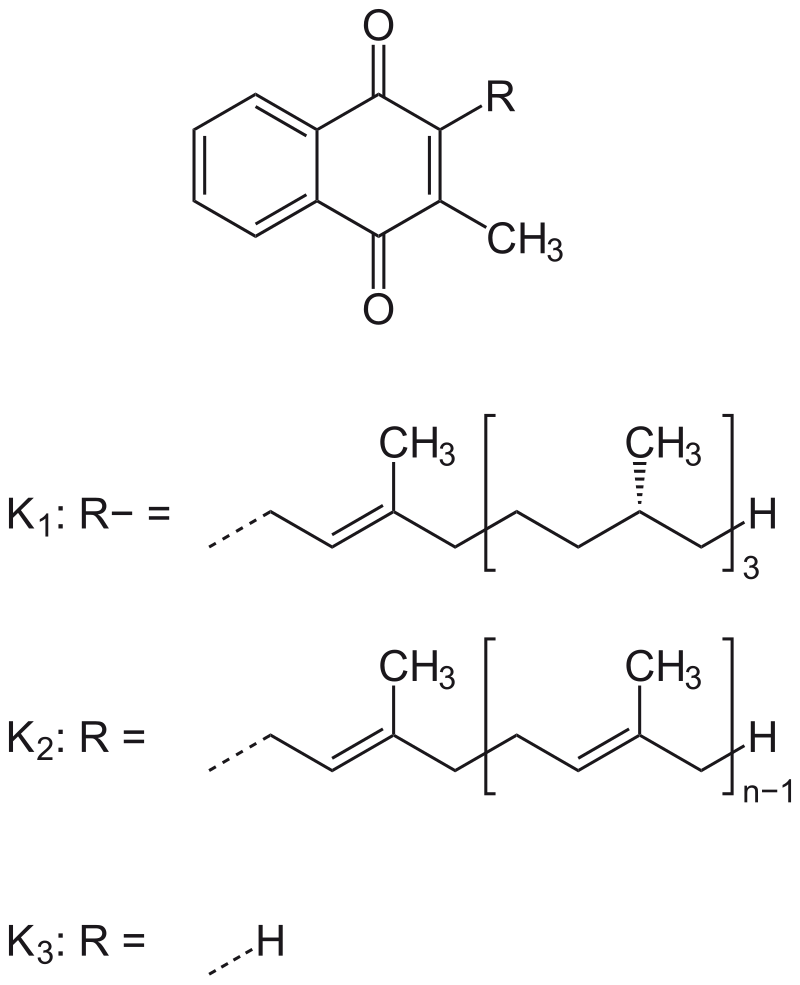
vitamin K
fat-soluble vitamins found in foods and marketed as dietary supplements
DL-ascorbic acid
group of chemical compounds

cholecalciferol
Cholecalciferol, also known as vitamin D3, colecalciferol or calciol, is a skin-made vitamin D that is found in certain foods and used as a dietary supplement. It was first described in 1936, and is on the World Health Organization's List of Essential Medicines. In 2023, it was the 68th most commonly prescribed medication in the United States, with more than 9million prescriptions, and is available as a generic medication.

ergocalciferol
Ergocalciferol, also known as vitamin D2 and nonspecifically calciferol, is a type of vitamin D found in food. It is used as a dietary supplement to prevent and treat vitamin D deficiency due to poor absorption by the intestines or liver disease. It may also be used for low blood calcium due to hypoparathyroidism. It is taken by mouth or via injection into a muscle.

tocopherol
Tocopherols (; TCP) are a class of organic compounds comprising various methylated phenols, many of which have vitamin E activity. Because the vitamin activity was first identified in 1936 from a dietary fertility factor in rats, it was named tocopherol, from Greek and , that is 'to carry a pregnancy', with the ending -ol signifying its status as a chemical alcohol.
.svg)
(E)-phytonadione
Phytomenadione, also known as vitamin K1, phylloquinone, or phytonadione, is a vitamin found in food and used as a dietary supplement. It is on the World Health Organization's List of Essential Medicines.
sodium ascorbate
chemical compound

cobamamide
Adenosylcobalamin (AdoCbl), also known as coenzyme B12, cobamamide, and dibencozide, is one of the biologically active forms of vitamin B12.
class=skin-invert-image|left|thumb|Schematic diagram of the propionate metabolic pathway. Adenosylcobalamin is required as a coenzyme by the methylmalonyl-CoA mutase in order to convert L-methylmalonyl-CoA into succinyl-CoA, otherwise methylmalonic acid accumulates.
Adenosylcobalamin participates as a cofactor in radical-mediated 1,2-carbon skeleton rearrangements. These processes require the formation of the deoxyadenosyl radical through homolytic dissoc
calcium ascorbate
chemical compound

tocotrienol
350px|right|thumb|class=skin-invert-image|General chemical structure of tocotrienols.
alpha(α)-Tocotrienol: R1 = Me, R2 = Me, R3 = Me; beta(β)-Tocotrienol: R1 = Me, R2 = H, R3= Me; gamma(γ)-Tocotrienol: R1 = H, R2 = Me, R3= Me; delta(δ)-Tocotrienol: R1 = H, R2 = H, R3= Me
vitamer
A vitamer () is any form in which some vitamin occurs. Each vitamer of a particular vitamin is a compound that performs the functions of that vitamin and prevents the symptoms of deficiency of the vitamin.