Category
page 1Warlords

Timur
Timur (1320s17/18 February 1405), also known as Tamerlane, was a Turco-Mongol conqueror, first ruler of the Timurid dynasty, and the founder of the Timurid Empire, which ruled over modern-day Afghanistan, Iran, and Central Asia. He was undefeated in battle and is widely regarded as one of the greatest military leaders and tacticians in history, as well as one of the most brutal and deadly. Timur is also considered a great patron of the arts, for he interacted with scholars and poets such as ibn Khaldun, Hafez, and Hafiz-i Abru. His reign led to the Timurid Renaissance.

David
David (; , "beloved one") was, originally, leader of the Tribe of Judah who became the first king of the united Kingdom of Israel according to the Hebrew Bible and Old Testament.

Yevgeny Prigozhin
Russian mercenary leader, oligarch, restaurateur, former owner of Wagner PVC (1961–2023)
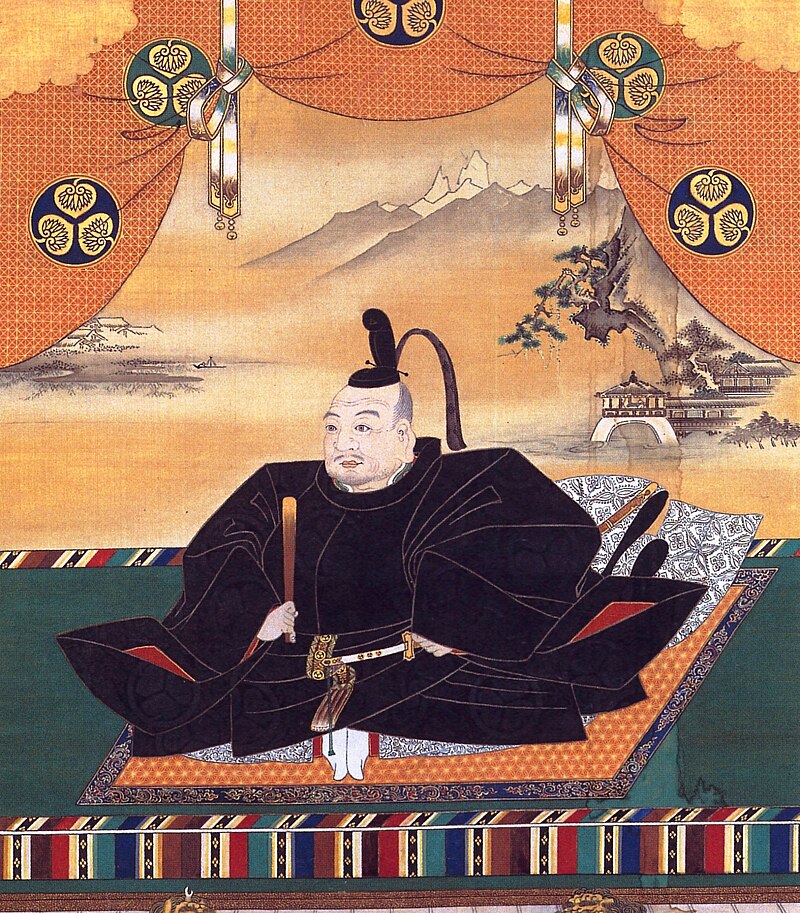
Tokugawa Ieyasu
founder and first shogun of the Tokugawa shogunate of Japan (1543–1616)

Rodrigo Diez de Vida
11th century Castilian nobleman and military leader

Mohammed Omar
Afghan cleric who founded the Taliban (1960–2013)
Abu Musab al-Zarqawi
Jordanian jihadist (1966–2006)

Augusto Nicolás Calderón Sandino
Nicaraguan revolutionary (1895-1934)

Igor Girkin
Russian citizen from Moscow who played a significant role in the War in Donbass

Aleksandr Zakharchenko
Head and Prime Minister of the Donetsk People's Republic

Roman von Ungern-Sternberg
Austrian anti-communist general (1886-1921)

warlord
right|thumb|Marshal Zhang Zuolin, one of many warlords in early 20th-century China
Warlords are individuals who exercise military, economic, and political control over a region, often one without a strong central or national government, typically through informal control over local armed forces. Warlords have existed throughout much of history, albeit in a variety of different capacities within the political, economic, and social structure of states or ungoverned territories. The term is often applied in the context of China around the end of the Qing dynasty, especially during the Warlord Era

Željko Ražnatović
' (, ; 17 April 1952 – 15 January 2000), better known as ' (), was a Serbian warlord, mobster and head of the Serb paramilitary force called the Serb Volunteer Guard during the Yugoslav Wars, considered one of the most feared and effective paramilitary forces during the wars. His paramilitary unit was responsible for numerous crimes in Eastern Bosnia, including murder, pillaging, rape and ethnic cleansings. was one of the most feared, celebrated and iconic figures in Serbia during his time.

Dihya
Al-Kahina (), also known as Dihya, was a Berber warrior-queen of the Aurès (present-day Algeria) and a religious and military leader who lived during the 7th century.

Seljuk
Ruler of Seljuk Turks
Ibn al-Khattab
Saudi Arabian militant (1969-2002)

Federico da Montefeltro
condottiere of the Italian Renaissance, and lord of Urbino
Roger de Flor
Italian military adventurer and condottiere

Sabuktigin
'''Abu Mansur Nasir ad-Din wa'd-Dawla Sabuktigin''' (; 940s – August-September 997) was the founder of the Ghaznavid dynasty, and amir of Ghazna from 977 to 997. Sabuktigin was a Turkic slave who was bought by Alp-Tegin, the commander of the royal guard of the Samanid dynasty. Alp-Tegin established himself as the governor of Ghazna in 962, and died a year later in 963. Afterwards, Sabuktigin built his prestige among other slave soldiers in Ghazna until he was elected by them as their ruler in 977.

Pyotr Krasnov
White movement Cossack (1869-1947)

Aegidius
Aegidius (died 464 or 465) was the ruler of the short-lived Kingdom of Soissons from 461 to 464/465. Before his ascension he was an ardent supporter of the Western Roman emperor Majorian, who appointed him magister militum per Gallias ("Master of the Soldiers for Gaul") in 458. After the general Ricimer assassinated Majorian and replaced him with Emperor Libius Severus, Aegidius rebelled and began governing his Gallic territory as an independent kingdom. He may have pledged his allegiance to the Eastern Roman emperor Leo I.

Mikhail Tolstykh
commander of the pro-Russian forces

Caudillo
thumb|A 1963 Spanish peseta coin with the image of [[Generalissimo Francisco Franco, and inscription Caudillo de España, por la Gracia de Dios (Spanish for "Caudillo of Spain, by the Grace of God")]]
thumb|Juan Manuel de Rosas, c. 1841 by [[Cayetano Descalzi, the caudillo paradigm]]
A caudillo ( , ; , from Latin , diminutive of caput "head") is a type of personalist leader wielding military and political power. No precise English translation exists for the term, though it is often used interchangeably with "military dictator", "warlord", "strongman", and "Generalissimo". The term is historical
Ya'qub ibn al-Layth al-Saffar
Safarid Dynasty Amir from 861 to 879

Guthrum
Guthrum (, – c. 890) was King of East Anglia in the late 9th century. Originally a native of Denmark, he was one of the leaders of the "Great Summer Army" that arrived in Reading during April 871 to join forces with the Great Heathen Army, whose intentions were to conquer the kingdoms of Anglo-Saxon England. The combined armies were successful in conquering the kingdoms of East Anglia, Northumbria, and parts of Mercia and overran Alfred the Great's Wessex but were ultimately defeated by Alfred at the Battle of Edington in 878. The Danes retreated to their stronghold, where Alfred laid siege an
Fikret Abdić
Bosnian Muslim and Croatian war criminal, businessman and politician
Alexander Boroday
Russian political adviser
Arsen Pavlov
rebel leader known by his nom de guerre Motorola, K.I.A., commander of the Sparta Battalion

Bonifatius
thumb|300px|Coin of Bonifatius Comes Africae (422-431 AD).
Pavel Bermondt-Avalov
Russian Cossack warlord (1877–1974)
Bronislav Kaminski
Polish-Russian-German SS-Brigadeführer (1899-1944)
Grigory Semyonov
Russian white Cossack general (1890–1946)
Valery Bolotov
eastern Ukrainian political figure (1970—2017)
Ta Mok
Cambodian military officer (1924–2006)

Andrei Shkuro
Cossack (Ukrainian) general (1887–1947)
.jpg)
polemarch
thumb|Datis fighting the polemarch of Athens Kallimachos at the [[Battle of Marathon, in the Stoa Poikile (reconstitution).]]
A polemarch (, from , polémarchos) was a senior military title in various ancient Greek city states (poleis). The title is derived from the words polemos ('war') and archon ('ruler, leader') and translates as 'warleader' or 'warlord'. The name indicates that the polemarch's original function was to command the army; presumably the office was created to take over this function from the king. The title held a high position in Athenian society, alongside the archon eponymo
Jaba Ioseliani
Georgian politician (1926-2003)
Tomás Cipriano de Mosquera
Colombian general and political figure (1798-1878)
Suheil al-Hassan
Syrian Army major general
Tengiz Kitovani
Georgian former politician and military commander (1938–2023)
Surat Huseynov
Azerbaijani colonel and politician (1959–2023)
Bodonchar Munkhag
Mongol warlord and ancestor of Genghis Khan
Jimmy Chérizier
Haitian gangster
Vladimir Zhoga
Ukrainian separatist military officer
Juan de Oñate
Spanish Conquistador, explorer, and colonial governor
William Quantrill
Confederate Army officer (1837-1865)
Qais Khazali
leader of the Asa'ib Ahl al-Haq
Carlos Castaño
Colombian paramilitary and assassin (1965-2004)
Lê Quang Vinh
Vietnamese military leader (1923–1956)
Wijerd Jelckama
Dutch pirate
Aleksandr Verkhovsky
Russian military personnel (1886-1938)

Piyama-Radu
Piyamaradu (also spelled Piyama-Radu, Piyama Radu, Piyamaradus, Piyamaraduš) was a warlord mentioned in Hittite documents from the middle and late 13th century BC. As an ally of the Ahhiyawa, he led or supported insurrections against the Hittite empire in Western Anatolia. His history is of particular interest since his area of activity may have included Wilusa, thus suggesting a potential connection to the myth of the Trojan War.
Abd al-Aziz al-Ghamidi
Islamist Saudi (1973–2004)
Georgius Tzul
khazar warlord
Igor Kakidzyanov
Russian militia commander
Chaghan Temur
Yuan dynasty Mongolian officer and military leader
Colonel Pessian
Iranian politician (1892–1921)

Haji Chalabi Khan
Khan of Shaki
Abu Hafs al-Urduni
Arab mujahideen (1973–2006)
Labaya
thumb|Amarna letter. Letter from Labaya (ruler of Shechem) to the Egyptian Pharaoh Amenhotep III or his son Akhenaten. 14th century BCE. From Tell el-Amarna, Egypt. British Museum. ME 29844. EA 252
Labaya (Labayu or '''Lib'ayu''') was a Canaanite prince and the ruler of Shechem in the central hill country of southern Canaan during the Amarna Period (c. 1350 BC). He lived contemporaneously with the pharaoh Akhenaten. Labaya is mentioned in several of the Amarna Letters (abbreviated "EA", for 'el Amarna'). He is the author of letters EA 252–54.