Category
page 1Wool animals

musk ox
The muskox (Ovibos moschatus) is a hoofed mammal of the family Bovidae. Native to the Arctic, it is noted for its thick coat and for the strong odor emitted by males during the seasonal rut, from which its name derives. This musky odor has the effect of attracting females during mating season. Its Inuktitut name translates to "the bearded one".

guanaco
The guanaco ( ; Lama guanicoe) is a camelid native to South America, closely related to the domesticated llama. Guanacos are one of two wild South American camelids; the other species is the vicuña, which lives at higher elevations.

vicuña
The vicuña (Lama vicugna) or vicuna (both , very rarely spelled vicugna, its latin specific name) is one of the two wild South American camelids, which live in the high alpine areas of the Andes; the other camelid is the guanaco, which lives at lower elevations. Vicuñas are relatives of the llama, and are now believed to be the wild ancestor of domesticated alpacas, which are raised for their coats. Vicuñas produce small amounts of extremely fine wool, which is very expensive because the animal can be shorn only every three years and has to be caught from the wild. When knitted together, the p
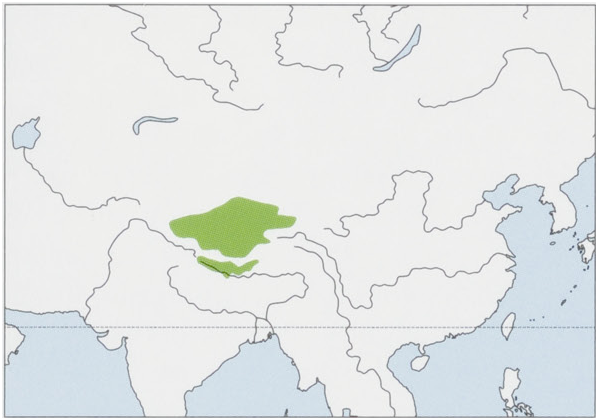
Pantholops hodgsonii
species of mammal

Samoyed
dog breed
Angora rabbit
rabbit breed
Lama pacos
The alpaca (Lama pacos) is a domesticated species of South American camelid. Traditionally, alpacas were kept in herds that grazed on the level heights of the Andes of Southern Peru, Western Bolivia, Ecuador, and Northern Chile. More recently, alpacas may be found on farms and ranches worldwide, with thousands of animals born and raised annually. Alpacas are especially popular in North America, Europe, and Australia.
Salish Wool Dog
extinct dog type