Category
page 1Wordplay

pseudonym
A pseudonym (; ) or alias () is a fictitious name that a person assumes for a particular purpose, which differs from their original or true name (orthonym). This also differs from a new name that entirely or legally replaces an individual's own. Many pseudonym holders use them because they wish to remain anonymous and maintain privacy, though this may be difficult to achieve as a result of legal issues.

rhyme
A rhyme is a repetition of similar sounds (usually the same phonemes) in the final stressed syllables and any following syllables of two or more words. Most often, this kind of rhyming (perfect rhyming) is consciously used for a musical or aesthetic effect in the final position of lines within poems or songs. More broadly, a rhyme may also variously refer to other types of similar sounds near the ends of two or more words. Furthermore, the word rhyme has come to be sometimes used as a shorthand term for any brief poem, such as a nursery rhyme or Balliol rhyme.

oxymoron
An oxymoron (plurals: oxymorons and oxymora) is a figure of speech that juxtaposes concepts with opposite meanings within a word or in a phrase that is a self-contradiction. Examples would be "bittersweet" or "cruel kindness". As a rhetorical device, an oxymoron illustrates a point to communicate and reveal a paradox. A general meaning of "contradiction in terms" is recorded by the 1902 edition of the Oxford English Dictionary.
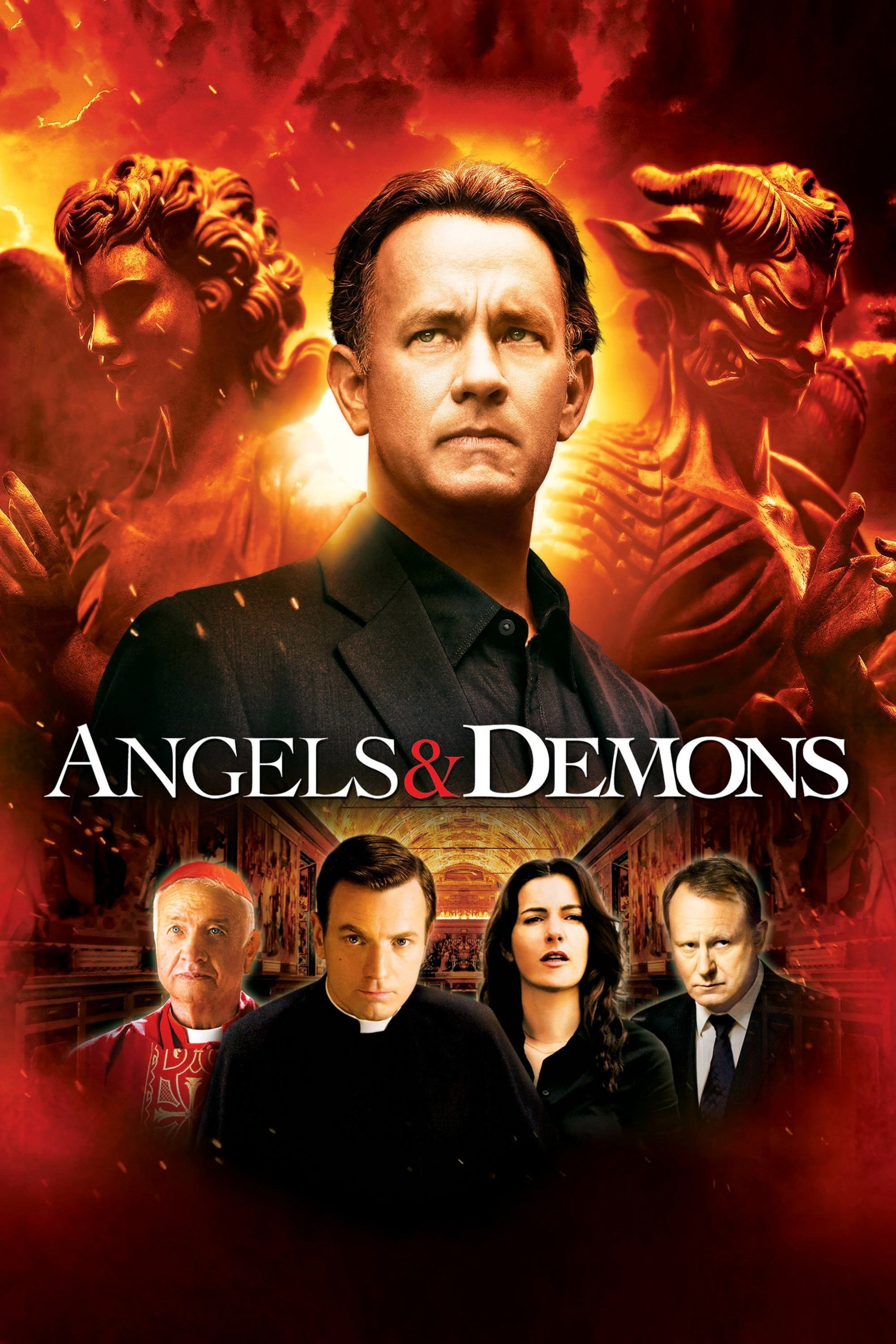
Angels & Demons
2009 film directed by Ron Howard

pun
thumb|upright=1.25|Punch (magazine)|Punch, 25 February 1914. The cartoon is a pun on the word "Jamaica", which pronunciation is a [[homonym to the clipped form of "Did you make her?"
]]

limerick
form of poetry

Buffalo buffalo Buffalo buffalo buffalo buffalo Buffalo buffalo.
language-based puzzle in English

nonsense
Nonsense is a form of communication, via speech, writing, or any other formal logic system, that lacks any coherent meaning. In ordinary usage, nonsense is sometimes synonymous with absurdity or the ridiculous. Many poets, novelists and songwriters have used nonsense in their works, often creating entire works using it for reasons ranging from pure comic amusement or satire, to illustrating a point about language or reasoning. In the philosophy of language and philosophy of science, nonsense is distinguished from sense or meaningfulness, and attempts have been made to come up with a coherent a

ambigram
thumb|Animation of a half-turn ambigram of the word ambigram, with 180-degree rotational symmetry
An ambigram is a calligraphic composition of glyphs (letters, numbers, symbols or other shapes) that can yield different meanings depending on the orientation of observation. Most ambigrams are visual palindromes that rely on some kind of symmetry, and they can often be interpreted as visual puns.
Although the concept is older, the term "ambigram" was coined by Douglas Hofstadter in 1983–1984.

homograph
thumb|400px|Venn diagram showing the relationships between homographs (yellow) and related linguistic concepts|class=skin-invert-image

spoonerism
thumb|An example of spoonerism on a protest placard in London: "Buck Frexit" instead of "Fuck [[Brexit"]]
A spoonerism is an occurrence of speech in which corresponding consonants, vowels, or morphemes are switched (see metathesis) between two words of a phrase. These are named after the Oxford don and priest William Archibald Spooner, who reportedly commonly spoke in this way.

word play
thumb|Artist Tavar Zawacki painted a site-specific wordplay painting in Lima, Peru, commenting on the [[cocaine crisis and exportation.]]
recursive acronym
acronym whose meaning refers to itself

Bushism
thumb|upright|George W. Bush addressing the nation from the East Room, September 2008
James while John had had had had had had had had had had had a better effect on the teacher.
sentence used to emphasize lexical ambiguity and the importance of punctuation

wit
thumb|
tautogram
A tautogram (Greek: tauto gramma, "same letter") is a text in which all words start with the same letter.

aptronym
thumb|A butcher's shop in Leerdam owned by "C. van der Ham"
An aptronym, aptonym, or euonym is a personal name aptly or peculiarly suited to its owner (e.g. their occupation). The word "euonym" (eu- + -onym), dated to late 1800, is defined as "a name well suited to the person, place, or thing named".
auto-antonym
A contronym or contranym is a word with two opposite meanings. For example, the word cleave can mean "to cling" or "to split apart". This feature is also called enantiosemy, enantionymy (enantio- means "opposite"), antilogy or autoantonymy. An enantiosemic term is by definition polysemic (having more than one meaning).
RAS syndrome
using an acronym followed by one of the words composing that acronym

Abecedarium
thumb|The Anglo-Saxon futhorc (abecedarium anguliscum)
thumb|An Early Cyrillic abecedarium on birch bark document № 591 from ancient [[Novgorod (Russia). Dated to 1025–1050 AD.]]
thumb|Folio 1 of the Codex Gigas, showing Hebrew, Greek, Latin, Glagolitic, and Early Cyrillic abecedaria
An abecedarium (also known as an abecedary or ABCs or simply an ABC) is an inscription consisting of the letters of an alphabet, almost always listed in order. Typically, abecedaria (or abecedaries) are practice exercises.
heterogram
word, phrase, or sentence in which no letter of the alphabet occurs more than once
sobriquet
A sobriquet ( ) is a descriptive nickname, sometimes assumed, but often given by another. A sobriquet is distinct from a pseudonym in that it is typically a familiar name used in place of a real name without the need for explanation; it may even become more familiar than the original name.
Īhām
thumb|right|220px|The Divan of Hafez, a master of the art of īhām. [[National Museum of Iran, Tehran, Persia.]]
secret language game
making spoken words incomprehensible to the untrained ear, such as in Pig Latin
isogram
REDIRECT Heterogram (literature)#Isograms
paraprosdokian
A paraprosdokian (), or '''par'hyponoian''', is a figure of speech in which the latter part of a sentence, phrase, or larger discourse is surprising or unexpected in a way that causes the reader or listener to reframe or reinterpret the first part. It is frequently used for humorous or dramatic effect, sometimes producing an anticlimax. For this reason, it is extremely popular among comedians and satirists, such as Groucho Marx.
Running while black
racial profiling of runners of color
capitonym
A capitonym is a word that changes its meaning (and sometimes pronunciation) when it is capitalized; the capitalization usually applies due to one form being a proper noun or eponym. It is a portmanteau of the word capital with the suffix -onym. A capitonym is a form of homograph and – when the two forms are pronounced differently – is also a form of heteronym. In situations where both words should be capitalized (such as the beginning of a sentence), there will be nothing to distinguish between them except the context in which they are used.
eye rhyme
a rhyme in which two words are spelled similarly but pronounced differently; e.g. "tough / through"