Category
page 4Year of birth unknown

Glycerius
Glycerius (died after 474) was Roman emperor of the West from 473 to 474. He served as (commander of the palace guard) during the reign of Olybrius (), until Olybrius died in November 472. After a four-month interregnum, Glycerius was proclaimed as emperor in March 473 by Gundobad, the (master of soldiers) and power behind the throne. Very few of the events of his reign are known other than that an attempted invasion of Italy by the Visigoths was repelled by local commanders, diverting them to Gaul. Glycerius also prevented an invasion by the Ostrogoths through diplomacy, including a gift of 2

Adam of Bremen
11th-century German historian and chronicler

Servius Tullius
legendary sixth king of Rome

Michael I Rangabe
Byzantine emperor

Ancus Marcius
legendary fourth king of Rome
.jpg)
Lycurgus of Sparta
Lycurgus (; ) was the legendary lawgiver of Sparta, credited with the formation of its (), involving political, economic, and social reforms to produce a military-oriented Spartan society in accordance with the Delphic oracle. The Spartans in the historical period honoured him as a god.

Olybrius
Anicius Olybrius (died 2 November 472) was Roman emperor from July 472 until his death later that same year; his rule as augustus in the western Roman Empire was not recognised as legitimate by the ruling augustus in the eastern Roman Empire, Leo I (). He was in reality a puppet ruler raised to power by Ricimer, the magister militum of Germanic descent, and was mainly interested in religion, while the actual power was held by Ricimer and his nephew Gundobad.

Merovech
Merovech (; ; 411 –457) was the ancestor of the Merovingian dynasty, and the grandfather of its founder Clovis I. He was reportedly a king of the Salian Franks, but records of his existence are mixed with legend and myth. The most important written source, Gregory of Tours, recorded that Merovech was said to be descended from Chlodio, a roughly contemporary Frankish warlord who pushed from the Silva Carbonaria in modern central Belgium as far south as the Somme, north of Paris in modern-day France. His supposed descendants, the kings Childeric I and Clovis I, are the first well-attested Merovi

Ahab
Ahab (, ; ; ; ; ) was a king of Israel, the son and successor of King Omri, and the husband of Jezebel of Sidon, according to the Hebrew Bible. He is depicted in the Bible as a Baal worshipper and is criticized for causing moral decline in Israel, though modern scholars question this.

Tank Man
anonymous man who stood in front of a column of Chinese tanks during the Tiananmen Square protests

William Tyndale
English Bible translator and reformer

Romanos IV Diogenes
Byzantine emperor

Joseph of Arimathea
disciple of Jesus, donated his heart for the burial of Jesus

Cyaxares
Cyaxares was the third king of the Medes. He ascended to the throne in 625 BC, after his father Phraortes lost his life in a battle against the Assyrians, probably Ashurbanipal. Assyrian allies, the Scythians then ruled Media for 28 years before Cyaxeres overthrew Scythian domination and became king.

Lucius Tarquinius Priscus
legendary fifth King of Rome

Judah Maccabee
2nd century BCE Jewish priest and leader of Maccabean Revolt against the Seleucids

Ānanda
Ānanda (Pali and Sanskrit: आनंद; 5th4th century BCE) was the primary attendant of the Buddha and one of his ten principal disciples. Among the Buddha's many disciples, Ānanda stood out for having the best memory. Most of the texts of the early Buddhist Sutta-Piṭaka (; , Sūtra-Piṭaka) are attributed to his recollection of the Buddha's teachings during the First Buddhist Council. For that reason, he is known as the Treasurer of the Dhamma, with Dhamma (, dharma) referring to the Buddha's teaching. In Early Buddhist Texts, Ānanda was the first cousin of the Buddha. Although the early texts do not

Stauracius
Staurakios or Stauracius (; early 790s – 11 January 812) was the shortest-reigning Byzantine emperor, ruling for 68 days between 26 July and 2 October 811.

Epiphanius of Salamis
4th century Christian bishop and saint
.jpg)
Jehoiakim
Jehoiakim (also sometimes spelled Jehoikim; – 598 BC) was the eighteenth and third-from-last King of Judah from 609 to 598 BC. He was the second son of King Josiah () and Zebidah, the daughter of Pedaiah of Rumah. His birth name was Eliakim.

Amalasuntha
Amalasuintha (495 – 30 April 535) was a ruler of the Ostrogothic Kingdom from 526 to 535. Initially serving as regent for her son Athalaric, she became queen regnant after his premature death. Highly educated, Amalasuintha was praised by both Cassiodorus and Procopius for her wisdom and her ability to speak three languages (Greek, Gothic, and Latin). Her status as an independent female monarch, and obvious affinity for Roman culture, caused discontent among the Gothic nobles in her court, and she was deposed and killed after six months of sole rule. Eastern Roman Emperor Justinian I used her d

Ay
Egyptian pharaoh of the late 18th Dynasty (14th century BCE)
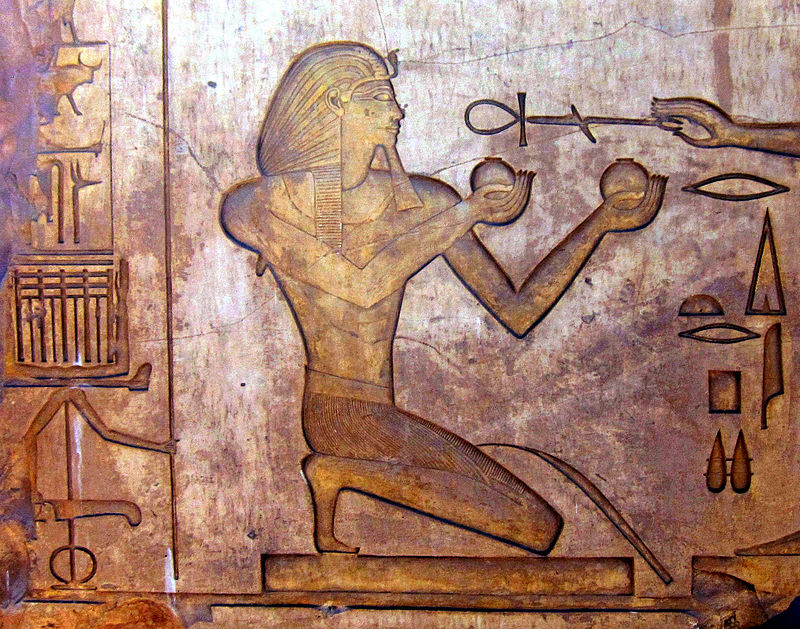
Thutmose II
Fourth Egyptian Pharaoh of the 18th Dynasty (c. 1493/1482 – 1479 BC)

William Baffin
British explorer

Theodosios III
Byzantine Emperor

Justin
Roman historian, 2nd century
%2C%201420-1440%2C%20possibly%20Herat.%20Topkapi%20H.2153.jpg)
Tokhtamysh
Tokhtamysh (Turki/Kypchak and Persian: توقتمش; ; ; – 1406) was Khan of the Golden Horde from 1380 to 1395. He briefly succeeded in consolidating the Blue and White Hordes into a single polity.

Melissus of Samos
5th-century BC Greek Eleatic philosopher

Poros
Porus or Puru ( ; 326–321 BC) was an ancient Indian king whose territory spanned the region between the Jhelum River (Hydaspes) and Chenab River (Acesines) in the Punjab region. He is only mentioned in Greek sources.
Said to be a warrior with exceptional skills, Porus fought against Alexander the Great in the Battle of the Hydaspes (326 BC). Following the conflict, Porus retained his kingship. Alexander not only reinstated him as his satrap but also expanded his jurisdiction to include dominion over lands to the south-east extending as far as the Hyphasis (Beas). Porus reportedly died sometime

Guan Yu
Chinese general serving warlord Liu Bei (160-220)

Totila
Totila, original name Baduila (died 1 July 552), was the penultimate King of the Ostrogoths, reigning from 541 to 552. A skilled military and political leader, Totila reversed the tide of the Gothic War, recovering by 543 almost all the territories in Italy that the Eastern Roman Empire had captured from his Kingdom in 540.

Abijah
male human biblical figure in 1 Kings 14:31 and 2 Chronicles, second King of Judah

Yermak Timofeyevich
Russian cossack explorer and pirate

James, son of Alphaeus
one of the Twelve Apostles of Jesus Christ

Horemheb
Horemheb, also spelled Horemhab, Haremheb or Haremhab (, meaning "Horus is in Jubilation"), was the last pharaoh of the 18th Dynasty of Egypt (1550–1292 BC). He ruled for at least 14 years between 1319 BC and 1292 BC. He had no relation to the preceding royal family other than by marriage to Mutnedjmet, who is thought (though disputed) to have been the daughter of his predecessor, Ay; he is believed to have been of common birth.
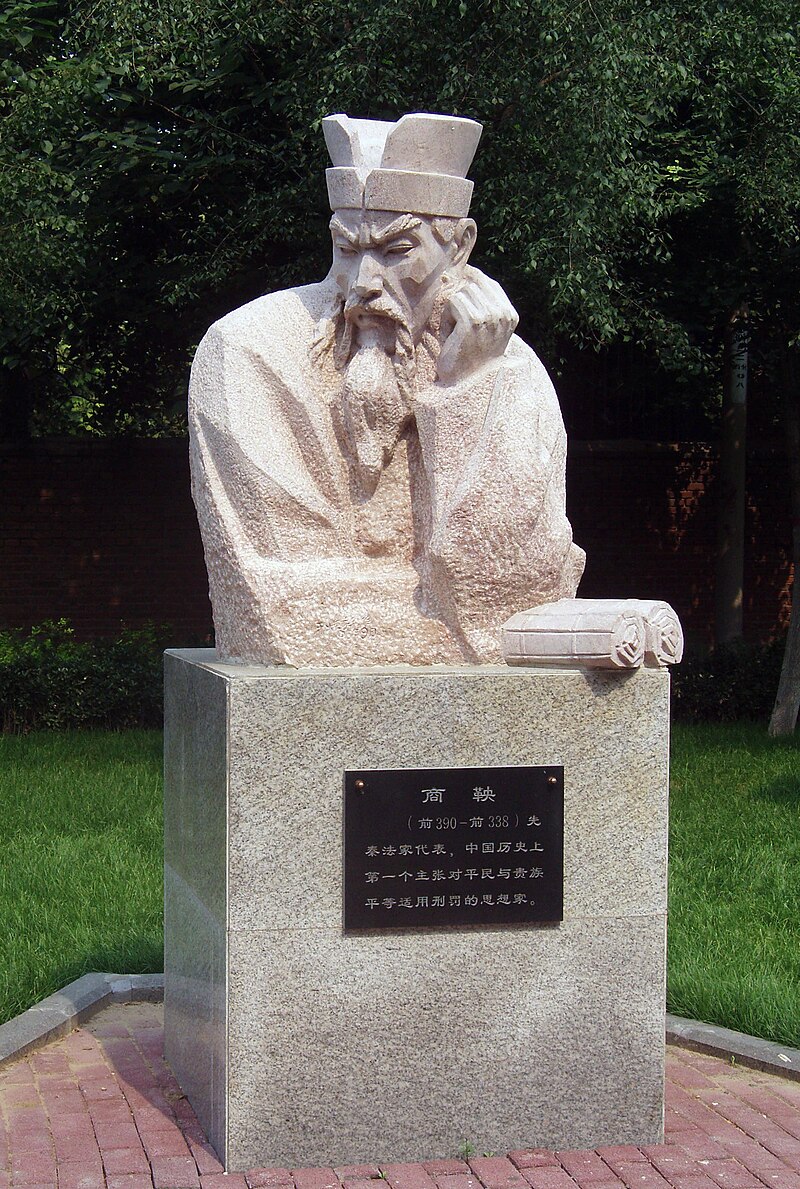
Shang Yang
Qin State statesman, chancellor and reformer (c. 390–338 BC)

Thutmose IV
Egyptian Pharaoh of the 18th dynasty

Cyrus I
The third king of the Achaemenid kingdom (625–580 BC)
Khasekhemwy
thumb|250px|Seal of "Khasekhemwy" with the symbol of unification with the double crown of Upper and Lower Egypt being worn both by Horus and Seth, on a container of state treasury warehouse for the redistribution of agricultural production.

Arses
The 12th Achaemenid Emperor (338–336 BC)

Senusret III
Pharaoh of Egypt

Nikephoros III Botaneiates
Byzantine emperor

Valerius Maximus
early 1st century AD Roman professional rhetorician, historian and author

Alaric II
King of the Visigoths Balti dynasty

Tiglath-Pileser I
King of Assyria during the Middle Assyrian period

D. B. Cooper
unidentified man who hijacked an airplane in 1971

Shalmaneser V
Assyrian king

Æthelwulf
King of Wessex
Ataulf
Athaulf (also Athavulf, Atawulf, or Ataulf and Adolf, Latinized as Ataulphus) ( 37015 August 415) was king of the Visigoths from 411 to 415. During his reign, he transformed the Visigothic state from a tribal kingdom to a major political power of late antiquity.

Wallia
Wallia, Walha or Vallia (Spanish: Walia, Portuguese Vália), ( 385 – 418) was king of the Visigoths from 415 to 418, earning a reputation as a great warrior and prudent ruler. He was elected to the throne after Athaulf and Sigeric were both assassinated in 415. One of Wallia's most notable achievements was negotiating a foedus (a kind of treaty or agreement) with the Roman emperor Honorius in 416. This agreement allowed the Visigoths to settle in Aquitania, a region in modern-day France, in exchange for military service to Rome. This settlement marked a significant step towards the eventual est

Börte
Börte Üjin (; Mongolian: ), better known as Börte (), was the first wife of Temüjin, who became Genghis Khan, the founder of the Mongol Empire. Börte became the head of the first Court of Genghis Khan, and Grand Empress of his Empire. She was betrothed to Genghis at a young age, married at seventeen, and then kidnapped by a rival tribe. Her husband's rescue of her is considered one of the key events that started him on his path to becoming a conqueror. She gave birth to four sons and five daughters, who, along with their own descendants, were the primary bloodline in the expansion of the Mongo

Psamtik I
first egyptian pharaoh of the 26th dynasty

Tyrtaeus
thumb|Tyrtée by Gustave Moreau, 1882
Tyrtaeus (; Tyrtaios; fl. mid-7th century BC) was a Greek elegiac poet from Sparta whose works were speculated to fill five books. His works survive from quotations and papyri, and include 250 lines or parts of lines. He wrote at a time of two crises affecting the city: a civic unrest threatening the authority of kings and elders, later recalled in a poem named Eunomia ("Law and Order"), where he reminded citizens to respect the divine and constitutional roles of kings, council, and demos; and the Second Messenian War, during which he served as a sort of "s

Artabasdos
Artabasdos or Artavasdos ( or , from , , , Latinized as Artabasdus) was a Byzantine general of Armenian descent who seized the throne from June 741 until November 743, in usurpation of the reign of Constantine V.

Bacchylides
right|thumb|A Musician by Albert Joseph Moore
Bacchylides (; Bakkhulides; – ) was a Greek lyric poet. Later Greeks included him in the canonical list of Nine Lyric Poets, which included his uncle Simonides. The elegance and polished style of his lyrics have been noted in Bacchylidean scholarship since at least Longinus. Some scholars have characterized these qualities as superficial charm. He has often been compared unfavourably with his contemporary, Pindar, as "a kind of Boccherini to Pindar's Haydn". However, the differences in their styles do not allow for easy comparison, and translator R

Ahaziah
Sixth King of Judah

Lapulapu

Pseudo-Dionysius the Areopagite
Greek philosopher
.jpg)
Alcman
thumb|Roman-period mosaic portrait of Alcman from Gerasa, 3rd century AD
Alcman (; Alkmán; fl. 7th century BC) was an Ancient Greek choral lyric poet from Sparta. He is the earliest representative of the Alexandrian canon of the Nine Lyric Poets. He wrote six books of choral poetry, most of which is now lost; his poetry survives in quotation from other ancient authors and on fragmentary papyri discovered in Egypt. His poetry was composed in the local Doric dialect with Homeric influences. Based on his surviving fragments, his poetry was mostly hymns, and seems to have been composed in long sta

Decebalus
Decebalus (; ), sometimes referred to as Diurpaneus, was the last Dacian king. He is known for fighting three wars, with varying success, against the Roman Empire under two emperors. After raiding south across the Danube, he defeated a Roman invasion in the reign of Domitian, securing a period of independence during which Decebalus consolidated his rule.