Category
page 1Yeasts used in brewing

Saccharomyces cerevisiae
species of fungus

Saccharomyces
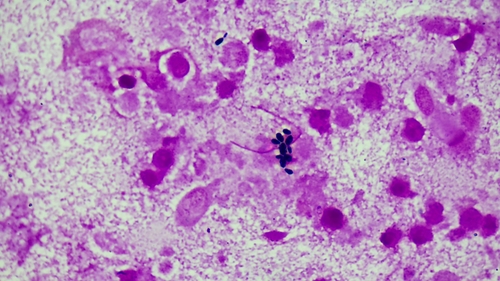
Saccharomyces is a genus of fungi that includes many species of yeasts. The name Saccharomyces is from Greek () and () and means sugar fungus. Many members of this genus are considered very important in food production where they are known as brewer's yeast, baker's yeast and sourdough starter among others. They are unicellular and saprotrophic fungi. One example is Saccharomyces cerevisiae, which is used in making bread, wine, and beer, and for human and animal health. Other members of this genus include the wild yeast Saccharomyces paradoxus that is the closest relative to S. cerevisiae, Sac
Saccharomycotina
Saccharomycotina is a subdivision (subphylum) of the division (phylum) Ascomycota in the kingdom Fungi. It comprises most of the ascomycete yeasts. The members of Saccharomycotina reproduce by budding and they do not produce ascocarps (fruiting bodies).
Schizosaccharomyces
Schizosaccharomyces is a genus of fission yeasts. The most well-studied species is S. pombe. At present five Schizosaccharomyces species have been described (S. pombe, S. japonicus, S. octosporus, S. cryophilus and S. osmophilus). Like the distantly related Saccharomyces cerevisiae, S. pombe is a significant model organism in the study of eukaryotic cell biology. It is particularly useful in evolutionary studies because it is thought to have diverged from the Saccharomyces cerevisiae lineage between 300 million and 1 billion years ago, and thus provides an evolutionarily distant comparison.
Torulaspora delbrueckii
species of fungus
Pichia
Pichia (Hansenula and Hyphopichia are obsolete synonyms) is a genus of yeasts in the family Pichiaceae with spherical, elliptical, or oblong acuminate cells. Pichia is a teleomorph, and forms hat-shaped, hemispherical, or round ascospores during sexual reproduction. The anamorphs of some Pichia species are Candida species. The asexual reproduction is by multilateral budding.

Saccharomyces pastorianus
species of yeast
Brettanomyces
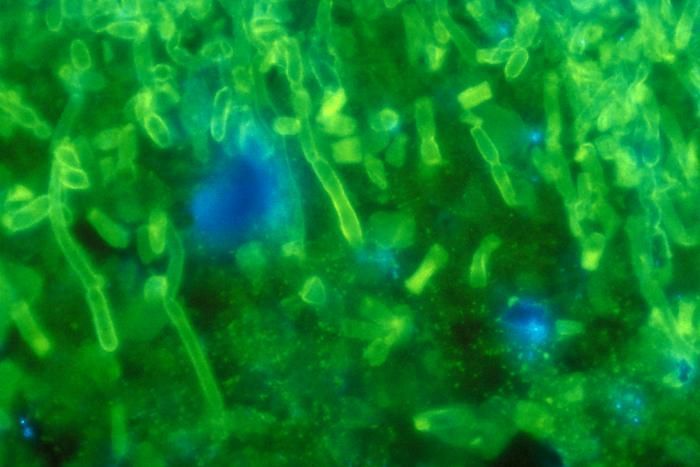
Brettanomyces is a non-spore forming genus of yeast in the family Pichiaceae, and is often colloquially referred to as "Brett". The genus name Dekkera is used interchangeably with Brettanomyces, as it describes the teleomorph or spore forming form of the yeast, but is considered deprecated under the one fungus, one name change. The cellular morphology of the yeast can vary from ovoid to long "sausage" shaped cells. The yeast is acidogenic, and when grown on glucose rich media under aerobic conditions, produces large amounts of acetic acid. Brettanomyces is important to both the brewing and win
Kluyveromyces
Kluyveromyces is a genus of ascomycetous yeasts in the family Saccharomycetaceae. Some of the species, such as K. marxianus, are the teleomorphs of Candida species.
Hanseniaspora
Hanseniaspora is a genus of yeasts. The name Kloeckera is applied to its anamorph form. They are typically apiculate (lemon-shaped) in shape and often found in grape musts pre-fermentation.
Saccharomyces uvarum
species of fungus
Saccharomyces paradoxus
species of fungus

Metschnikowia
Metschnikowia is a genus of yeast in the family Metschnikowiaceae. Cells are usually spherical to ellipsoid. Asci are elongate and contain one or two needle shaped ascospores. Metschnikowia bicuspidata is the type species. Metschnikowia pulcherrima has been investigated for use in winemaking and as a substitute for Palm oil.
Saccharomyces bayanus
species of fungus
Wickerhamomyces anomalus
species of Saccharomycetes

Torulaspora
Torulaspora is a genus of ascomycetous yeasts in the family Saccharomycetaceae.
Saccharomyces eubayanus
species of fungus
Saccharomycodes ludwigii
species of fungus
Lachancea thermotolerans
species of fungus
Ogataea
Ogataea is a genus of ascomycetous yeasts in the family Saccharomycetaceae. It was separated from the former genus Hansenula via an examination of their 18S and 26S rRNA partial base sequencings by Yamada et al. 1994.