
(1036) Ganymed
Also known as Ganymed
Asteroid vom Amor-Typ
AI overview
1036 Ganymed is a large asteroid that orbits the Sun in a path that occasionally brings it relatively close to Earth. It's scientifically important because studying near-Earth asteroids like this one helps us understand the composition of the early solar system and assess potential impact risks to our planet.
AI-generated from the Wikipedia summary — may contain errors.
Picture of the Day · NASA
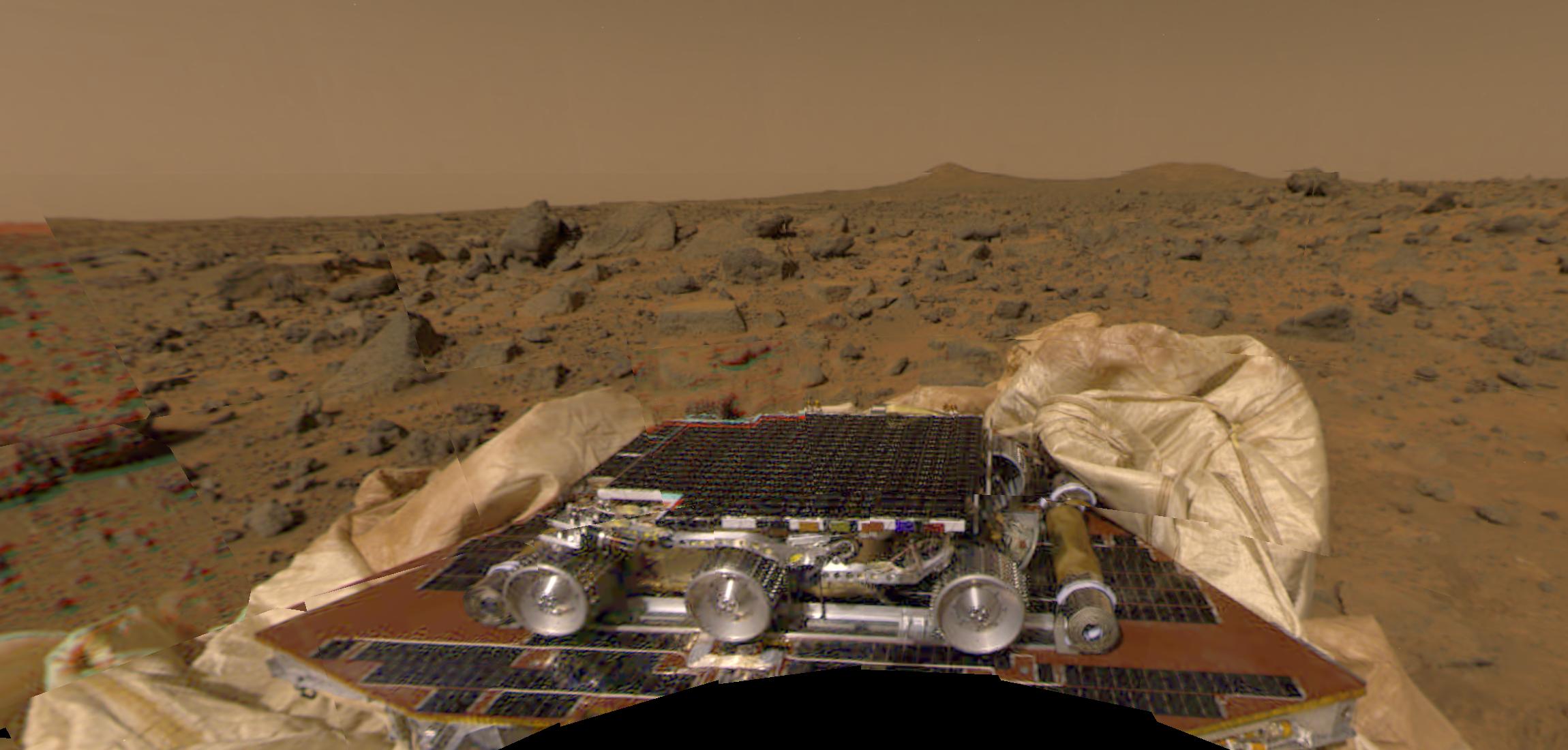
Pathfinder on Mars
2026-07-04
On July 4th, 1997, using its own array of fireworks, a parachute, and a cocoon of airbags, the Mars Pathfinder spacecraft bounced like a giant beach ball at least 15 times before it came to rest on the surface of Mars at 10:07 AM Pacific Daylight Time. After its then novel airbag-assisted landing sequence was completed, Pathfinder transmitted this color mosaic to mission operators on Earth. In the scene from another world, the Mars Sojourner robot rover is visible in the foreground, crouched on top of the unfolded Pathfinder. About the size of a large house cat, the six-wheeled, solar-powered Sojourner became the first successful Martian rover. Surrounding Pathfinder are deflated airbags and the rock-strewn terrain of the Ares Vallis floodplain. In the distance Martian hills appear against a dusty brownish sky. The Pathfinder lander was subsequently renamed the Carl Sagan Memorial Station.
via NASA APOD
Wikidata facts
- Diameter
- 37.675
- Mass
- 33000000000000000
- Orbital period
- 1589.046592572039
- Image
- 001036-asteroid shape model (1036) Ganymed.png
Show 18 more facts
Article · Deutsch
(1036) Ganymed ist ein erdnaher Asteroid vom Amor-Typ und wurde am 23. Oktober 1924 von Walter Baade an der Sternwarte Bergedorf bei Hamburg entdeckt. Der Planetoid ist nach einer Figur aus der griechischen Mythologie benannt, siehe Ganymed (Mythologie). Die Bahn von Ganymed ist 26,697° gegen die Ekliptik geneigt, die Bahnexzentrizität beträgt 0,534. Ganymed hat einen Durchmesser von etwa 31,7 Kilometern und ist damit der größte bekannte Amor-Asteroid. Ganymed ist auch der Name eines Jupiter-Monds.
Abstract from DBpedia / Wikipedia · CC BY-SA