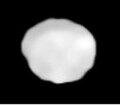
(19) Fortune
Also known as (19) Fortuna, Fortuna
astéroïde de la ceinture principale
AI overview
19 Fortuna is a large asteroid located in the main belt between Mars and Jupiter. It was one of the earliest asteroids to be discovered and remains scientifically interesting as a well-studied member of a major population of rocky bodies in our solar system.
AI-generated from the Wikipedia summary — may contain errors.
Picture of the Day · NASA
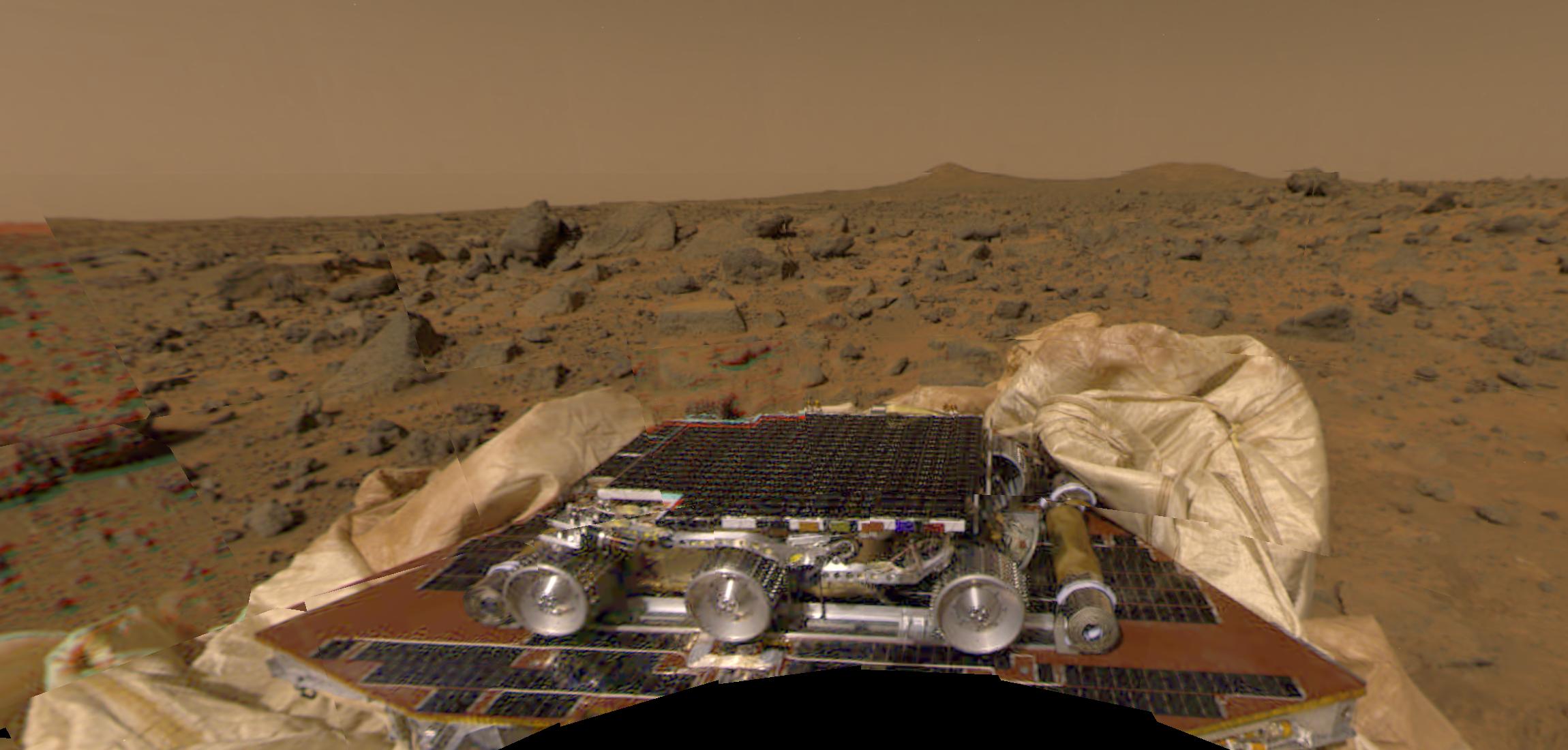
Pathfinder on Mars
2026-07-04
On July 4th, 1997, using its own array of fireworks, a parachute, and a cocoon of airbags, the Mars Pathfinder spacecraft bounced like a giant beach ball at least 15 times before it came to rest on the surface of Mars at 10:07 AM Pacific Daylight Time. After its then novel airbag-assisted landing sequence was completed, Pathfinder transmitted this color mosaic to mission operators on Earth. In the scene from another world, the Mars Sojourner robot rover is visible in the foreground, crouched on top of the unfolded Pathfinder. About the size of a large house cat, the six-wheeled, solar-powered Sojourner became the first successful Martian rover. Surrounding Pathfinder are deflated airbags and the rock-strewn terrain of the Ares Vallis floodplain. In the distance Martian hills appear against a dusty brownish sky. The Pathfinder lander was subsequently renamed the Carl Sagan Memorial Station.
via NASA APOD
Wikidata facts
- Diameter
- 200.0
- Mass
- 12.7
- Orbital period
- 1393.90713348928
- Image
- 19Fortuna-LB1-crab-mag11.jpg
Show 15 more facts
Article · Français
(19) Fortune, internationalement (19) Fortuna, est un des astéroïdes les plus volumineux de la ceinture principale d'astéroïdes. Il a une composition similaire à Cérès : une surface de couleur sombre qui a fortement subi l'érosion spatiale et une composition à base de composés organiques primitifs, incluant des tholins. Il a été découvert par John Russell Hind le 22 août 1852 et nommé d'après Fortune, la déesse romaine de la chance.Son symbole astronomique était .
Abstract from DBpedia / Wikipedia · CC BY-SA