Picture of the Day · NASA
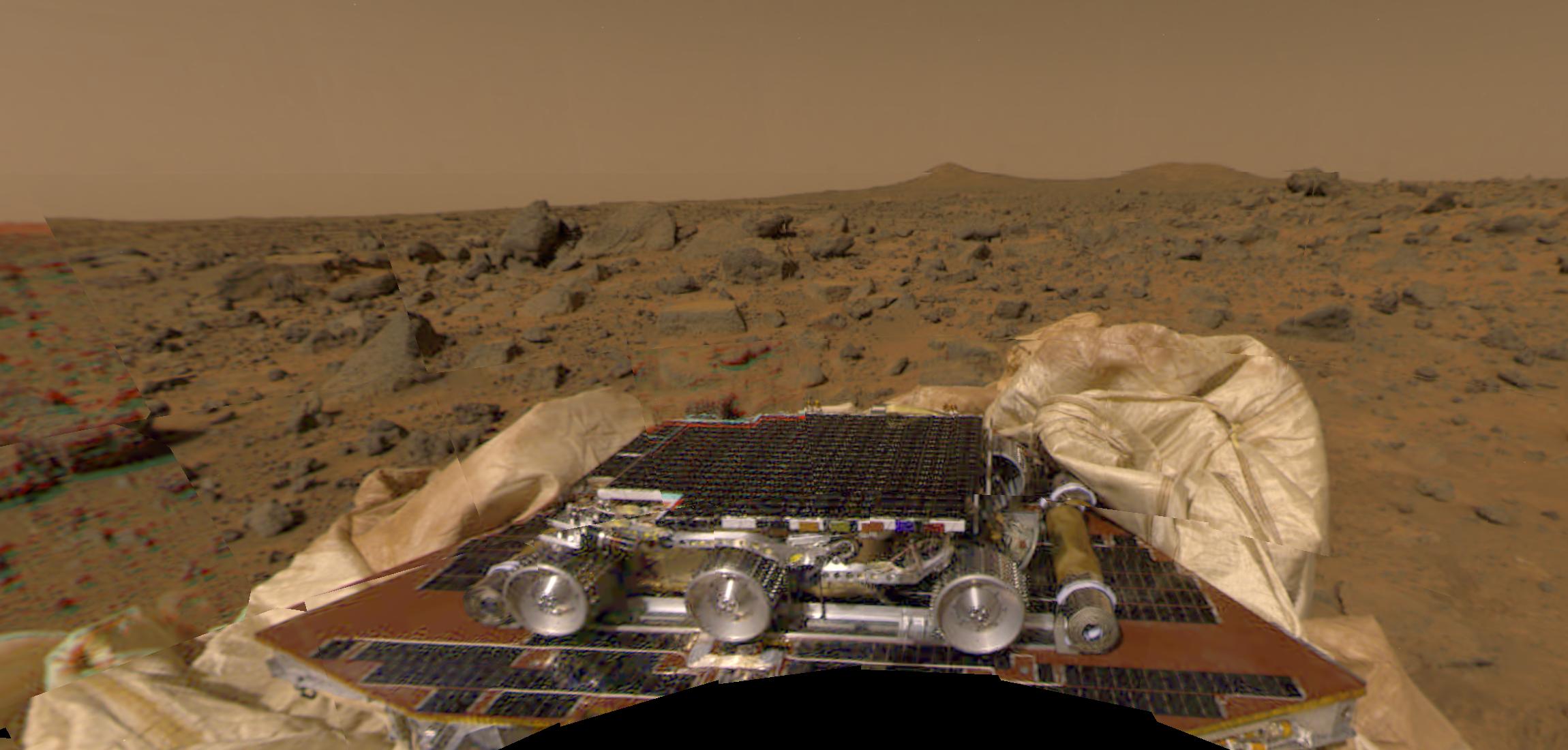
Pathfinder on Mars
2026-07-04
On July 4th, 1997, using its own array of fireworks, a parachute, and a cocoon of airbags, the Mars Pathfinder spacecraft bounced like a giant beach ball at least 15 times before it came to rest on the surface of Mars at 10:07 AM Pacific Daylight Time. After its then novel airbag-assisted landing sequence was completed, Pathfinder transmitted this color mosaic to mission operators on Earth. In the scene from another world, the Mars Sojourner robot rover is visible in the foreground, crouched on top of the unfolded Pathfinder. About the size of a large house cat, the six-wheeled, solar-powered Sojourner became the first successful Martian rover. Surrounding Pathfinder are deflated airbags and the rock-strewn terrain of the Ares Vallis floodplain. In the distance Martian hills appear against a dusty brownish sky. The Pathfinder lander was subsequently renamed the Carl Sagan Memorial Station.
via NASA APOD
Wikidata facts
- Diameter
- 3.308
- Orbital period
- 1638.177754510434
Show 14 more facts
- time of discovery or invention
- 2000-02-27
- provisional designation
- 2000 DQ1
Article · Polski
(50413) Petrginz – planetoida z pasa głównego asteroid okrążająca Słońce w ciągu 4 lat i 178 dni w średniej odległości 2,72 j.a. Została odkryta 27 lutego 2000 w Obserwatorium Kleť w pobliżu Czeskich Budziejowic przez Janę Tichą i Miloša Tichego. Nazwa planetoidy pochodzi od Petra Ginza (1928-1944), urodzonego w Pradze żydowskiego chłopca zainteresowanego pisarstwem oraz malarstwem a także miłośnika twórczości Juliusza Verne’a. W latach 1942-1944 chłopiec redagował tajne czasopismo Vedem w getcie w Terezínie. Jego rysunek Moon Landscape został zabrany w kosmos przez Ilana Ramona podczas ostatniej misji promu kosmicznego Columbia (STS-107). Przed nadaniem nazwy planetoida nosiła oznaczenie tymczasowe (50413) 2000 DQ1.
Abstract from DBpedia / Wikipedia · CC BY-SA