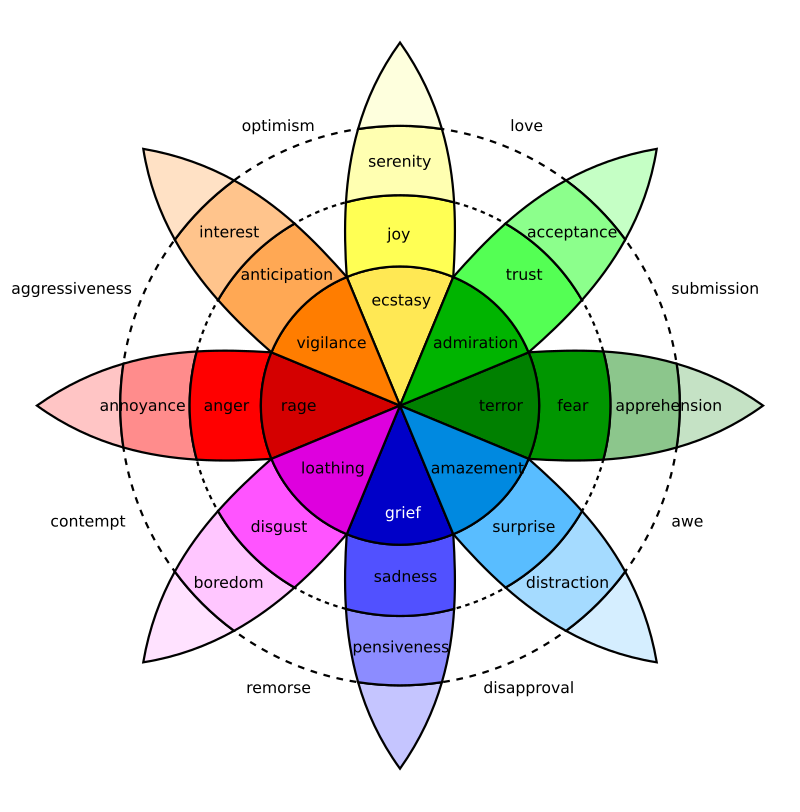
File:Plutchik-wheel.svg · Wikimedia Commons · See Wikimedia Commons
アクセプタンス
Sign in to savethumb|262px|Soviet Red Army soldiers accepting their defeat by surrendering to the military units of the German Army during the [[Great Patriotic War in the Soviet Union. Photograph taken in 1942 by Tamás Konok.]] Acceptance in psychology is a person's recognition and assent to the finality of a situation without attempting to change or protest it. This plays out at both the individual and societal level as people experience change.
Wikidata facts
- Subclass of
- emotional process
- Part of
- grief
- Has part
- inner peace
Show 2 more facts
- Commons category
- Acceptance
- facet of
- heuristic
Sources (3)
via Wikidata · CC0
Article · 日本語
人間心理学におけるアクセプタンス(Acceptance)、受容(じゅよう)とは、その人が置かれた現実の状況について、変化や抵抗しようとせずに、その過程や状況を理解しようとする姿である。その多くはネガティブで不快な状況についての姿勢である。この概念はacquiescence(黙諾)に近似しており、これはラテン語の 'acquiēscere' に由来する。 アクセプタンスは、様々な信仰と瞑想の世界において顕著である。たとえば仏教の四諦においては「全ての生は苦(dukkha)である」という真理が述べられており、人生の本質は不満足であることを受容するよう諭している。ユダヤ教のカバラという語も、アクセプタンスと同意である。 マジョリティ側がマイノリティ側を社会的排除しないであろう社会において、マイノリティ集団(LGBTなど)は多くの場合、自分たちの目標を「受容」と表現する。一方、マジョリティがマイノリティの社会参加を特定の分野のみに限定している場合、少数派を「許容」していると言えるかもしれないが、「受容」しているとは言えない。
Abstract from DBpedia / Wikipedia · CC BY-SA