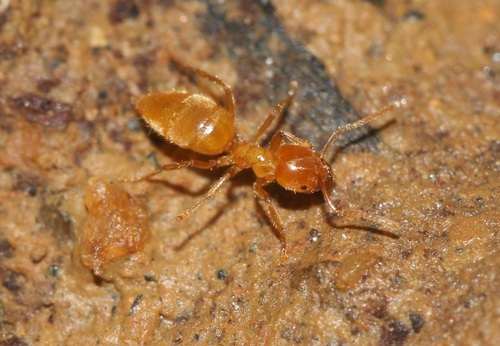
(c) Amila P Sumanapala, some rights reserved (CC BY-NC), uploaded by Amila P Sumanapala · cc-by-nc
Acropyga
Sign in to saveAcropyga is a genus of small formicine ants. Some species can be indirect pests. A. acutiventris, which is found from India to Australia, tends subterranean, root-feeding mealybugs of the species Xenococcus annandalei. Living, gravid females are carried in the jaws of A. acutiventris queens during their nuptial flight, to establish the symbiotic association in founding colonies. Other Acropyga species have relationships with different species of mealybugs, and it could be a trait common to the whole genus.
Species
GENUS
- KingdomAnimalia
- PhylumArthropoda
- ClassInsecta
- OrderHymenoptera
- FamilyFormicidae
via GBIF
Museum specimens
- Specimen records
- 404
- With media
- 28
- Family
- Formicidae
- Collections
- INECOL, USNM, CAS, UTEP
- Recorded in
- Mexico, Panama, South Africa, Fiji, Tanzania, Guatemala, Australia, Solomon Islands
Wikidata facts
- Instance of
- taxon
- Parent taxon
- Plagiolepidini
- Image
- Acropyga.berwicki.-.wheeler.svg
Show 4 more facts
- taxon name
- Acropyga
- taxon rank
- genus
- Commons category
- Acropyga
- topic's main category
- Category:Acropyga
Sources (1)
via Wikidata · CC0
~3 min read
Encyclopedic overview
6 sectionsContents
- Description
- Distribution
- Species
- References
- Further reading
- External links
Acropyga is a genus of small formicine ants. Some species can be indirect pests. A. acutiventris, which is found from India to Australia, tends subterranean, root-feeding mealybugs of the species Xenococcus annandalei. Living, gravid females are carried in the jaws of A. acutiventris queens during their nuptial flight, to establish the symbiotic association in founding colonies. Other Acropyga species have relationships with different species of mealybugs, and it could be a trait common to the whole genus.
==Description== Acropyga are smaller than , with a compact, stocky body. They have antennae with 10 or 11 segments (including the scape), short palps and reduced eyes with four to 30 individual ommatidia. In some species, the eyes are completely absent.
Excerpted from Wikipedia’s “Acropyga” article, available under the CC BY-SA 4.0 licence.
Gallery (3)
Available in 13 languages
via Wikidata sitelinks · CC0