Boulard, M.
Aetalionidae
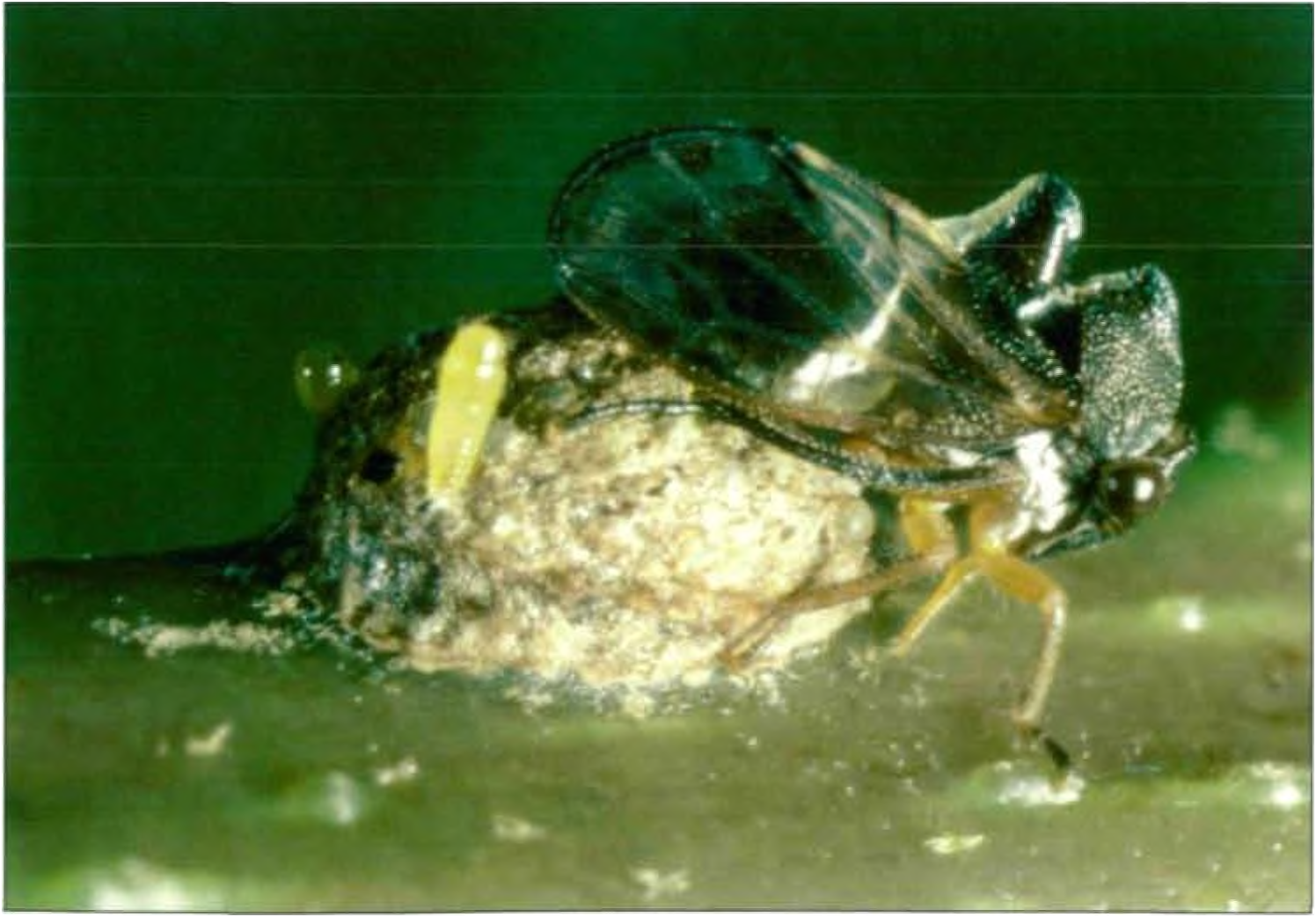
Sign in to saveAetalionidae are a family of treehoppers in the superfamily Membracoidea. Aetalionidae are somewhat like Membracidae in that they have one to three rows of short spines on the hind tibia but differ in having the front femur fused to the trochanter and the scutellum is completely exposed. The females have finger-like protrusions on the genital capsule. The family is mostly Neotropical. The subfamily Biturritiinae is Neotropical while the subfamily Aetalioninae has a Neotropical genus Aetalion and the sole Old World representative genus Darthula with a single species Darthula hardwickii (which i
Museum specimens
- Specimen records
- 30
- Family
- Aetalionidae
- Collections
- LCDI, FMNH, MSU, MNHN, MZLU
- Recorded in
- United States, Colombia, Perú, Bolivie, Ecuador
Wikidata facts
- Instance of
- taxon
- Parent taxon
- Cicadomorpha
- Image
- Tropidaspis carinata lateral CeNak.jpg
Show 3 more facts
- taxon name
- Aetalionidae
- taxon rank
- family
- Commons category
- Aetalionidae
Sources (1)
via Wikidata · CC0
~1 min read
Encyclopedic overview
2 sectionsContents
- References
- External links
Aetalionidae are a family of treehoppers in the superfamily Membracoidea. Aetalionidae are somewhat like Membracidae in that they have one to three rows of short spines on the hind tibia but differ in having the front femur fused to the trochanter and the scutellum is completely exposed. The females have finger-like protrusions on the genital capsule. The family is mostly Neotropical. The subfamily Biturritiinae is Neotropical while the subfamily Aetalioninae has a Neotropical genus Aetalion and the sole Old World representative genus Darthula with a single species Darthula hardwickii (which is eaten in parts of China and India).
They form aggregations on the branches of trees where they produce honeydew and are associated with ants and stingless bees. Aetalionid treehoppers are also known for their maternal care with females standing guard over their eggs. thumb|left|Darthula hardwickii with tail raised When disturbed, species like Darthula hardwickii are known to raise their tails in a threatening posture.
Excerpted from Wikipedia’s “Aetalionidae” article, available under the CC BY-SA 4.0 licence.