Shofner, Ryan;Cassis, Gerasimos
Tingidae
Sign in to saveAlso known as lace bugs
The Tingidae, commonly referred to as lace bugs due to their intricate wings, are a family of very small (2-10 mm (0.08-0.39 in)) insects in the order Hemiptera. These insects exist in multiple regions of the world and live on various plants, depending on the species. There are roughly 2,000 described species across the 3 subfamilies which include Cantacaderinae, Tinginae and Vianaidinae.
Species
lacebugs
FAMILY
- KingdomAnimalia
- PhylumArthropoda
- ClassInsecta
- OrderHemiptera
- FamilyTingidae
via GBIF
Museum specimens
- Specimen records
- 3,454
- With media
- 89
- Family
- Tingidae
- Collections
- YPM, DBG, UAM, MHNCA, UMNH, TTU
- Recorded in
- United States, Mexico
Wikidata facts
- Instance of
- taxon
- Image
- Corythucha.ciliata.1.jpg
Show 5 more facts
- Commons category
- Tingidae
- taxon rank
- family
- taxon name
- Tingidae
- topic's main category
- Category:Tingidae
- taxon common name
- netteger
Sources (3)
via Wikidata · CC0
~12 min read
Encyclopedic overview
10 sectionsContents
- Characteristics
- Reproduction and development
- Habitat
- Phylogeny
- Ecological importance
- Gallery
- See also
- References
- Further reading
- External links
The Tingidae, commonly referred to as lace bugs due to their intricate wings, are a family of very small (2-10 mm (0.08-0.39 in)) insects in the order Hemiptera. These insects exist in multiple regions of the world and live on various plants, depending on the species. There are roughly 2,000 described species across the 3 subfamilies which include Cantacaderinae, Tinginae and Vianaidinae.
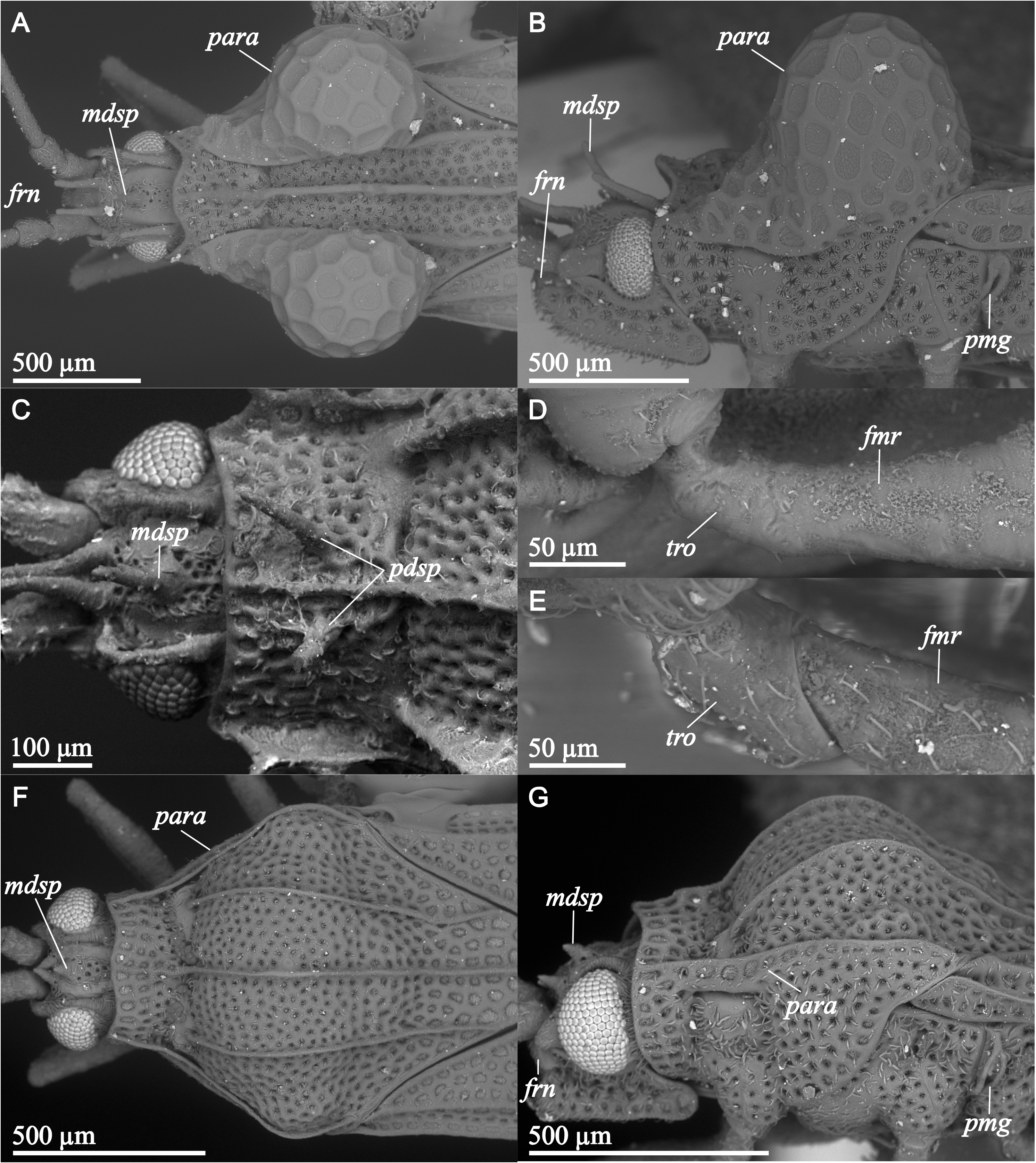
== Characteristics == They have two main life stages, nymphal and adult. The nymphal period consists of 5 instar stages each similar but unique in their own manners lasting a total of 8-16 days. The first instar stage occurs after hatching and lasts typically 2-4 days, the molt is oblong shaped and transforms from a pale brown to a brownish-black coloured cuticle. The second instar also typically lasts 2-4 days, it remains a dark brown-black colour but the molt is rounded instead, the abdominal surface have indications of spinal projections along the body's margin. The third instar typically lasts 2-3 days and the molt remains round but larger in size with short cephalic spines. The fourth instar lasts 1-3 days and the molt continues to grow in size, large cephalic spines as well as a wider paranotum on the thorax are observed. Finally, the fifth instar stage lasts 1-2 days and is very similar to the previous stage but the molt transforms back into an elongated body form. This concludes the nymphal stage, transforming the cuticle into its adult life form.
Excerpted from Wikipedia’s “Tingidae” article, available under the CC BY-SA 4.0 licence.