Described at
Ahellil of Gourara - UNESCO Intangible Cultural Heritage
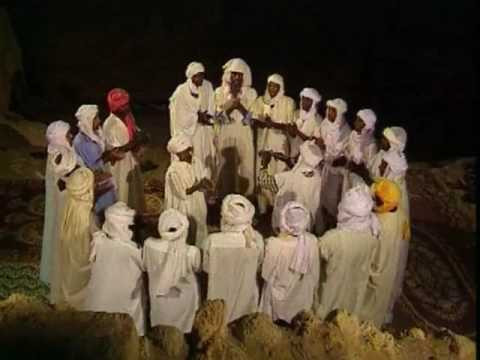
ich.unesco.org →Performed during collective ceremonies, the Ahellil is a poetic and musical genre emblematic of the Zenete population of Gourara. This region in southwest Algeria includes some one hundred oases populated by over 50,000 inhabitants of Berber, Arab and Sudanese origin. The Ahellil, which is specific to the Berber-speaking part of Gourara, is regularly rendered at religious festivities and pilgrimages as well as secular celebrations, such as weddings and community events. The Ahellil is closely linked to the Zenete way of life and its oasis agriculture, symbolizing the cohesion of the community living in a harsh environment and, at the same time, transmitting the values and the history of the Zenete population in a language that is at risk of disappearing. Simultaneously interpreted as poetry, polyphonic chant, music and dance, this genre is performed by a bengri (flute) player, a singer and a chorus of up to a hundred people. Standing shoulder to shoulder in a circle surrounding the singer, they slowly move around him while clapping their hands. An Ahellil performance consists of a series of chants in an order decided by the instrumentalist or singer and follows an age-old pattern. The first part, the lemserreh, includes everyone and encompasses short, well-known chants that are sung late into the night. The second, the aougrout, concerns only the experienced performers who continue until dawn. The tra finishes with daybreak and involves only the most accomplished performers. This threefold structure is also reflected in the chant performance, which begins with a prelude by the instrumentalist, followed by the chorus picking up certain verses, and ending with it chanting in whisper and slowly building up into a powerful, harmonious whole. 1. Knowledge and practices concerning nature and the universe (308) 2. Oral traditions and expressions (384) 3. Performing arts (411)
Excerpt from a page describing this subject · 7,623 chars · not written by Vinony
Wikidata facts
- Instance of
- literary genre
- Subclass of
- music of Algeria
- Country of origin
- Algeria
- Image
- Gourara lors d'un mariage.jpg
Show 3 more facts
- described at URL
- ich.unesco.org/es/RL/00121
- intangible cultural heritage status
- Masterpieces of the Oral and Intangible Heritage of Humanity
- Commons category
- Ahellil du Gourara
via Wikidata · CC0
Article · Nederlands
Ahellil is een Berberse compositievorm, die muziek, dans en liederen bevat en afkomstig is uit Algerije. Sinds 2005 staat Ahellil vermeld op de Lijst van Meesterwerken van het Orale en Immateriële Erfgoed van de Mensheid. Ahellil wordt uitgevoerd tijdens collectieve ceremoniën, het is een poëtisch en muzikaal genre van de bevolking van . In dit gebied liggen een paar honderd oases, bevolkt door meer dan 50.000 inwoners van Berberse, Arabische en Soedanese afkomst. De Ahellil is specifiek voor het Berber-sprekende deel van de gourara. Ahellil komt voor bij bedevaarten, religieuze feesten, bruiloften en gemeenschappelijke evenementen. Het symboliseert de samenhang van de gemeenschap, het geeft de waarden en de geschiedenis van de Zenete bevolking door in een taal die kans heeft om te verdwijnen. Er is poëzie, meerstemmige zang, muziek en dans. Het koor bestaat uit maximaal honderd mensen, ze staan permanent schouder aan schouder in een cirkel rond de zanger. Ze bewegen langzaam heen en weer terwijl ze in de handen klappen. Ahellil bestaat uit een serie van gezangen in een eeuwenoud patroon. * Het eerste deel, lemserreh, omvat iedereen en bestaat uit korte, bekende gezangen die laat in de nacht worden opgevoerd * Het tweede deel, aougrout, heeft betrekking op de ervaren artiesten en gaat door tot het ochtendgloren * De tra eindigt met het aanbreken van de dag en het gaat dan alleen om de meest talentvolle artiesten
Abstract from DBpedia / Wikipedia · CC BY-SA
Available in 9 languages
via Wikidata sitelinks · CC0