Described at
Ahellil of Gourara - UNESCO Intangible Cultural Heritage
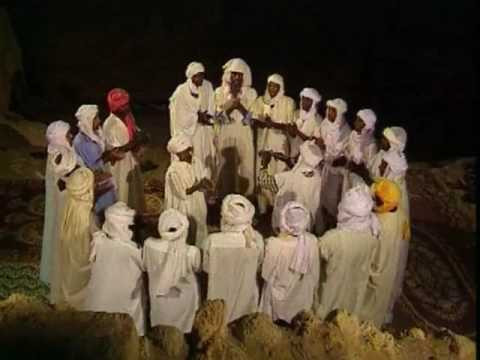
ich.unesco.org →Performed during collective ceremonies, the Ahellil is a poetic and musical genre emblematic of the Zenete population of Gourara. This region in southwest Algeria includes some one hundred oases populated by over 50,000 inhabitants of Berber, Arab and Sudanese origin. The Ahellil, which is specific to the Berber-speaking part of Gourara, is regularly rendered at religious festivities and pilgrimages as well as secular celebrations, such as weddings and community events. The Ahellil is closely linked to the Zenete way of life and its oasis agriculture, symbolizing the cohesion of the community living in a harsh environment and, at the same time, transmitting the values and the history of the Zenete population in a language that is at risk of disappearing. Simultaneously interpreted as poetry, polyphonic chant, music and dance, this genre is performed by a bengri (flute) player, a singer and a chorus of up to a hundred people. Standing shoulder to shoulder in a circle surrounding the singer, they slowly move around him while clapping their hands. An Ahellil performance consists of a series of chants in an order decided by the instrumentalist or singer and follows an age-old pattern. The first part, the lemserreh, includes everyone and encompasses short, well-known chants that are sung late into the night. The second, the aougrout, concerns only the experienced performers who continue until dawn. The tra finishes with daybreak and involves only the most accomplished performers. This threefold structure is also reflected in the chant performance, which begins with a prelude by the instrumentalist, followed by the chorus picking up certain verses, and ending with it chanting in whisper and slowly building up into a powerful, harmonious whole. 1. Knowledge and practices concerning nature and the universe (308) 2. Oral traditions and expressions (384) 3. Performing arts (411)
Excerpt from a page describing this subject · 7,623 chars · not written by Vinony
Wikidata facts
- Instance of
- literary genre
- Subclass of
- music of Algeria
- Country of origin
- Algeria
- Image
- Gourara lors d'un mariage.jpg
Show 3 more facts
- described at URL
- ich.unesco.org/es/RL/00121
- intangible cultural heritage status
- Masterpieces of the Oral and Intangible Heritage of Humanity
- Commons category
- Ahellil du Gourara
via Wikidata · CC0
Article · Português
O ahellil é um género musical e poético emblemático do povo Zenete de Gurara, do sudoeste da Argélia, onde há uma centena de oásis povoados por mais de 50000 pessoas de origem berbere. Interpretado durante as cerimónias coletivas, o ahellil, que é específico da região de expressão berbere de Gourara, é interpretado regularmente em festividades religiosas e peregrinações, e em festejos profanos como casamentos e feiras locais. O ahellil está intimamente associado ao modo de vida dos Zenete e à sua agricultura de oásis, e simboliza a coesão da vida em comunidade num ambiente hostil, transmitindo os valores e a história dos Zenete numa linguagem que está em perigo de desaparecer. Ao mesmo tempo poesia, canto polifónico, música e dança, este género é tocado por um bengri (flautista), um cantor e um coral. Pode envolver uma centena de cantores que, colocados ombro a ombro em círculo em redor do cantor, dar-lhe réplica, batendo palmas. Uma sessão de ahellil consiste numa série de canções que se seguem numa ordem decidida pelo músico ou cantor de acordo com um padrão inalterável. A primeira parte, o lemserreh, é aberta a todos e consiste em cantos curtos e conhecidos que duram até altas horas da noite. No segundo, chamado aougrout, apenas artistas treinados intervêm e continuam até ao amanhecer. O trabalho termina ao amanhecer e participam apenas os melhores intérpretes. Esta estrutura tripartida também se reflete na interpretação da música, que começa com um prelúdio fundamental, seguido por uma repetição de certos versos pelo coro e termina com um coro em murmúrio a crescer lentamente para produzir um conjunto poderoso e harmonioso. Esta tradição musical está ameaçada de desaparecimento devido ao número cada vez menor de ocasiões para a interpretar. Esta diminuição é devida à escassez de festas tradicionais, que exigem muita preparação, ao êxodo de jovens para as cidades e para a multiplicação das gravações de ahellil que as pessoas preferem ouvir, em vez de participar em espetáculos ao vivo. O ahelill de Gurara foi integrado pela UNESCO na lista representativa do Património Cultural Imaterial da Humanidade em 2008.
Abstract from DBpedia / Wikipedia · CC BY-SA
Available in 9 languages
via Wikidata sitelinks · CC0