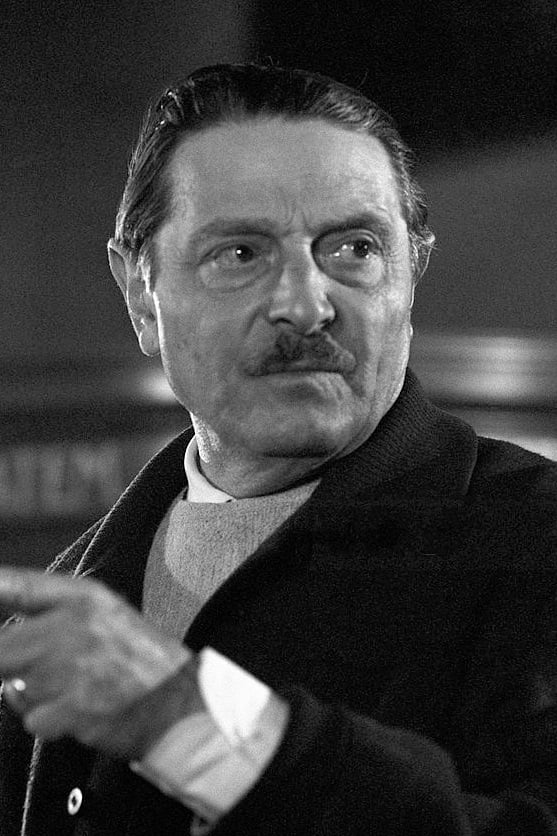
Profile via TMDB · Courtesy of TMDB
Alessandro Blasetti
Sign in to saveItalian film director, screenwriter and film editor (1900–1987)
OverviewAI-generated
Alessandro Blasetti was an Italian film director, screenwriter, and film editor. Born in Rome on July 3, 1900, he was educated at Sapienza University of Rome. He held citizenship in both the Kingdom of Italy and Italy. Blasetti worked primarily in the directing department and spoke Italian.
He died in Rome on February 1, 1987, and was buried at Campo Verano. His professional recognition included the Golden Lion for Lifetime Achievement, the David di Donatello for Best Director, the Knight Grand Cross of the Order of Merit of the Italian Republic, and the Civil Order of Savoy.
Synthesized by Vinony from 19 facts across 2 sources: Wikidata, TMDb. Generated from structured data (not the Wikipedia text) and checked against those facts — may still contain errors.
In the Vinony graph
Vinony's link graph records 441 inbound references to Alessandro Blasetti, and connects out to Resurrection, Rome and Charlie Chaplin.
It is catalogued under topics including 1900 births, 1987 deaths and 20th-century Italian male writers.
Vinony links it to 28 Wikipedia language editions.
Film & TV
Rome, Lazio, Italy
Alessandro Blasetti (3 July 1900 – 1 February 1987) was an Italian film director and screenwriter who influenced Italian neorealism with the film Quattro passi fra le nuvole. Blasetti was one of the leading figures in Italian cinema during the Fascist era. He is sometimes known as the "father of Italian cinema" because of his role in reviving the struggling industry in the late 1920s.
Known for
- Cinecittà, de Mussolini à la Dolce Vita — Self (archive footage)2021
- The Four Truths — (segment "Le lièvre et le tortue")1962
- A Difficult Life — Self1961
- Bellissima — Self1952
via TMDB
Key facts
- Born
- ( 1900-07-03 ) 3 July 1900, Rome , Kingdom of Italy
- Died
- 1 February 1987 (1987-02-01) (aged 86), Rome, Italy
- Occupation
- Film director
- Years active
- 1917–1981
via Wikipedia infobox
Wikidata facts
- Instance of
- human
- Given name
- Alessandro
- Gender
- male
- Citizenship
- Kingdom of Italy
- Place of birth
- Rome
- Place of death
- Rome
- Occupation
- film editor
- Educated at
- Sapienza University of Rome
- Languages spoken
- Italian
- Image
- Alessandro Blasetti 1965.jpg
Show 6 more facts
- place of burial
- Campo Verano
- date of birth
- 1900-07-03
- date of death
- 1987-02-01
- Commons category
- Alessandro Blasetti
- related category
- Category:Films directed by Alessandro Blasetti
- name in native language
- Alessandro Blasetti
Sources (2)
via Wikidata · CC0
~4 min read
Encyclopedic overview
Alessandro Blasetti (3 July 1900 – 1 February 1987) was an Italian film director and screenwriter who influenced Italian neorealism with the film Four Steps in the Clouds. Blasetti was one of the leading figures in Italian cinema during the Fascist era. He is sometimes known as the "father of Italian cinema" because of his role in reviving the struggling industry in the late 1920s.
Early life
Excerpted from Wikipedia’s “Alessandro Blasetti” article, available under the CC BY-SA 4.0 licence.