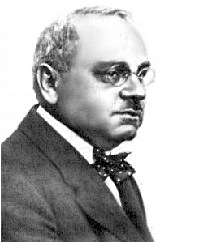
File:Alfred_Adler1.png · Wikimedia Commons · See Wikimedia Commons
Alfred Adler
Sign in to saveAustrian psychotherapist (1870–1937)
Alfred Adler was an Austrian psychotherapist who lived from 1870 to 1937 and developed influential ideas about human psychology and behavior. His work matters because it shaped modern psychology's understanding of how people's feelings of inferiority, their social connections, and their life goals influence their mental health and personal development.
AI-generated from the Wikipedia summary — may contain errors.
Wikidata facts
- Instance of
- human
- Given name
- Alfred
- Family name
- Adler
- Gender
- male
- Citizenship
- Cisleithania
- Place of death
- Aberdeen
- Spouse
- Raissa Adler
- Occupation
- ophthalmologist
- Educated at
- University of Vienna
- Employer
- University of Vienna
- Languages spoken
- German
- Religion
- Judaism
- Field of work
- psychoanalysis
- Movement
- Neo-Freudianism
- Official website
- adler-iaip.net
- Image
- AlfredAdler.jpg
- Residence
- Austria
Show 13 more facts
- Commons category
- Alfred Adler
- date of birth
- 1870-02-07
- date of death
- 1937-05-28
- cause of death
- acute myocardial infarction
- place of burial
- Vienna Central Cemetery
- student
- Abraham Maslow
- writing language
- German
- name in native language
- Alfred Adler
- influenced by
- Friedrich Nietzsche
- birth name
- Alfred Adler
- on focus list of Wikimedia project
- Wikipedia:Vital articles/Level/4
- P8168
- Habomai
- manner of death
- natural causes
Sources (6)
via Wikidata · CC0
~40 min read
Encyclopedic overview
Alfred Adler (/ˈædlər/ AD-lər; Austrian German: [ˈalfreːd ˈaːdlɐ]; February 7, 1870 – May 28, 1937) was an Austrian medical doctor, psychotherapist, and founder of the school of individual psychology. His emphasis on the importance of feelings of belonging, relationships within the family, and birth order set him apart from Freud and others in their common circle. He proposed that contributing to others ("social interest" or Gemeinschaftsgefühl) was how the individual feels a sense of worth and belonging in the family and society. His earlier work focused on inferiority, coining the term "inferiority complex", an isolating element which he argued plays a key role in personality development. Adler considered a human being as an individual whole, and therefore he called his school of psychology Individual Psychology.
Adler was the first to emphasize the importance of the social element in the re-adjustment process of the individual and to carry psychiatry into the community. A Review of General Psychology survey, published in 2002, ranked Adler as the 67th most eminent psychologist of the 20th century.
Excerpted from Wikipedia’s “Alfred Adler” article, available under the CC BY-SA 4.0 licence.
Gallery (2)
Available in 77 languages
- Español
- Français
- Deutsch
- 中文
- 日本語
- Русский
- Português
- Italiano
- العربية
- Albanian
- Armenian
- Asturian
- azb
- Azerbaijani
- Bahasa Indonesia
- Bangla
- Basque
- Belarusian
Show 58 more
- Bosnian
- Bulgarian
- Catalan
- Central Kurdish
- Corsican
- Croatian
- Czech
- Danish
- Egyptian Arabic
- Esperanto
- Estonian
- Finnish
- Galician
- Georgian
- Greek
- Hebrew
- Hungarian
- Ido
- Irish
- Javanese
- Kannada
- Kazakh
- Kurdish
- Kyrgyz
- Latin
- Latvian
- Lingua Franca Nova
- Lithuanian
- Macedonian
- Malagasy
- Malayalam
- Mazanderani
- Mongolian
- Nederlands
- Norwegian
- Pashto
- Piedmontese
- Polski
- Punjabi
- Romanian
- Scots
- Serbian
- Serbian (Latin)
- Slovak
- Slovenian
- Svenska
- Tamil
- Tiếng Việt
- Türkçe
- Ukrainian
- Uzbek
- Waray
- Wu Chinese
- Yoruba
- Zaza
- zh_yue
- فارسی
- 한국어
via Wikidata sitelinks · CC0