.jpg)
Anacaona
Sign in to saveAlso known as Anacoana
Anacaona ( 1474 – 1504) was a Taíno , zemi interpreter, composer, and poet born in Yaguana, Jaragua, Hispaniola (present-day Léogâne, Haiti). After the death of her brother in 1500, she became the ruler of Jaragua. In the centuries since her death, she has been re-imagined and memorialized in various forms of poetry, music, and literature from the Dominican Republic, Haiti, and the wider Caribbean.
OverviewAI-generated
Anacaona was a female human born in 1474. She was a member of the Taíno people and spoke the Taíno language. Her occupations included serving as a traditional leader or chief and as a composer. She was married to Caonabo and had a sibling named Bohechío.
She died in Haiti by hanging to death, which was classified as a homicide. While some music databases list an artist named Anacaona with tags such as cubaton and latin, and associate the name with genres like jazz and son cubano in Cuba, these entries refer to different entities. The historical figure Anacaona is distinct from musical groups or artists identified by those specific genre tags and regional classifications.
Synthesized by Vinony from 17 facts across 3 sources: Wikidata, Last.fm, MusicBrainz. Generated from structured data (not the Wikipedia text) and checked against those facts — may still contain errors.
Music · MusicBrainz
- Type
- Group
- Origin
- Cuba
- Active from
- 1932-02-19
Discography
via MusicBrainz · CC0
Listeners · Last.fm
- Listeners
- 1,346
- Total plays
- 6,311
Tags
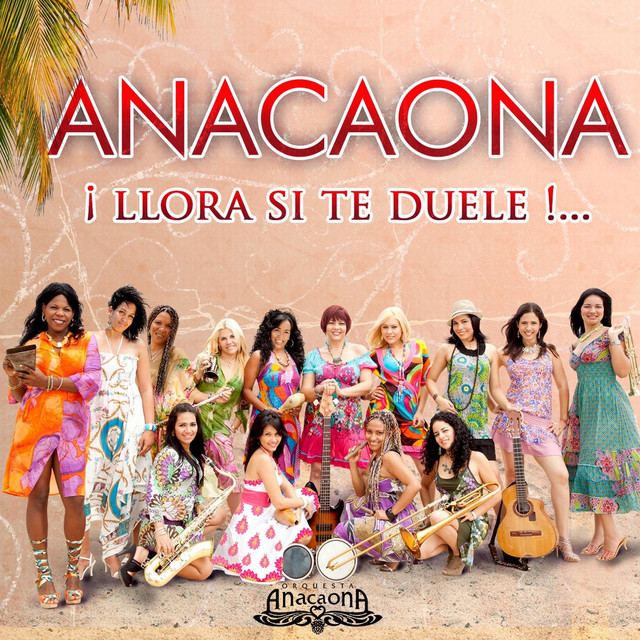
All-female Cuban dance band. The original orchestra was founded in 1930s Havana by Cuchito Castro and her sisters. Eventually, all 11 sisters joined the band. The band was formed during the Machado era when the political situation led to university closings, forcing Cuchito Castro to abandon her studies and her plan to start a dental practice. Instead, in 1932, she chose a different career by proposing a female septet to challenge the male-dominated son music. <a href="https://www.last.fm/music
Key facts
- Royalty.name
- Anacaona
- Royalty.image
- File:Vida y viajes de Cristóbal Colón-1852-Honores Tributados à la Reina Anacaona (cropped).png
- Royalty.caption
- Honors to Queen Anacaona, from A History of the Life and Voyages of Christopher Columbus by Washington Irving
- Royalty.succession
- of Jaragua
- Royalty.reign
- 1500–1504
- Royalty.birth_date
- 1474
- Royalty.birth_place
- Yaguana, Jaragua, Hispaniola
- Royalty.death_date
- 1504 (aged 30)
- Royalty.death_place
- Santo Domingo
- Royalty.death_cause
- Hanging
- Royalty.spouse
- Caonabo
via Wikipedia infobox
Wikidata facts
- Instance of
- human
- Gender
- female
- Place of death
- Haiti
- Spouse
- Caonabo
- Sibling
- Bohechío
- Occupation
- composer
- Languages spoken
- Taíno
- Image
- Vida y viajes de Cristóbal Colón-1852-Honores Tributados à la Reina Anacaona.png
Show 6 more facts
- date of birth
- 1474-01-01
- date of death
- 1503-00-00
- Commons category
- Anacaona
- cause of death
- hanging to death
- ethnic group
- Taíno people
- manner of death
- homicide
Sources (2)
via Wikidata · CC0
~14 min read
Encyclopedic overview
10 sectionsContents
- Early life
- Arrival of the Spanish
- Reign
- Death
- Legacy
- See also
- Notes
- References
- Sources
- External links
Anacaona ( 1474 – 1504) was a Taíno , zemi interpreter, composer, and poet born in Yaguana, Jaragua, Hispaniola (present-day Léogâne, Haiti). After the death of her brother in 1500, she became the ruler of Jaragua. In the centuries since her death, she has been re-imagined and memorialized in various forms of poetry, music, and literature from the Dominican Republic, Haiti, and the wider Caribbean.
Prior to becoming , Anacaona was married to a Caonabo, a from the Lucayos (now The Bahamas) who conquered the of Maguana in 1470. However, she spent most of her time in Jaragua with Bohechío. With Christopher Columbus's arrival in Hispaniola in 1492, the Spanish began enslaving Taínos, resulting in conflict. Caonabo, who fought against the Spanish, was ultimately captured and banished in 1496. After Christopher left, his brother Bartholomew took over the administration of Hispaniola in 1496. Anacaona played a prominent role during Bartholomew's visits to Jaragua, welcoming him, helping to facilitate tribute payments to him, and offering him valuable gifts, potentially suggesting her administrative authority and status as a steward of luxury goods.
Excerpted from Wikipedia’s “Anacaona” article, available under the CC BY-SA 4.0 licence.