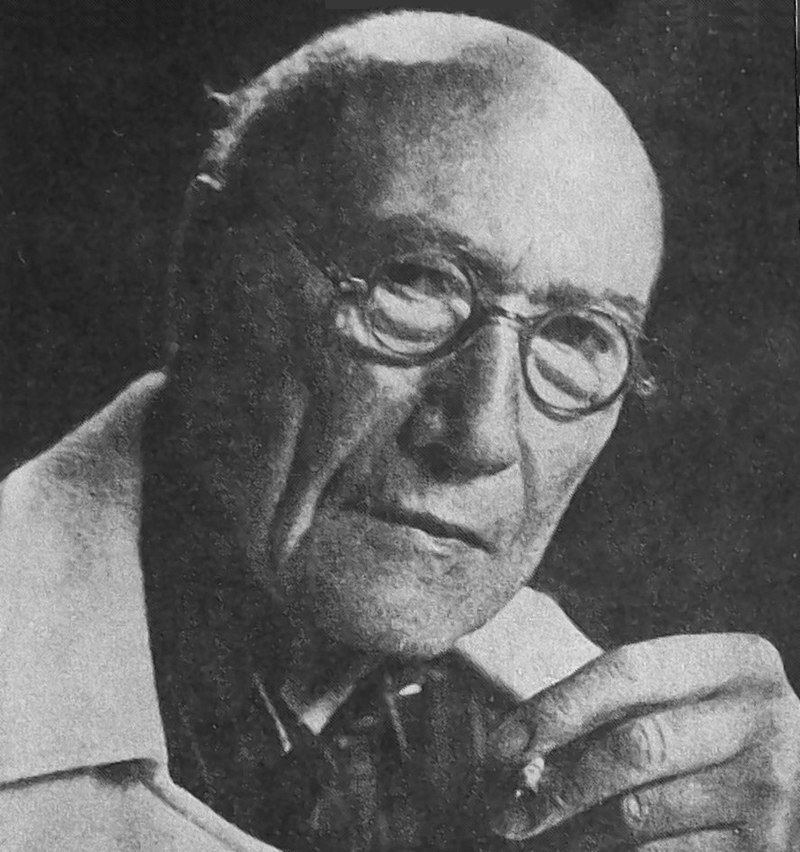
File:André_Gide.jpg · Wikimedia Commons · See Wikimedia Commons
André Gide
Sign in to saveAlso known as André Paul Guillaume Gide, Andre Gide, Andre Paul Guillaume Gide
French author and Nobel laureate (1869–1951)
André Gide was a prominent French writer who lived from 1869 to 1951 and won the Nobel Prize in Literature, making him one of the most celebrated authors of his era. His works explored complex themes of morality, freedom, and personal identity, influencing modern literature and thought.
AI-generated from the Wikipedia summary — may contain errors.
Film & TV
Paris, France
André Paul Guillaume Gide (22 November 1869 – 19 February 1951) was a French author whose writings spanned a wide variety of styles and topics. He was awarded the 1947 Nobel Prize in Literature. Gide's career ranged from his beginnings in the symbolist movement, to criticising imperialism between the two World Wars. The author of more than fifty books, he was described in his obituary in The New…
Known for
- L'affaire Matzneff — (archive footage)2020
- With André Gide — Self1952
- Life Begins Tomorrow — Self1950
- Paris 1900 — Self (archive footage)1948
- Fanny — (uncredited)1932
via TMDB
Nobel Prize
- The Nobel Prize in Literature1947
“for his comprehensive and artistically significant writings, in which human problems and conditions have been presented with a fearless love of truth and keen psychological insight”
Wikidata facts
- Instance of
- human
- Given name
- Guillaume
- Gender
- male
- Citizenship
- France
- Place of birth
- Paris
- Place of death
- Paris
- Occupation
- screenwriter
- Employer
- Le Figaro
- Languages spoken
- French
- Native language
- French
- Participant in
- La Nouvelle Revue française
- Student of
- Youra Guller
- Field of work
- fiction
- Image
- Gide 1920 cropped.jpg
- Significant event
- Nazi book burnings
Show 16 more facts
- Commons category
- André Gide
- date of birth
- 1869-11-22
- date of death
- 1922-02-19
- influenced by
- Oscar Wilde
- Commons Creator page
- André Gide
- birth name
- André Paul Guillaume Gide
- topic's main category
- Category:André Gide
- Commons gallery
- André Gide
- nominated for
- Nobel Prize in Literature
- name in native language
- André Gide
- has works in the collection
- National Gallery of Art
- writing language
- French
- on focus list of Wikimedia project
- Wikipedia:Vital articles/Level/4
- partner in business or sport
- Gaston Gallimard
- P12749
- Vufflens-la-Ville
- has effect
- La Nouvelle Revue française
Sources (12)
via Wikidata · CC0
~24 min read
Encyclopedic overview
André Paul Guillaume Gide ( French: [ɑ̃dʁe pɔl ɡijom ʒid]; 22 November 1869 – 19 February 1951) was a French author whose writing spanned a wide variety of styles and topics. He was awarded the 1947 Nobel Prize in Literature. Gide's career ranged from his beginnings in the symbolist movement to criticising imperialism between the two World Wars. Author of more than 50 books, he was described in his New York Times obituary as "France's greatest contemporary man of letters" and "judged the greatest French writer of this century by the literary cognoscenti."
Known for his fiction as well as his autobiographical works, Gide expressed the conflict and eventual reconciliation of the two sides of his personality (characterized by a Protestant austerity and a transgressive sexual adventurousness, respectively). As a self-professed pederast, he used his writing to explore his struggle to be fully oneself, including owning one's sexual nature, without betraying one's values. His political activity was shaped by the same ethos. While sympathetic to Communism in the early 1930s, like many intellectuals, after his 1936 journey to the USSR he supported the anti-Stalinist left. Towards the end of his life, in the 1940s, he shifted towards more traditional values and repudiated Communism as an idea that breaks with the traditions of Christian civilization.
Excerpted from Wikipedia’s “André Gide” article, available under the CC BY-SA 4.0 licence.
Gallery (5)
Available in 97 languages
- Español
- Français
- Deutsch
- 中文
- 日本語
- Русский
- Português
- Italiano
- العربية
- हिन्दी
- Afrikaans
- Albanian
- Aragonese
- Armenian
- Assamese
- Asturian
- azb
- Azerbaijani
Show 78 more
- Bahasa Indonesia
- Bangla
- Banjar
- Basque
- be_x_old
- Belarusian
- Bosnian
- Bulgarian
- Catalan
- Croatian
- Czech
- Danish
- Egyptian Arabic
- Esperanto
- Estonian
- Fiji Hindi
- Finnish
- Galician
- Georgian
- Greek
- Haitian Creole
- Hakka Chinese
- Hebrew
- Hungarian
- hyw
- Icelandic
- Ido
- Iloko
- Interlingua
- Irish
- Javanese
- Kannada
- Kazakh
- Kotava
- Kurdish
- Latin
- Latvian
- Lithuanian
- Luxembourgish
- Macedonian
- Malagasy
- Malay
- Malayalam
- Marathi
- Mazanderani
- Mingrelian
- Nederlands
- Norwegian
- Norwegian Nynorsk
- Occitan
- Piedmontese
- Polski
- Punjabi
- Romanian
- Scottish Gaelic
- Serbian
- Serbian (Latin)
- simple
- Slovak
- Slovenian
- Svenska
- Swahili
- Tatar
- Tiếng Việt
- Türkçe
- Ukrainian
- Urdu
- Uzbek
- Waray
- Welsh
- Western Frisian
- Western Panjabi
- Wu Chinese
- Yoruba
- zh_min_nan
- zh_yue
- فارسی
- 한국어
via Wikidata sitelinks · CC0