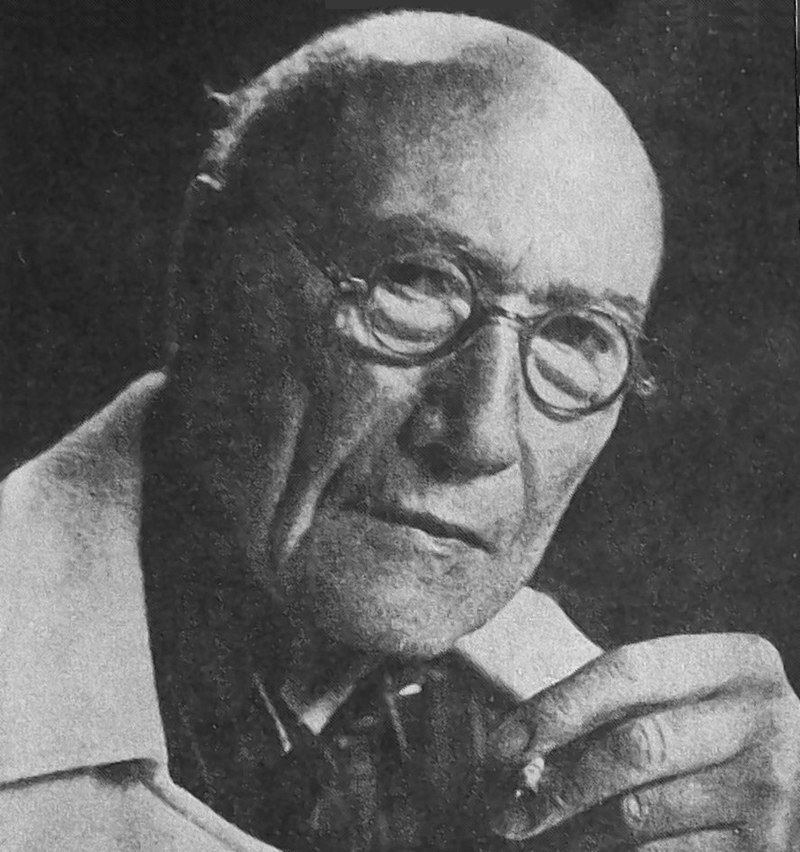
File:André_Gide.jpg · Wikimedia Commons · See Wikimedia Commons
André Gide
Sign in to saveAlso known as André Paul Guillaume Gide, Andre Gide, Andre Paul Guillaume Gide
scrittore francese
André Gide was a prominent French writer who lived from 1869 to 1951 and won the Nobel Prize in Literature, making him one of the most celebrated authors of his era. His works explored complex themes of morality, freedom, and personal identity, influencing modern literature and thought.
AI-generated from the Wikipedia summary — may contain errors.
Film & TV
Paris, France
André Paul Guillaume Gide (22 November 1869 – 19 February 1951) was a French author whose writings spanned a wide variety of styles and topics. He was awarded the 1947 Nobel Prize in Literature. Gide's career ranged from his beginnings in the symbolist movement, to criticising imperialism between the two World Wars. The author of more than fifty books, he was described in his obituary in The New…
Known for
- L'affaire Matzneff — (archive footage)2020
- With André Gide — Self1952
- Life Begins Tomorrow — Self1950
- Paris 1900 — Self (archive footage)1948
- Fanny — (uncredited)1932
via TMDB
Nobel Prize
- The Nobel Prize in Literature1947
“for his comprehensive and artistically significant writings, in which human problems and conditions have been presented with a fearless love of truth and keen psychological insight”
Wikidata facts
- Instance of
- human
- Given name
- Guillaume
- Gender
- male
- Citizenship
- France
- Place of birth
- Paris
- Place of death
- Paris
- Occupation
- screenwriter
- Employer
- Le Figaro
- Languages spoken
- French
- Native language
- French
- Participant in
- La Nouvelle Revue française
- Student of
- Youra Guller
- Field of work
- fiction
- Image
- Gide 1920 cropped.jpg
- Significant event
- Nazi book burnings
Show 16 more facts
- Commons category
- André Gide
- date of birth
- 1869-11-22
- date of death
- 1922-02-19
- influenced by
- Oscar Wilde
- Commons Creator page
- André Gide
- birth name
- André Paul Guillaume Gide
- topic's main category
- Category:André Gide
- Commons gallery
- André Gide
- nominated for
- Nobel Prize in Literature
- name in native language
- André Gide
- has works in the collection
- National Gallery of Art
- writing language
- French
- on focus list of Wikimedia project
- Wikipedia:Vital articles/Level/4
- partner in business or sport
- Gaston Gallimard
- P12749
- Vufflens-la-Ville
- has effect
- La Nouvelle Revue française
Sources (12)
via Wikidata · CC0
Article · Italiano
André Gide (Parigi, 22 novembre 1869 – Parigi, 19 febbraio 1951) è stato uno scrittore francese, premio Nobel per la letteratura nel 1947. Firma di Gide I temi centrali dell'opera e della vita di André Gide sono stati affermare la libertà, allontanarsi dai vincoli morali e puritani, ricercare l'onestà intellettuale che permette di essere pienamente sé stessi, accettando la propria omosessualità senza venir meno ai propri valori. Influenzato dagli scritti di autori come Henry Fielding, Goethe, Victor Hugo, Dostoevskij, Stéphane Mallarmé, Nietzsche, Joris-Karl Huysmans, Rabindranath Tagore, Roger Martin du Gard e l'amico Oscar Wilde, scrisse varie opere di stampo autobiografico e di narrativa ed espose spesso al pubblico il conflitto e, a volte, la riconciliazione tra le due parti della propria personalità, divise dalla rigida educazione e dalle meschine regole sociali ed etiche impostegli dalla società della sua epoca. Le sue opere, in particolare Corydon, Se il grano non muore e L'immoralista, hanno esercitato una grande influenza (soprattutto per i temi trattati) su vari scrittori successivi a Gide, in particolare su Rainer Maria Rilke, Jacques Rivière, André Malraux, Flann O'Brien, Jean-Paul Sartre, Albert Camus, Yukio Mishima, Roland Barthes.
Abstract from DBpedia / Wikipedia · CC BY-SA
Gallery (5)
Available in 97 languages
- Español
- Français
- Deutsch
- 中文
- 日本語
- Русский
- Português
- Italiano
- العربية
- हिन्दी
- Afrikaans
- Albanian
- Aragonese
- Armenian
- Assamese
- Asturian
- azb
- Azerbaijani
Show 78 more
- Bahasa Indonesia
- Bangla
- Banjar
- Basque
- be_x_old
- Belarusian
- Bosnian
- Bulgarian
- Catalan
- Croatian
- Czech
- Danish
- Egyptian Arabic
- Esperanto
- Estonian
- Fiji Hindi
- Finnish
- Galician
- Georgian
- Greek
- Haitian Creole
- Hakka Chinese
- Hebrew
- Hungarian
- hyw
- Icelandic
- Ido
- Iloko
- Interlingua
- Irish
- Javanese
- Kannada
- Kazakh
- Kotava
- Kurdish
- Latin
- Latvian
- Lithuanian
- Luxembourgish
- Macedonian
- Malagasy
- Malay
- Malayalam
- Marathi
- Mazanderani
- Mingrelian
- Nederlands
- Norwegian
- Norwegian Nynorsk
- Occitan
- Piedmontese
- Polski
- Punjabi
- Romanian
- Scottish Gaelic
- Serbian
- Serbian (Latin)
- simple
- Slovak
- Slovenian
- Svenska
- Swahili
- Tatar
- Tiếng Việt
- Türkçe
- Ukrainian
- Urdu
- Uzbek
- Waray
- Welsh
- Western Frisian
- Western Panjabi
- Wu Chinese
- Yoruba
- zh_min_nan
- zh_yue
- فارسی
- 한국어
via Wikidata sitelinks · CC0