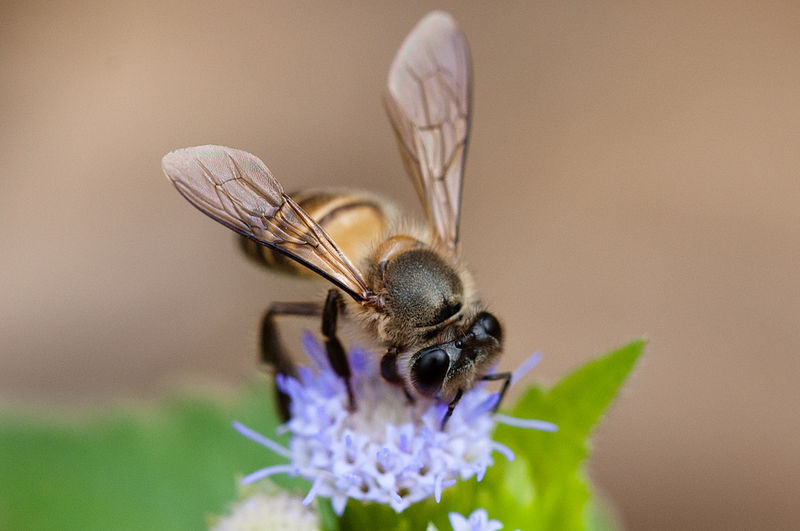
File:Apis_cerana,_Asiatic_honey_bee_-_Khao_Yai_National_Park.jpg · Wikimedia Commons · See Wikimedia Commons
Apis cerana
Sign in to saveAlso known as Chinese honey bee, Eastern honey bee, Himalayan hive honeybee, Indian honey bee, Asiatic honey bee, Apis cerana Fabricius, Asian honey bee
species of insect
OverviewAI-generated
*Apis cerana*, also referred to as the Asian honey bee, is a species within the genus *Apis*. It belongs to the family Apidae, order Hymenoptera, class Insecta, phylum Arthropoda, and kingdom Animalia. The species was described by Fabricius in 1793. Common names for this taxon include 中華蜜蜂, 中國蜂, and 재래꿀벌.
The organism is noted as invasive to Australia. Specimen records are held by institutions including USNM, KU, and YPM, with collections originating from Thailand, China, Sri Lanka, and Myanmar.
Synthesized by Vinony from 23 facts across 5 sources: Wikidata, GBIF, Gbif Occ, iDigBio, Vinony graph. Generated from structured data (not the Wikipedia text) and checked against those facts — may still contain errors.
Species
SPECIES
- KingdomAnimalia
- PhylumArthropoda
- ClassInsecta
- OrderHymenoptera
- FamilyApidae
Die Östliche Honigbiene (Apis cerana), auch Asiatische oder früher Indische Honigbiene genannt, ist eine der acht in Asien vorkommenden Arten der Gattung der Honigbienen. Sie ist das östlich-asiatische Pendant zur Westlichen Honigbiene (Apis mellifera) und gilt als ursprünglicher Wirt der parasitären Varroamilbe. Inhaltsverzeichnis 1 Merkmale 2 Verbreitungsgebiet 3 Unterarten 4 Verwendung in der Imkerei 5 Natürliche Feinde 6 Literatur 7 Weblinks 8 Einzelnachweise Merkmale Flügeladerung von Apis mellifera und Apis cerana im Vergleich. Unterschiedliche Aderung im Hinterflügel (Kreis) Apis cerana ist in den meisten Merkmalen äußerst ähnlich zu ihrer Schwesterart Apis mellifera und auf den ersten Blick nicht von ihr zu unterscheiden. Oft wird angegeben, sie wäre etwas kleiner als diese, diese Angabe ist aber unzuverlässig, sie gilt nur beim Vergleich der (relativ großen) europäischen Rassen der westlichen Honigbiene, wobei die Größen stark überlappen. Verlässliche Unterscheidungsmerkmale sind: Im Hinterflügel besitzt die Radialader einen Fortsatz, der bei der westlichen Honigbiene fehlt. Auf dem Hinterleib sind die Tergite eins bis sechs kurz filzig behaart („tomentiert“), bei der west
via GBIF
Museum specimens
- Specimen records
- 4,026
- With media
- 10
- Family
- Apidae
- Collections
- USNM, KU, YPM
- Recorded in
- Thailand, China, Sri Lanka, Myanmar
Wikidata facts
Show 7 more facts
via Wikidata · CC0
~26 min read
Encyclopedic overview
Apis cerana, the eastern honey bee, Asiatic honey bee or Asian honey bee, is a species of honey bee native to South, Southeast and East Asia. This species is the sister species of Apis koschevnikovi and both are in the same subgenus as the western (European) honey bee, Apis mellifera. A. cerana is known to live sympatrically along with Apis koschevnikovi within the same geographic location. Apis cerana colonies are known for building nests consisting of multiple combs in cavities containing a small entrance, presumably for defense against invasion by individuals of another nest. The diet of this honey bee species consists mostly of pollen and nectar, or honey. Moreover, Apis cerana is known for its highly social behavior, reflective of its classification as a type of honey bee.
The terms Apis cerana indica and Apis Indica or Indian honey bee, is a historic term, with all Asian hive bees now referred to as Apis cerana.
Excerpted from Wikipedia’s “Apis cerana” article, available under the CC BY-SA 4.0 licence.