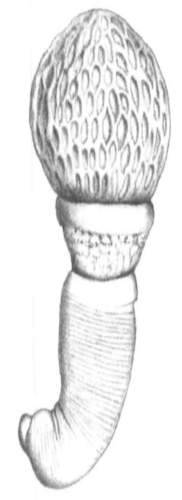
Arthur E. Shipley, no known copyright restrictions (public domain) · pd
Apororhynchus
Sign in to saveApororhynchus is a genus of small parasitic spiny-headed (or thorny-headed) worms. It is the only genus in the family Apororhynchidae, which in turn is the only member of the order Apororhynchida. A lack of features commonly found in the phylum Acanthocephala (primarily musculature) suggests an evolutionary branching from the other three orders of class Archiacanthocephala; however no genetic analysis has been completed to determine the evolutionary relationship between species. The distinguishing features of this order among archiacanthocephalans is a highly enlarged proboscis which contain s
Species
GENUS
- KingdomAnimalia
- PhylumAcanthocephala
- ClassArchiacanthocephala
- OrderApororhynchida
- FamilyApororhynchidae
via GBIF
Wikidata facts
- Instance of
- taxon
- Parent taxon
- Apororhynchidae
- Image
- Apororhynchus hemignathi.png
Show 3 more facts
- taxon name
- Apororhynchus
- taxon rank
- genus
- Commons category
- Apororhynchus
Sources (1)
via Wikidata · CC0
~12 min read
Encyclopedic overview
7 sectionsContents
- Taxonomy
- Description
- Species
- Hosts
- Notes
- References
- External links
Apororhynchus is a genus of small parasitic spiny-headed (or thorny-headed) worms. It is the only genus in the family Apororhynchidae, which in turn is the only member of the order Apororhynchida. A lack of features commonly found in the phylum Acanthocephala (primarily musculature) suggests an evolutionary branching from the other three orders of class Archiacanthocephala; however no genetic analysis has been completed to determine the evolutionary relationship between species. The distinguishing features of this order among archiacanthocephalans is a highly enlarged proboscis which contain small hooks. The musculature around the proboscis (the proboscis receptacle and receptacle protrusor) is also structured differently in this order. This genus contains six species that are distributed globally, being collected sporadically in Hawaii, Europe, North America, South America, and Asia. These worms exclusively parasitize birds by attaching themselves around the cloaca using their hook-covered proboscis. The bird hosts are of different orders, including owls, waders, and passerines. Infestation by an Apororhynchus species may cause enteritis and anemia.
==Taxonomy== The first species in this order to be described was Apororhynchus hemignathi which was originally named Arhynchus hemignathi by Arthur Shipley in 1896. The name Arhynchus was chosen based on the characteristic absence of a proboscis in this species of Acanthocephala. It was later renamed Apororhynchus (along with the family name Apororhynchidae) by Shipley in 1899 due to the name Arhynchus having been used by Dujean in 1834 for a beetle.
Excerpted from Wikipedia’s “Apororhynchus” article, available under the CC BY-SA 4.0 licence.