File:65Cyb-LB3-apmag.jpg · Wikimedia Commons · See Wikimedia Commons
apparent magnitude
Sign in to savemeasure of brightness for celestial objects, as seen from Earth
Apparent magnitude is a number that measures how bright a star or other object in the sky appears to us when we look at it from Earth. It matters because it helps astronomers and stargazers compare the brightness of different celestial objects and understand what we can see in the night sky.
AI-generated from the Wikipedia summary — may contain errors.
Wikidata facts
- Subclass of
- magnitude
- Image
- 65Cyb-LB3-apmag.jpg
Show 1 more fact
- on focus list of Wikimedia project
- Wikipedia:Vital articles/Level/4
Sources (2)
via Wikidata · CC0
~19 min read
Encyclopedic overview
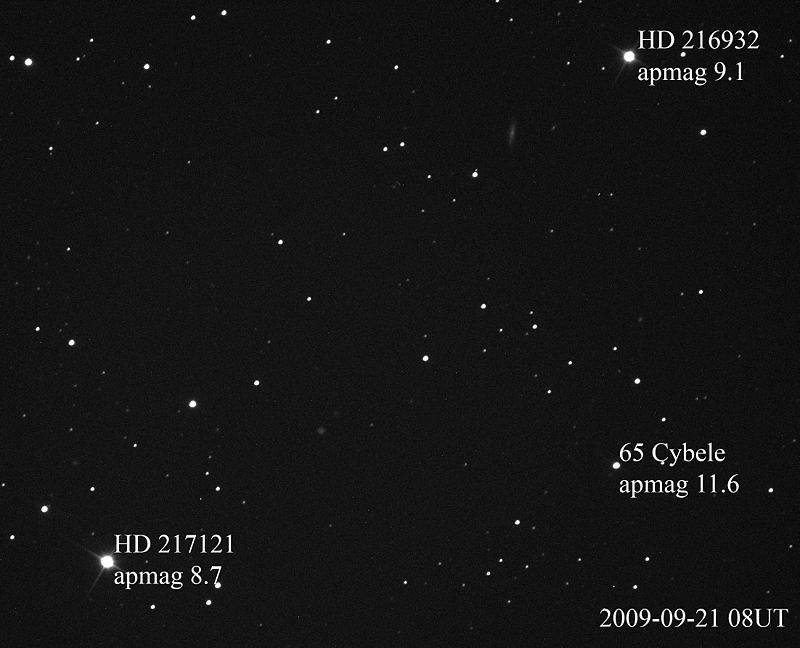
Asteroid 65 Cybele and two stars in the constellation Aquarius, with their magnitudes labeled
Apparent magnitude (m) is a measure of the brightness of a star, astronomical object or other celestial objects like artificial satellites. Its value depends on its intrinsic luminosity, its distance, and any extinction of the object's light caused by interstellar dust or atmosphere along the line of sight to the observer.
Excerpted from Wikipedia’s “apparent magnitude” article, available under the CC BY-SA 4.0 licence.
Gallery (4)
Available in 77 languages
- Español
- Français
- Deutsch
- 中文
- 日本語
- Русский
- Português
- Italiano
- العربية
- हिन्दी
- Albanian
- Armenian
- Asturian
- Azerbaijani
- Bahasa Indonesia
- Bangla
- Basque
- Belarusian
Show 58 more
- Bosnian
- Bulgarian
- Catalan
- Croatian
- Czech
- Esperanto
- Estonian
- Filipino
- Finnish
- Galician
- Georgian
- Greek
- Haitian Creole
- Hebrew
- Hungarian
- Interlingua
- Kabyle
- Kurdish
- Latin
- Latvian
- Lithuanian
- Luxembourgish
- Macedonian
- Malay
- Malayalam
- Marathi
- Nederlands
- Northern Frisian
- Norwegian
- Norwegian Nynorsk
- Occitan
- Oromo
- Polski
- Punjabi
- Romanian
- Serbian
- Serbian (Latin)
- Sicilian
- simple
- Sinhala
- Slovak
- Slovenian
- Svenska
- Swahili
- Tajik
- Tamil
- Tatar
- Tiếng Việt
- Türkçe
- Ukrainian
- Uzbek
- Waray
- West Flemish
- Wu Chinese
- zh_yue
- فارسی
- ไทย
- 한국어
via Wikidata sitelinks · CC0