Category
page 1Observational astronomy

planet
thumb|upright=1.5|The eight planets of the Solar System with size to scale (up to down, left to right): [[Saturn, Jupiter, Uranus, Neptune (outer planets), Earth, Venus, Mars, and Mercury (inner planets)]]
A planet is a large, rounded astronomical body that is generally required to be in orbit around a star, stellar remnant, or brown dwarf, and is not one itself. The Solar System has eight planets by the most restrictive definition of the term: the terrestrial planets Mercury, Venus, Earth, and Mars, and the giant planets Jupiter, Saturn, Uranus, and Neptune. The best available theory of plane
.jpg)
sky
upright=1.25|thumb|The night sky over Slovenia in July
upright=1.25|thumb|cirrus cloud|Cirriform clouds and a quarter [[Moon in the blue daytime sky over Germany]]
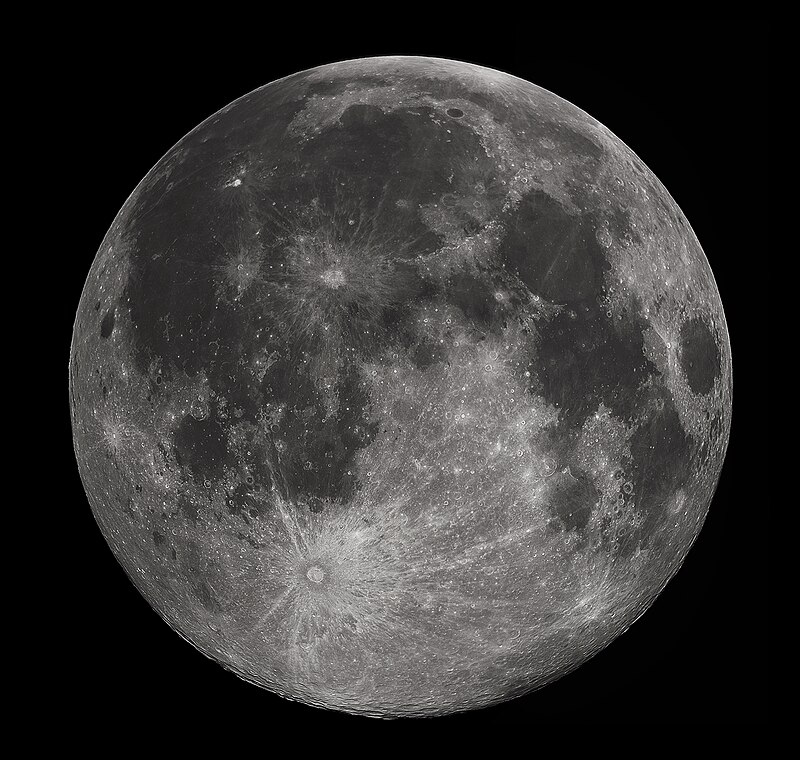
full moon
lunar phase: completely illuminated disc

spectroscopy
thumb|A Prism (optics)|prism separates white light by dispersing it into its component colors, which can then be studied using spectroscopy.

cosmic microwave background
electromagnetic radiation as a remnant from an early stage of the universe in Big Bang cosmology

phase of the moon
shape of the sunlit portion of the Moon as viewed from Earth
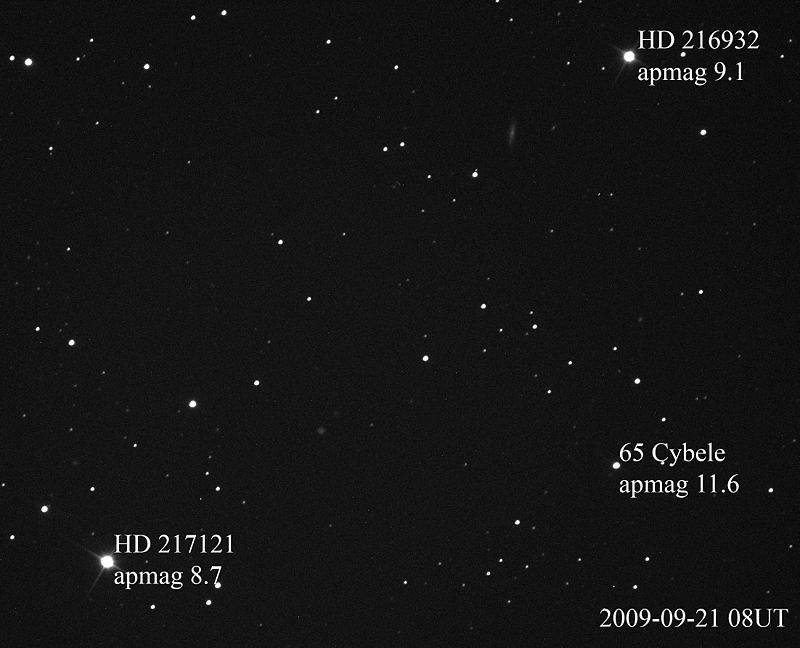
apparent magnitude
measure of brightness for celestial objects, as seen from Earth

absolute magnitude
logarithmic measure of the luminosity of a celestial object

light pollution
anthropogenic light in the night environment, caused by excess or misdirected lighting

radio astronomy
subfield of astronomy that studies celestial objects at radio frequencies

zodiacal light
glow in the night sky appearing to extend from the Sun's direction and along the zodiac

occultation
thumb|200px|In this July 1997 still frame captured from video, the bright star Aldebaran has just reappeared on the dark limb of the waning crescent moon in this predawn occultation.

opposition
situation where two celestial bodies are on opposite sides of the sky, viewed from a given place (usually Earth)

magnitude
logarithmic measure of the brightness of an astronomical object

Compton scattering
scattering of a photon off of a charged particle
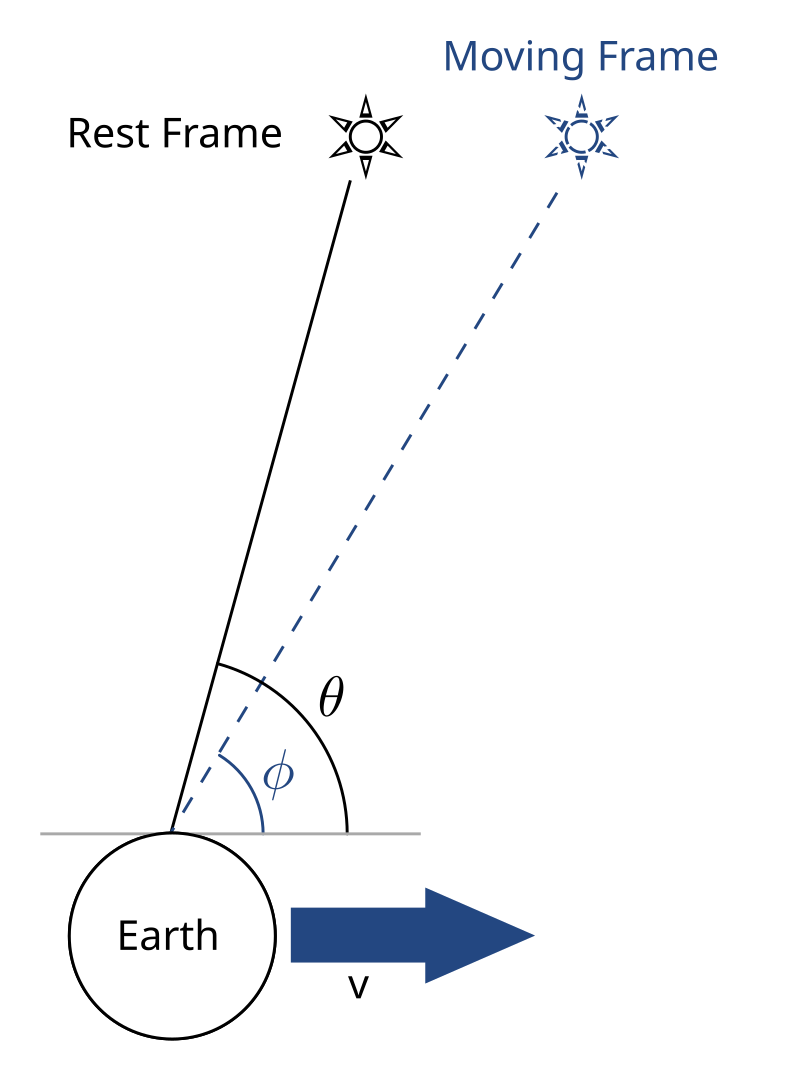
optical aberration
phenomenon in astronomy

photometry
the determination of light intensities of astronomical bodies, including stars

aperture
thumb|Different apertures of a lens
thumb|In biology, the pupil (appearing as a black hole) of the eye is its aperture and the iris is its diaphragm. In humans, the pupil can constrict to as small as 2 mm (8.3) and dilate to larger than 8 mm (2.1) in some individuals.
thumb|A camera aperture
thumb|Definitions of Aperture in the 1707 Glossographia Anglicana Nova
thumb|Aperture icon

infrared astronomy
observational astronomy of emissions over the wavelength band 0.75 to 300 micrometers
X-ray astronomy
branch of astronomy that uses X-ray observation

radiometry
thumb|upright=1.5|Comparison of photometric and radiometric quantities
Radiometry is a set of techniques for measuring electromagnetic radiation, including visible light. Radiometric techniques in optics characterize the distribution of the radiation's power in space, as opposed to photometric techniques, which characterize the light's interaction with the human eye.
observational astronomy
field of astronomy concerned with recording data about the observable universe
naked eye viewing
practice of engaging in visual perception unaided by a magnifying or light-collecting optical device, such as a telescope or microscope. Vision corrected to normal acuity using corrective lenses is considered "naked"
extinction
in astronomy, the absorption and scattering of electromagnetic radiation by dust and gas between an emitting astronomical object and the observer
astronomical spectroscopy
science of temporal, spatial, and spectral distributions of radiation
%20on%2013th%20of%20August%202015.jpg)
airglow
thumb|Airglow over Auvergne, France
thumb|Yellow, green and red bands of airglow along Earth's limb as seen from space.
gamma-ray astronomy
observational astronomy performed at less than 10 nm wavelengths
Sloan Digital Sky Survey
multi-spectral imaging and spectroscopic redshift survey
deep-sky object
any astronomical object that is not an individual star
atmospheric refraction
deviation of light or other electromagnetic wave from a straight line as it passes through the atmosphere
heliacal rising
Rising of stars prior to sunrise

planetshine
thumb|right|220px|Saturn's moon Mimas is lit by Saturnshine on the right and sunshine at the top.
thumb|right|220px|The Moon lit by [[earthshine, captured by the lunar-prospecting Clementine spacecraft in 1994. Clementine's color enhanced image reveals (from right to left) the Moon lit by earthshine, the Sun's corona rising over the Moon's dark limb, and the planets Saturn, Mars, and Mercury (the three dots at lower left).]]

gegenschein
thumb|300px|The gegenschein appears in this image as a bright spot on the diagonal band (running top left to lower right) above the Very Large Telescope. (The [[Andromeda Galaxy and Pleiades are prominent in the lower half of the image.)]]
Great Comet
Exceptionally bright comets
scintillation
thumb|The twinkling of the brightest star in the [[night sky Sirius (apparent magnitude of −1.1), shortly before upper culmination at the meridian, at 20° above the southern horizon. In 29 seconds, Sirius appears to move 7.5 arcminutes from left to right.]]
thumb|Comparison of twinkling of a star (top) and a planet (bottom). The turbulent atmosphere (shaded blue) distorts their wavefronts (cyan lines) differently with time, like caustics on a swimming pool floor. When a dark part hits the observer (white circle), the object appears dark, and vice versa. An object with larger angular size smear
surface brightness
measure of brightness of an astronomical object
night sky
dark sky in the deep twilight or at night
transient lunar phenomenon
short-lived light, color, or change in appearance on the surface of the Moon
astronomical seeing
amount of apparent blurring and twinkling of astronomical objects due to atmospherical effects
quadrature
aspect of a heavenly body in which it makes a right angle with the direction of the Sun
visible-light astronomy
astronomical observation via telescopes using visible light
zenithal hourly rate
number of meteors a single observer would see in an hour of peak activity for the meteor shower
blink comparator
Astronomical instrument used to measure movements or variations in the brightness of celestial objects
SKY-MAP.ORG
Sky-Map.org (or WikiSky.org) is a wiki and interactive sky map that covers over half a billion known celestial bodies. WikiSky is designed, in part, as a wiki. Users can edit information about different stars by writing articles, adding Internet links, uploading images, or creating a special interest group for a specific task.
position angle
measurement relating to observed visual binary stars
gravitational-wave astronomy
type of astronomy involving observation of gravitational waves
astronomical survey
general map or image of a region of the sky with no specific observational target
radar astronomy
reflective and observational astronomy that uses radar to map the surfaces of bodies in the solar system
geometric albedo
albedo subtype

Granat
The International Astrophysical Observatory "GRANAT" (usually known as Granat; , lit. pomegranate), was a Soviet (later Russian) space observatory developed in collaboration with France, Denmark and Bulgaria. It was launched on 1 December 1989 aboard a Proton rocket and placed in a highly eccentric four-day orbit, of which three were devoted to observations. It operated for almost nine years.
opposition surge
brightening of a rough surface, when illuminated from directly behind the observer
observational cosmology
cosmology
collimated light
light whose rays are parallel, and therefore will spread minimally as it propagates
Ecliptic alignment of CMB anisotropy
purported correlation of the cosmic microwave background with the Earth’s ecliptic
JPL Small-Body Database
astronomy database
planetary phase
period of time during which a planet's surface reflects specific amounts of sunlight from the perspective of a given point in space
infrared excess
greater measured infrared flux than expected from star temperature
phases of Venus
Variations of lighting of the planet's surface
high-energy astronomy
study of astronomical objects that release ionizing radiation of highly energetic wavelengths
Astronomy on Mars
What an observer on Mars can see in the sky