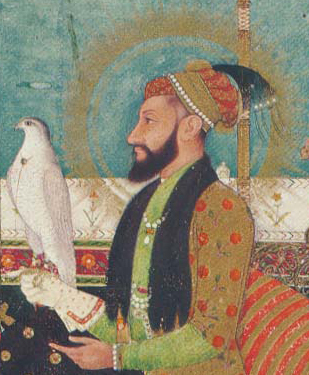
File:Aurangzeb-portrait.jpg · Wikimedia Commons · See Wikimedia Commons
Aurangzeb
Sign in to saveAlso known as Aurangezeb, Alamgir I, Alamgir Shah, Abul Muzaffar Muhi-ud-Din Muhammad Aurangzeb, Alamgir Aurangzeb, Aurungzebe
Alamgir I (Muhi al-Din Muhammad; 3 November 1618 – 3 March 1707), commonly known by the title Aurangzeb, was the sixth Mughal emperor, reigning from 1658 until his death in 1707. Under his reign, the Mughal Empire reached its greatest extent, with territory spanning nearly the entirety of the Indian subcontinent.
Aurangzeb was the sixth Mughal emperor of India who ruled from 1658 until his death in 1707, during which time the empire expanded to cover nearly the entire Indian subcontinent, making it the largest it had ever been. He matters historically because his reign marked the height of Mughal territorial power and influence, a pivotal period in Indian history that shaped the political landscape of the subcontinent.
AI-generated from the Wikipedia summary — may contain errors.
Key facts
- Royalty.predecessor
- Shah Jahan
- Royalty.regnal name
- Abu al-Muzaffar Muhi al-Din Muhammad Bahadur Alamgir Aurangzeb Badshah al-Ghazi ()
- Royalty.coronation2
- Shah Jahan
- Royalty.name
- Alamgir I عالمگیر
- Royalty.title
- Shahenshah-e-Sultanat Al-Hindiyyah(Emperor of the Sultanate of India)
- Royalty.image
- Aurangzeb-portrait.jpg
- Royalty.caption
- Darbar of Aurangzeb by Bichitr,
- Royalty.succession
- Mughal Emperor
- Royalty.coronation
- 31 July 1658Sheesh Mahal
- Royalty.successor
- Azam Shah
- Royalty.reg type
- Grand Viziers
- Royalty.birth_name
- Muhi al-Din Muhammad
- Royalty.birth_place
- Dahod, Gujarat Subah, Mughal Empire
- Royalty.death_place
- Bhingar, Aurangabad Subah, Mughal Empire
- Royalty.issue link
- Family
- Royalty.issue pipe
- Detail
- Royalty.full name
- Muhi al-Din Muhammad ()
- Royalty.posthumous name
- Khuld-Makani ()
via Wikipedia infobox
Wikidata facts
- Instance of
- human
- Given name
- Muhammad
- Gender
- male
- Place of birth
- Dahod
- Place of death
- Ahilyanagar
- Spouse
- Nawab Bai
- Child
- Badr-un-Nissa Begum
- Father
- Shah Jahan
- Mother
- Mumtaz Mahal
- Sibling
- Murad Bakhsh
- Occupation
- monarch
- Languages spoken
- Hindustani
- Native language
- Persian
- Religion
- Islam
- Family
- Mughal dynasty
- Image
- Aurangzeb (r. 1658-1707).jpg (Cropped).jpg
- Work location
- Mughal Empire
Show 11 more facts
- Commons category
- Aurangzeb
- date of birth
- 1618-11-03
- date of death
- 1707-03-03
- Commons gallery
- Alamgir I
- place of burial
- Tomb of Aurangzeb
- on focus list of Wikimedia project
- Wikipedia:Vital articles/Level/4
- name in native language
- اورنگزیب عالمگیر
- nickname
- اورنگزیب
- P13311
- Christopher Hitchens
- P8168
- most livable cities
- unmarried partner
- Udaipuri Mahal
via Wikidata · CC0
~75 min read
Encyclopedic overview
53 sectionsContents
- Early life
- Ancestry
- Career as prince
- First Deccan governorate (1636–1644)
- Governor of Gujarat (1645–1647)
- Governor of Balkh (1647–1648)
- Governor of Multan and Sindh (1648–1652)
- Second Deccan governorate (1653–1658)
- War of succession
- Reign
- Full title
- Bureaucracy
- Economy
- Religious policy
- Taxation policy
- Administrative reforms
- Revenue
- Coins
- Law
- Military
- Art and culture
- Calligraphy
- Architecture
- Textiles
- Foreign relations
- Relations with Aceh
- Relations with the Uzbek
- Relations with the Safavid dynasty
- Relations with the French
- Relations with the Sultanate of Maldives
- Relations with the Ottoman Empire
- Relations with the English and the Anglo-Mughal War
- Relations with the Ethiopian Empire
- Relations with the Tibetans, Uyghurs, and Dzungars
- Relations with the Czardom of Russia
- Rebellions
- Jat rebellion
- Mughal–Maratha Wars
- Ahom campaign
- Satnami opposition
- Sikh opposition
- Pashtun opposition
- Rathore rebellion
- Death
- Assessments and legacy
- Literatures
- Issue
- See also
- Notes
- Citations
- Bibliography
- Further reading
- External links
Alamgir I (Muhi al-Din Muhammad; 3 November 1618 – 3 March 1707), commonly known by the title Aurangzeb, was the sixth Mughal emperor, reigning from 1658 until his death in 1707. Under his reign, the Mughal Empire reached its greatest extent, with territory spanning nearly the entirety of the Indian subcontinent.
Aurangzeb and the Mughals belonged to a branch of the Timurid dynasty. He held administrative and military posts under his father Shah Jahan () and gained recognition as an accomplished military commander. Aurangzeb served as the viceroy of the Deccan in 1636–1637 and the governor of Gujarat in 1645–1647. He jointly administered the provinces of Multan and Sindh in 1648–1652 and continued expeditions into the neighbouring Safavid territories. In September 1657, Shah Jahan nominated his eldest and liberalist son Dara Shikoh as his successor, a move repudiated by Aurangzeb, who proclaimed himself emperor in February 1658. In April 1658, Aurangzeb defeated the allied army of Shikoh and the Kingdom of Marwar at the Battle of Dharmat. Aurangzeb's decisive victory at the Battle of Samugarh in May 1658 cemented his sovereignty and his suzerainty was acknowledged throughout the Empire. After Shah Jahan recovered from illness in July 1658, Aurangzeb declared him incompetent to rule and imprisoned his father in the Agra Fort. Following this, Aurangzeb had Dara Shikoh executed by beheading and his head was placed in a box and presented to their imprisoned father.
Excerpted from Wikipedia’s “Aurangzeb” article, available under the CC BY-SA 4.0 licence.
Gallery (632)
Available in 86 languages
- Español
- Français
- Deutsch
- 中文
- 日本語
- Русский
- Português
- Italiano
- العربية
- हिन्दी
- Afrikaans
- Albanian
- Armenian
- Asturian
- azb
- Azerbaijani
- Bahasa Indonesia
- Bangla
Show 67 more
- Bashkir
- Basque
- Bhojpuri
- Breton
- Bulgarian
- Catalan
- Central Kurdish
- Croatian
- Czech
- Danish
- Egyptian Arabic
- Esperanto
- Fiji Hindi
- Finnish
- Galician
- Georgian
- Goan Konkani
- Greek
- Gujarati
- Hebrew
- Hungarian
- Icelandic
- Kannada
- Kazakh
- Latvian
- Lithuanian
- Madurese
- Maithili
- Malagasy
- Malay
- Malayalam
- Manipuri
- Marathi
- Nederlands
- Nepali
- Norwegian
- Norwegian Nynorsk
- Occitan
- Odia
- Old English
- Pashto
- Polski
- Punjabi
- Sanskrit
- Scots
- Serbian
- Serbian (Latin)
- simple
- Sindhi
- skr
- Svenska
- Tajik
- Tamil
- Telugu
- Tiếng Việt
- Türkçe
- Ukrainian
- Urdu
- Uzbek
- Waray
- Western Panjabi
- Wu Chinese
- zh_min_nan
- zh_yue
- فارسی
- ไทย
- 한국어
via Wikidata sitelinks · CC0