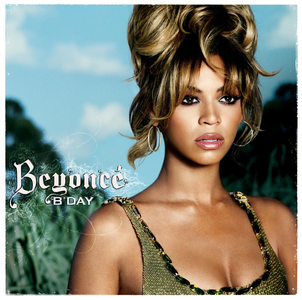
File:Beyoncé_-_B'Day.png · Wikimedia Commons · See Wikimedia Commons
B'Day
Sign in to save'''''B'Day''''' is the second studio album by American singer and songwriter Beyoncé. It was released on September 1, 2006, by Columbia Records, Music World Entertainment and Sony Urban Music. The album was recorded in April 2006, and was produced by Beyoncé herself, alongside Darkchild, Nellee Hooper, Ne-Yo, The Neptunes, Stargate, and Swizz Beatz, among others. The album features two guest appearances from Beyoncé's then-boyfriend Jay-Z, with deluxe and international editions including Bun B of UGK, Slim Thug, Shakira, and Alejandro Fernández.
OverviewAI-generated
B'Day is a studio album by Beyoncé, released on September 4, 2006. The work is published in the English language and falls under the genres of rhythm and blues and pop. It was released by Columbia Records in the United States.
The album contains 13 parts, though iTunes lists 15 tracks. It is distributed via compact disc and music streaming. Producers for the project include Swizz Beatz, The Neptunes, and Stargate. Selected tracks from the album include "Get Me Bodied," "Suga Mama," "Upgrade U," and "Kitty Kat." The album holds a review score of 4.
Synthesized by Vinony from 18 facts across 2 sources: Wikidata, Itunes. Generated from structured data (not the Wikipedia text) and checked against those facts — may still contain errors.

Key facts
- Album.name
- B'Day
- Album.type
- studio
- Album.artist
- Beyoncé
- Album.cover
- Beyoncé - B'Day.png
- Album.border
- yes
- Album.alt
- Album cover which shows a young woman in a low-cut dress, with dark eyeliner and hair pinned high on her head.
- Album.caption
- Standard edition cover
- Album.recorded
- April 2006
- Album.genre
- Hip-hop funk R&B
- Album.length
- 48:18
- Album.prev_title
- Live at Wembley
- Album.prev_year
- 2004
- Album.next_title
- Irreemplazable
- Album.next_year
- 2007
via Wikipedia infobox
Wikidata facts
- Instance of
- album
- Genre
- rhythm and blues
- Producer
- Stargate
- Duration
- 3139
- Performer
- Beyoncé
- Record label
- Columbia Records
- Distribution format
- music streaming
- Image
- Beyonce - BDay.svg
Show 9 more facts
- publication date
- 2006-09-04
- language of work or name
- English language
- title
- B'Day
- form of creative work
- studio album
- place of publication
- United States
- Commons category
- B'Day
- review score
- 4
- number of parts of this work
- 13
- tracklist
- Get Me Bodied
via Wikidata · CC0
~58 min read
Encyclopedic overview
29 sectionsContents
- Background and development
- Recording and production
- Music and lyrics
- Title and packaging
- Release and promotion
- Singles
- Critical reception
- Accolades
- Awards and nominations
- Listicles
- Commercial performance
- Controversies
- Legacy
- Track listing
- Standard edition
- Deluxe edition
- Personnel
- Charts
- Weekly charts
- Year-end charts
- Decade-end charts
- All-time charts
- Certifications
- Release history
- See also
- Notes
- References
- Bibliography
- External links
'''''B'Day''''' is the second studio album by American singer and songwriter Beyoncé. It was released on September 1, 2006, by Columbia Records, Music World Entertainment and Sony Urban Music. The album was recorded in April 2006, and was produced by Beyoncé herself, alongside Darkchild, Nellee Hooper, Ne-Yo, The Neptunes, Stargate, and Swizz Beatz, among others. The album features two guest appearances from Beyoncé's then-boyfriend Jay-Z, with deluxe and international editions including Bun B of UGK, Slim Thug, Shakira, and Alejandro Fernández.
Originally set to be released in 2004, ''B'Day'' was planned as a follow-up to Beyoncé's solo debut Dangerously in Love (2003). However, it was delayed to accommodate the recording of Destiny's Child's final studio album Destiny Fulfilled (2004) and Beyoncé's starring role in the film Dreamgirls (2006). While on vacation after filming Dreamgirls, Beyoncé began contacting various producers and rented Sony Music Studios, completing the album within two weeks during April 2006. Most of the album's lyrical content was inspired by Beyoncé's role in the film, with its musical style ranging from 1970s–1980s funk influences and balladry to urban contemporary elements such as hip hop, pop, and R&B. Live instrumentation was employed in recording most of the tracks as part of Beyoncé's vision of creating a record using live instruments.
Excerpted from Wikipedia’s “B'Day” article, available under the CC BY-SA 4.0 licence.