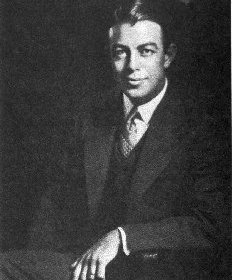
File:Blwhorf.jpeg · Wikimedia Commons · See Wikimedia Commons
Key facts
- Born
- ( 1897-04-24 ) April 24, 1897, Winthrop , Massachusetts, US
- Died
- July 26, 1941 (1941-07-26) (aged 44), Hartford , Connecticut, US
- Alma mater
- Massachusetts Institute of Technology
- Known for
- Sapir–Whorf hypothesis (Linguistic relativity), Nahuatl linguistics, allophone , cryptotype , Maya script
- Spouse
- Celia Inez Peckham ( married</span>"}]]}'>m. 1920 )
- Relatives
- John , Richard , Mike Whorf
- Fields
- linguistics , anthropology , fire prevention
- Institutions
- Hartford Fire Insurance Company , Yale University
via Wikipedia infobox
Wikidata facts
- Instance of
- human
- Given name
- Benjamin
- Gender
- male
- Citizenship
- United States
- Place of birth
- Winthrop
- Place of death
- Hartford
- Occupation
- philosopher
- Educated at
- Massachusetts Institute of Technology
- Employer
- Yale University
- Languages spoken
- English language
- Notable work
- Sapir-Whorf hypothesis
- Doctoral advisor
- Edward Sapir
- Field of work
- volkerpsychologie
Show 7 more facts
- date of birth
- 1897-04-24
- date of death
- 1941-07-26
- described by source
- Armenian Soviet Encyclopedia
- name in native language
- Benjamin Lee Whorf
- influenced by
- Wilhelm von Humboldt
- cause of death
- cancer
- manner of death
- natural causes
via Wikidata · CC0
~40 min read
Encyclopedic overview
Benjamin Atwood Lee Whorf (/hwɔːrf/; April 24, 1897 – July 26, 1941) was an American linguist and fire prevention engineer best known for proposing the Sapir–Whorf hypothesis. He believed that the structures of different languages shape how their speakers perceive and conceptualize the world. Whorf saw this idea, named after him and his mentor Edward Sapir, as having implications similar to those of Einstein's principle of physical relativity. However, the concept originated from 19th-century philosophy and thinkers like Wilhelm von Humboldt and Wilhelm Wundt.
Whorf initially pursued chemical engineering but developed an interest in linguistics, particularly Biblical Hebrew and indigenous Mesoamerican languages. His groundbreaking work on the Nahuatl language earned him recognition, and he received a grant to study it further in Mexico. He presented influential papers on Nahuatl upon his return. Whorf later studied linguistics with Edward Sapir at Yale University while working as a fire prevention engineer.
Excerpted from Wikipedia’s “Benjamin Lee Whorf” article, available under the CC BY-SA 4.0 licence.