
File:Bertolt-Brecht.jpg · Wikimedia Commons · See Wikimedia Commons
Bertolt Brecht
Sign in to saveAlso known as Berŭtʻoltʻŭ Bŭrehitʻŭ, Pertōl Pirekcṭ, Mpertolt Mprecht, Pu-lai-hsi-tʻe, Pertōlṭ Pirekcṭ, Perṭōlṭ Pireṣṭ, Bertolt Breht, Bert Brecht
German poet, playwright, and theatre director (1898–1956)
OverviewAI-generated
Bertolt Brecht, also known by the pseudonym Berthold Larsen, was a male poet, playwright, screenwriter, and theatrical producer and director. He worked in the fields of theater production and direction, poetry, motion picture authorship, drama, and acting. Brecht wrote in German.
He was born in 1898 and died in 1956. His nationalities included DE, US, SE, DK, and DEU. Brecht is associated with 27 works.
Synthesized by Vinony from 12 facts across 3 sources: Wikidata, VIAF, Europeana Sparql. Generated from structured data (not the Wikipedia text) and checked against those facts — may still contain errors.
Film & TV
Augsburg, Germany
Eugen Berthold Friedrich Brecht (10 February 1898 – 14 August 1956), known as Bertolt Brecht and Bert Brecht, was a German theatre practitioner, playwright, and poet. Coming of age during the Weimar Republic, he had his first successes as a playwright in Munich and moved to Berlin in 1924, where he wrote The Threepenny Opera with Elisabeth Hauptmann and Kurt Weill and began a lifelong…
Known for
- Bertolt Brecht - Flüchtlingsgespräche — Lui-même2022
- Brecht und das Berliner Ensemble — Himself (archive footage)2019
- Brecht — Himself (archive footage)2019
- Theater of War — Self (archive footage)2008
- Brecht - Die Kunst zu leben — Self (archive footage)2006
- Das Jahrhundert des Theaters — Self (archive footage)2002
- Carola Neher - Todesursache unbekannt — Self (archive footage)1990
- Der springende Punkt1987
- Film Emigration from Nazi Germany — Self (archive footage)1975
via TMDB
Authority record · VIAF
- Lifespan
- 1898–1956
- Nationality
- DE, US, SE, DK, DEU
- Role / Field
- Theatrical producers and directors, Screenwriters, Poets, Poetas, Playwright, Theater production and direction
- Language
- ger, deu
- Gender
- Male
Recorded by 47 libraries
via VIAF · OCLC
Wikidata facts
- Instance of
- human
- Given name
- Berthold
- Family name
- Brecht
- Gender
- male
- Citizenship
- Austria
- Place of birth
- Augsburg
- Place of death
- East Berlin
- Spouse
- Helene Weigel
- Occupation
- director
- Educated at
- Ludwig-Maximilians-Universität München
- Political party
- Independent Social Democratic Party of Germany
- Languages spoken
- German
- Religion
- atheism
- Notable work
- The Resistible Rise of Arturo Ui
- Student of
- Arthur Kutscher
- Field of work
- drama
- Image
- Bundesarchiv Bild 183-W0409-300, Bertolt Brecht.jpg
- Significant event
- Nazi book burnings
Show 18 more facts
- student
- Joseph Losey
- birth name
- Eugen Berthold Friedrich Brecht
- member of
- Academy of Arts, Berlin
- pseudonym
- Berthold Larsen
- Commons category
- Bertolt Brecht
- cause of death
- myocardial infarction
- date of birth
- 1898-02-10
- date of death
- 1956-08-14
- topic's main category
- Category:Bertolt Brecht
- Commons gallery
- Bertolt Brecht
- manner of death
- natural causes
- place of burial
- Dorotheenstadt Cemetery
- nominated for
- Tony Award for Best Original Score
- name in native language
- Bertolt Brecht
- P8168
- Rosa
- writing language
- German
- P12674
- Saraland
- P12749
- Markward von Annweiler
Sources (15)
via Wikidata · CC0
Works in European collections
27 objects attributed to Bertolt Brecht, held across European museums, libraries & archives · via Europeana

Querschnitt aus der Oper: "Aufstieg und Fall der Stadt Mahagonny"; I. Teil; II. Teil / (Kurt Weill). Text: Bert Brecht
Leben des Galilei

Bert Brecht an Arnold Bronnen: 12 Briefe und 6 Karten, teils eigenhändig, teils maschinengeschrieben, 1 Brief von Hessel-Burri und 1 Banknote mit eigenhändigen Zeilen - BSB Cgm 8075

A kaukázusi krétakör

Koldusopera

Kurázsi mama és gyermekei
Aufstieg und Fall der Stadt Mahagonny. Oper in drei Akten von Brecht [Textbuch] Musik von Kurt Weill
Der gute Mensch von Sezuan
Die Dreigroschenoper
Die Kleinbürgerhochzeit
Mutter Courage und ihre Kinder
Flüchtlingsgespräche
Der aufhaltsame Aufstieg des Arturo Ui
Mann ist Mann
Mann ist Mann
Die Dreigroschenoper
Der gute Mensch von Sezuan
In der Fremde
Die Dreigroschenoper
Herr Puntila und sein Knecht Matti
Im Dickicht der Städte
Baal
Glut unter der Asche
Leben des Galilei

Handschriftlicher Brief Bertolt Brechts an Paula Banholzer, 16. April 1919 - SuStB Augsburg "BSX 1, Banholzer, Paula, 1919-04-16"
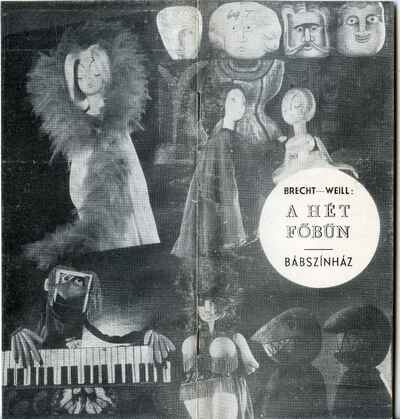
Untitled
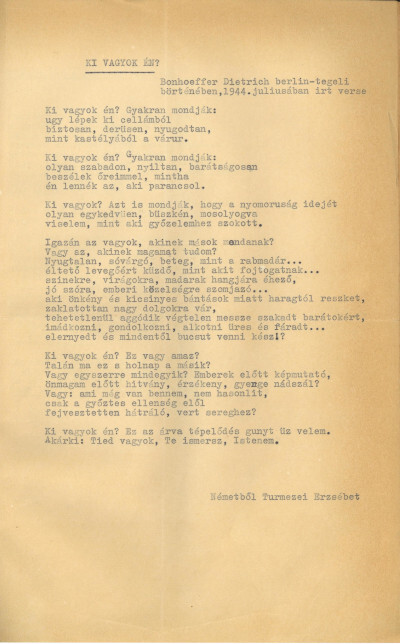
Untitled
~40 min read
Encyclopedic overview
Eugen Berthold Friedrich Brecht (10 February 1898 – 14 August 1956), known as Bertolt Brecht and Bert Brecht, was a German theatre practitioner, playwright, and poet. Coming of age during the Weimar Republic, he had his first successes as a playwright in Munich and moved to Berlin in 1924, where he wrote The Threepenny Opera with Elisabeth Hauptmann and Kurt Weill and began a lifelong collaboration with the composer Hanns Eisler. Immersed in Marxist thought during this period, Brecht wrote didactic Lehrstücke and became a leading theoretician of epic theatre (which he later preferred to call "dialectical theatre") and the Verfremdungseffekt.
When the Nazis came to power in Germany in 1933, Brecht fled his home country, initially to Scandinavia. During World War II he moved to Southern California, where he established himself as a screenwriter while being surveilled by the FBI. In 1947, he was part of the first group of Hollywood film artists to be subpoenaed by the House Un-American Activities Committee for alleged Communist Party affiliations. The day after testifying, he returned to Europe, eventually settling in East Berlin, where he co-founded the theatre company Berliner Ensemble with his wife and long-time collaborator, actress Helene Weigel.
Excerpted from Wikipedia’s “Bertolt Brecht” article, available under the CC BY-SA 4.0 licence.
Gallery (7)
Available in 109 languages
- Español
- Français
- Deutsch
- 中文
- 日本語
- Русский
- Português
- Italiano
- العربية
- हिन्दी
- Afrikaans
- Albanian
- Aragonese
- Armenian
- Arpitan
- Asturian
- Aymara
- azb
Show 90 more
- Azerbaijani
- Bahasa Indonesia
- Bangla
- Bashkir
- Basque
- be_x_old
- Belarusian
- Bhojpuri
- Bishnupriya
- Bosnian
- Breton
- Bulgarian
- Catalan
- Central Kurdish
- Croatian
- Czech
- Danish
- Egyptian Arabic
- Esperanto
- Estonian
- Faroese
- Fiji Hindi
- Filipino
- Finnish
- Galician
- Georgian
- Greek
- Gujarati
- Haitian Creole
- Hebrew
- Hungarian
- hyw
- Icelandic
- Ido
- Interlingue
- Irish
- Javanese
- Kazakh
- Kurdish
- Kyrgyz
- Latin
- Latvian
- Lingua Franca Nova
- Lithuanian
- Low German
- Luxembourgish
- Macedonian
- Malagasy
- Malayalam
- Maltese
- Manx
- Mingrelian
- Mongolian
- Nederlands
- Norwegian
- Norwegian Nynorsk
- Occitan
- Pashto
- Piedmontese
- Polski
- Punjabi
- Quechua
- Romanian
- Serbian
- Serbian (Latin)
- simple
- Sinhala
- Slovak
- Slovenian
- Svenska
- Tajik
- Tamil
- Tiếng Việt
- Türkçe
- Ukrainian
- Upper Sorbian
- Urdu
- Uzbek
- Volapük
- Waray
- Welsh
- Western Frisian
- Western Mari
- Western Panjabi
- Wu Chinese
- Zaza
- zh_min_nan
- zh_yue
- فارسی
- 한국어
via Wikidata sitelinks · CC0