Biebersteinia · Kew POWO · Kew Plants of the World Online
Biebersteinia
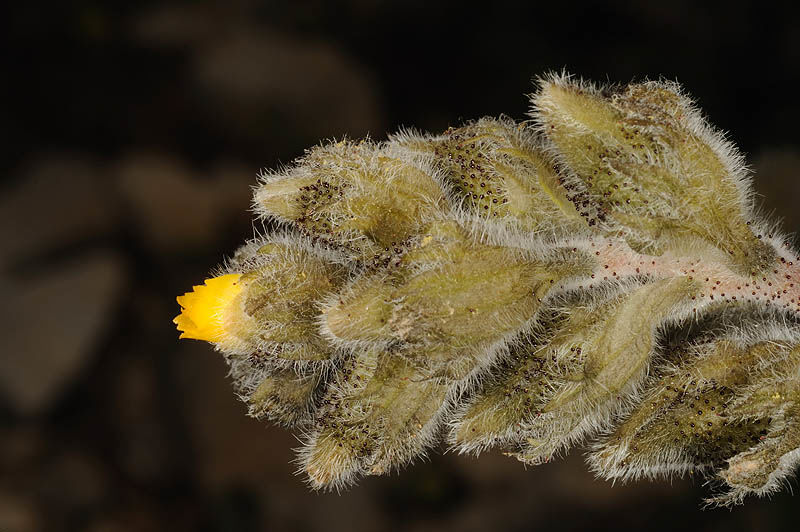
Sign in to saveBiebersteinia is a genus containing four, or five, accepted species of herbaceous plants in the flowering plant order Sapindales. They occur from Greece in the eastern Mediterranean, to western Siberia, Central Asia, and the western Himalaya. They have erect stems (to 0.3 metres tall in B. odora, and to 2 metres or more in B. heterostemon) with a pleasant spicy odour, and have tuberous rhizomes; the leaves are finely divided, green to greyish-green, and the flowers are yellow (red with a yellow base in B. orphanidis), with five petals. The plants are superficially similar in appearan
Species
GENUS
- KingdomPlantae
- PhylumTracheophyta
- ClassMagnoliopsida
- OrderSapindales
- FamilyBiebersteiniaceae
via GBIF · Kew POWO
Museum specimens
- Specimen records
- 12
- With media
- 5
- Family
- Biebersteiniaceae
- Collections
- MO, NHMUK, VT, RSA, MNHN
- Recorded in
- Tajikistan, India, Afghanistan, China
Wikidata facts
- Instance of
- taxon
- Parent taxon
- Biebersteiniaceae
- Image
- BiebersteiniaOdoraRoyle.jpg
Show 6 more facts
- taxon rank
- genus
- taxon name
- Biebersteinia
- Commons category
- Biebersteinia
- topic's main category
- Category:Biebersteinia
- taxon common name
- 熏倒牛属
Sources (2)
via Wikidata · CC0
~2 min read
Encyclopedic overview
3 sectionsContents
- Species
- References
- External links
Biebersteinia is a genus containing four, or five, accepted species of herbaceous plants in the flowering plant order Sapindales. They occur from Greece in the eastern Mediterranean, to western Siberia, Central Asia, and the western Himalaya. They have erect stems (to 0.3 metres tall in B. odora, and to 2 metres or more in B. heterostemon) with a pleasant spicy odour, and have tuberous rhizomes; the leaves are finely divided, green to greyish-green, and the flowers are yellow (red with a yellow base in B. orphanidis), with five petals. The plants are superficially similar in appearance to some Potentilla species, despite being unrelated. They grow in alpine and subalpine meadows, dry slopes, riverside gravels, and scree, reported at altitudes of 4,300–5,600 m (B. odora) in Pakistan, at 1,000–3,500 m (B. heterostemon) and 1,600–5,600 m (B. odora) in western China, and (B. orphanidis) at 1,630–1,760 m in Greece.
In 1806, Christian Friedrich Stephan formed the genus Biebersteinia, then in 1841 Endlicher converted it to a family status. This was the start of various changes to the genus. It was then placed in Geraniaceae by Pierre Edmond Boissier, in 1867, and changed by various botanists (including Knuth (1912), Thorne (1992), Cronquist (1981, 1988), Dahlgren (1989) and Takhtajan (1987 and 1997)).
Excerpted from Wikipedia’s “Biebersteinia” article, available under the CC BY-SA 4.0 licence.