
File:Bikini_Atoll_2001-01-14,_Landsat_7_ETM+,_bands_3-2-1-8.png · Wikimedia Commons · See Wikimedia Commons
Bikini Atoll
Sign in to saveAlso known as Pikinni, Bikini Atoll, Marshall Islands, Eschscholtz Atoll
atoll of the Marshall Islands, former site of nuclear tests
Bikini Atoll is a ring-shaped coral island in the Marshall Islands that was used by the United States as a testing site for nuclear weapons during the Cold War. It matters historically because these tests had significant environmental and health impacts on the atoll and its former inhabitants.
AI-generated from the Wikipedia summary — may contain errors.
Described at
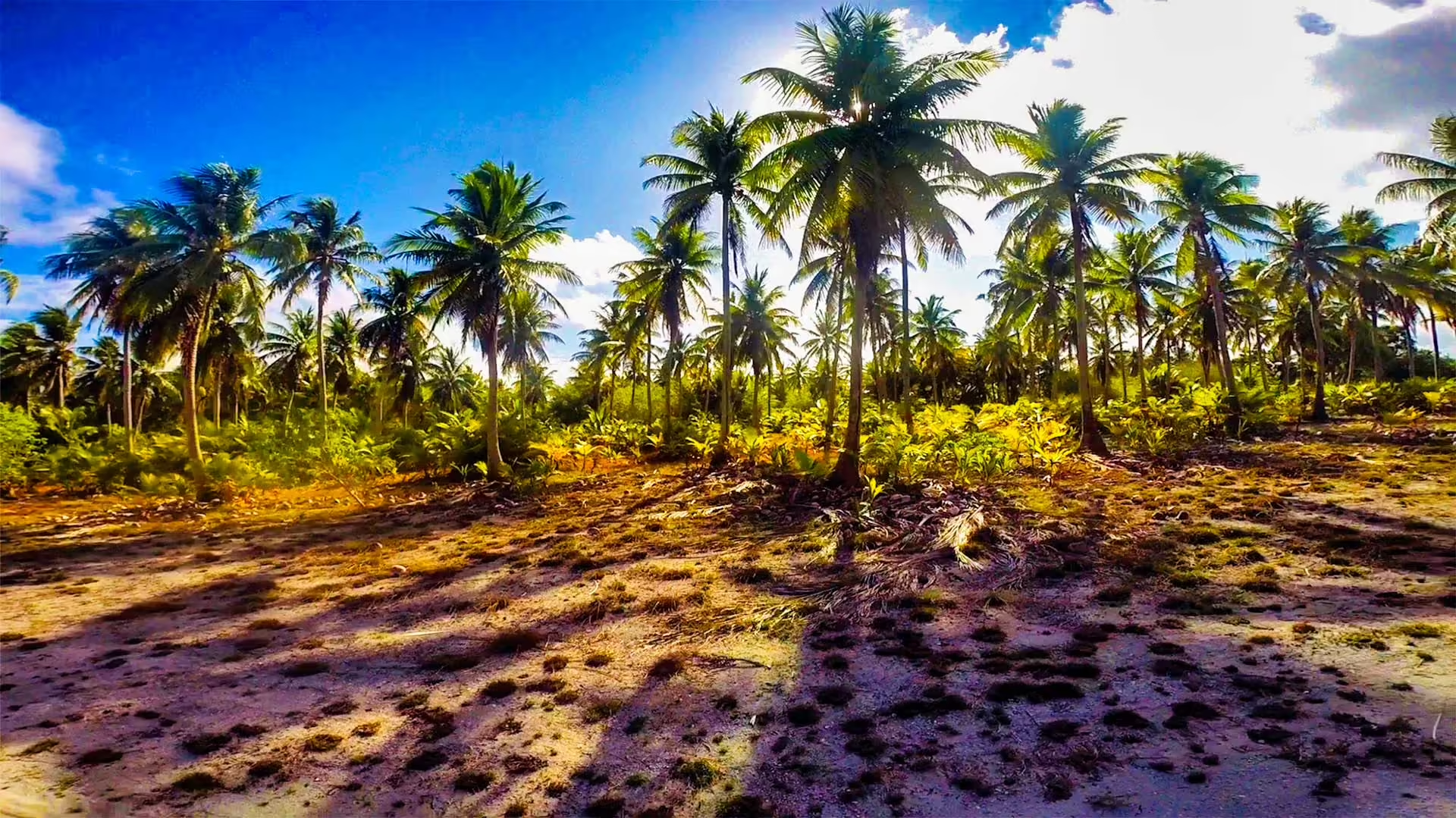
Atol Bikini - Marshallove ostrovy - PlaceMania
Miesto, kde sa zrodil atómový vek aj Godzilla a kde sa zrodili plavky.
placemania.sk →Atol Bikini je ostrov v Mikronézii, ktorý sa nachádza približne na polceste medzi Havajom a Austráliou a mal by byť rajským miestom na Zemi. Jeho obyvatelia však boli násilne presídlení, keď ostrovy v roku 1946 získali Spojené štáty, a počas nasledujúcich 12 rokov krajina poslala na tento kúsok raja 23 jadrových bômb. Počas prvého cvičného testu vodíkovej bomby na Bikini bolo výbuchom kontaminovaných 23 členov posádky japonskej rybárskej lode, ktorí sa údajne nachádzali v bezpečnej vzdialenosti, a škandál, ktorý otriasol národom, bol epický. Nakoniec sa stal inšpiráciou pre film Godzilla , v ktorom rádioaktívne monštrum povstane z amerického jadrového testu a zaútočí na Japonsko. V roku 1968 USA predčasne označili ostrovy za bezpečné a dovolili obyvateľom vrátiť sa do svojich domovov. Úroveň kontaminácie však zostala nebezpečná a museli ich opäť odviezť. Pod priezračnou lagúnou sa nachádzajú pozostatky takmer tucta lodí potopených počas operácie Crossroads v roku 1946 a je možné a bezpečné – hoci pomerne drahé – navštíviť a potápať sa pri vrakoch, vrátane lietadlovej lode, bojovej lode. a ďalších. Samotný ostrov je tiež bezpečné navštíviť, ale vyhnite sa konzumácii kokosových orechov. Zakladateľ projektu PlaceMania.sk a zodpovedá za jeho obsah, technické fungovanie a dlhodobý rozvoj. Cestovné zápisky na webe vychádzajú z vlastnej skúsenosti z ciest; faktografické záznamy o miestach vznikajú kombináciou verejných zdrojov, automatizovaného spracovania dát a redakčného overovania. Zameriava sa na netradičné lokality, ich historický a geografický kontext a menej známe súvislosti. Things to do near Atol Bikini, Bikini-Atoll, Bikini, Atolón Bikini, Atollo di Bikini, Atol de Bikini, Atoll, Prírodný útvar, Ostrov, Marshall Islands, Marshallove ostrovy, MH, MHL, Atol Bikini, Marshallove ostrovy. Find tours, guided tours, local activities, attractions, tickets, excursions, sightseeing, day trips and travel experiences nearby. Coordinates: 11.6065142, 165.3768099. Tak, ako v Černobyľe, aj na tomto atole postavili nad jadrovým kráterom obrovskú betónovú stavbu. Pozrite si ďalšie zaujímave miesta vo svete, ktoré stoja za naplánovanie ďalšej cesty. Tak, ako v Černobyľe, aj na tomto atole postavili nad jadrovým kráterom obrovskú betónovú stavbu. Na Fangataufa Francúzi odpálili svoju najväčšiu vodíkovú bombu. Odvtedy tu nič nie je. Aldabra je vyzdvihnutý koralový atol a UNESCO lokalita, ktorá ostala takmer nedotknutá. Miesto, kde dodnes žije najväčšia populácia obrovských korytnačiek… Chcete vidieť ďalšie úchvatné miesta ako Atol Bikini? Nájdeš ich u nás na mape. Objav s nami ďalšie úžasné miesta na zemi.
Excerpt from a page describing this subject · 13,993 chars · not written by Vinony
Wikidata facts
- Instance of
- atoll
- Part of
- Ralik Chain
- Country
- Marshall Islands
- Population
- 9
- Area
- 130425
- Elevation
- 25
- Time zone
- UTC+12:00
- Body of water
- Pacific Ocean
- Image
- Bikini Atoll 2001-01-14, Landsat 7 ETM+, bands 3-2-1-8.png
Show 8 more facts
- twinned administrative body
- Keelung
- described at URL
- www.placemania.sk/svetova-zaujimavost/atol-bikini
- Commons category
- Bikini Atoll
- topic's main category
- Category:Bikini Atoll
- heritage designation
- World Heritage Site
- located in/on physical feature
- Marshall Islands
- native label
- Bikini
- P12749
- Hydrangea macrophylla
via Wikidata · CC0
~40 min read
Encyclopedic overview
Bikini Atoll (/ˈbɪkɪni/ BIK-in-ee or /bɪˈkiːni/ bih-KEE-nee; Marshallese: Pikinni [pʲiɡinnʲi], lit. 'Coconut place'), known as Eschscholtz Atoll between the 19th century and 1946, is a coral reef in the Marshall Islands consisting of 23 islands surrounding a 229.4-square-mile (594.1 km) central lagoon. The atoll is at the northern end of the Ralik Chain, approximately 530 miles (850 km) northwest of the capital Majuro.
After the Second World War, the atoll was chosen by the United States as a nuclear weapon testing site. The 167 people who lived on Bikini were forcefully relocated by the U.S. military in preparation for testing. In 1946, the Bikini population moved to Rongerik, a small island east of Bikini Atoll, but it did not have adequate resources to support them. The islanders began experiencing starvation by early 1948, and were moved to Kwajalein Atoll. The U.S. used Bikini Atoll for the fourth detonation of a nuclear bomb, and carried out 22–23 additional nuclear tests there until 1958, when it was discovered that the fallout from testing was much more dangerous than previously thought. To this day, the Bikini islanders are prohibited from returning to Bikini Atoll due to nuclear contamination. However, there are some signs of recovery as the amount of radiation slowly decreases.
Excerpted from Wikipedia’s “Bikini Atoll” article, available under the CC BY-SA 4.0 licence.
Gallery (12)
On the map
Available in 65 languages
- Español
- Français
- Deutsch
- 中文
- 日本語
- Русский
- Português
- Italiano
- العربية
- हिन्दी
- Afrikaans
- Albanian
- Asturian
- Bahasa Indonesia
- Basque
- Belarusian
- Breton
- Bulgarian
Show 46 more
- Catalan
- Cebuano
- Colognian
- Croatian
- Czech
- Danish
- Egyptian Arabic
- Esperanto
- Estonian
- Finnish
- Galician
- Georgian
- Greek
- Hebrew
- Hungarian
- Ido
- Inupiaq
- Javanese
- Latvian
- Lithuanian
- Luxembourgish
- Macedonian
- Malay
- Maltese
- Marathi
- Nederlands
- Nepali
- Norwegian
- Norwegian Nynorsk
- Polski
- Serbian
- Serbian (Latin)
- simple
- Slovak
- Svenska
- Swahili
- Tiếng Việt
- Türkçe
- Ukrainian
- Urdu
- Waray
- Welsh
- zh_yue
- فارسی
- ไทย
- 한국어
via Wikidata sitelinks · CC0